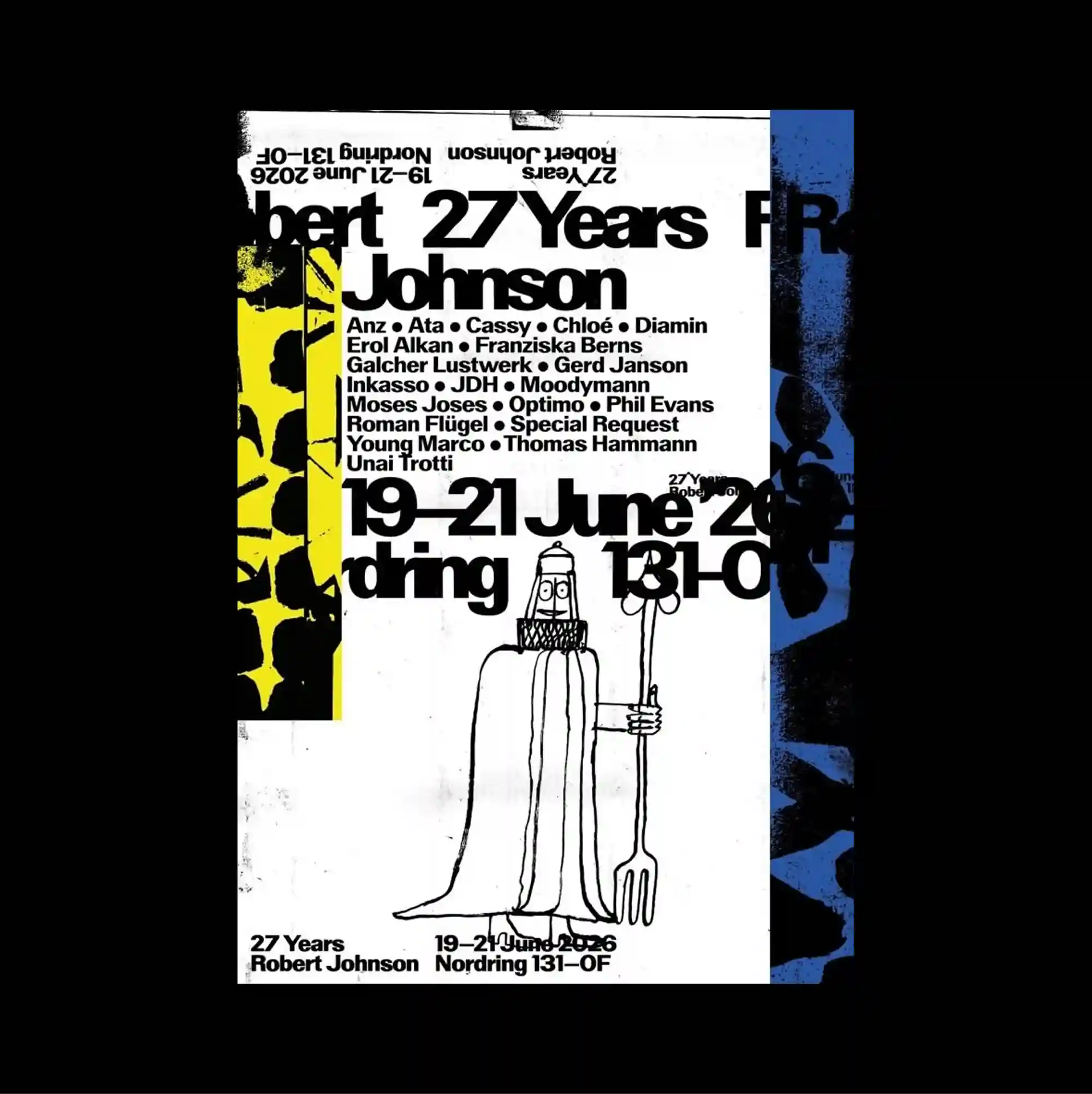
Several overlapping panels and cropped fragments are layered across the page, creating an assembled composition in which foreground and background continuously exchange roles. Oversized display lettering is paired with dense micro-typography, creating an extreme scale contrast between headline forms and secondary information. Huge black sans-serif lettering overlaps yellow and blue photographic fragments, while a simple central line drawing and irregular edge crops create a rough cut-and-paste structure. The mixture of irregular fragments, changing scales, and layered surfaces gives the work an experimental collage quality without losing overall balance.
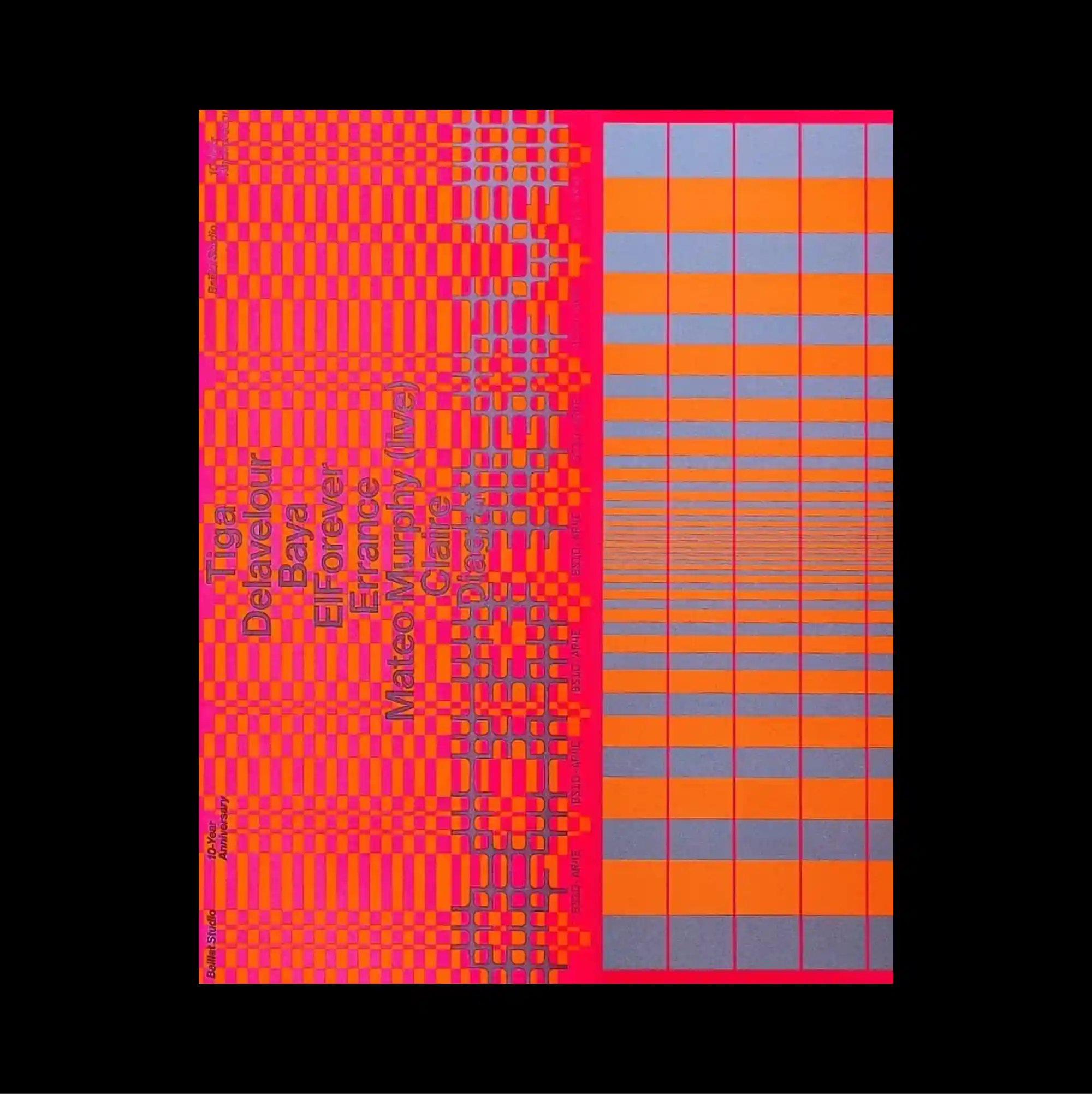
The design is divided into strongly contrasting color and image zones, using large rectangular fields to establish a clear structural hierarchy. Repeated words and characters accumulate into a patterned surface, allowing typography to function simultaneously as information and texture. A vivid pink-and-orange lattice fills the left half with repeated vertical wording, while the right side shifts into a precise stepped grid of blue, gray, and orange horizontal bars. Bold color contrasts and abrupt shifts in scale produce an energetic graphic rhythm that remains legible despite the density of the elements.
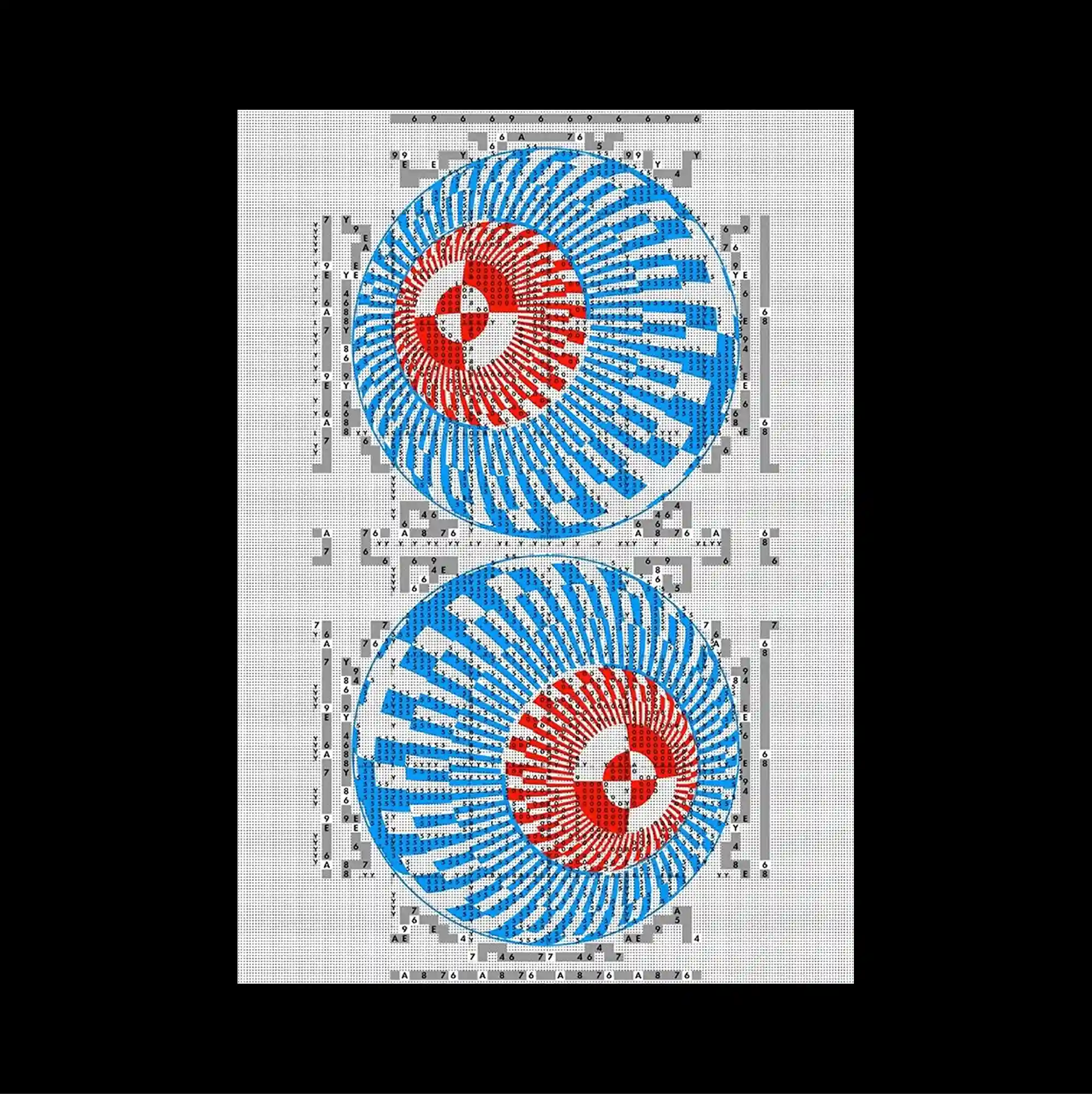
The page is organized as a sequence of modular bands and compartments, each functioning like a small technical panel within a larger information system. Typography is integrated with diagrams, coordinates, and graphic notation, so textual information and visual systems become difficult to separate. Two large blue-and-red circular spiral diagrams are stacked vertically over a gray technical background filled with small grids, labels, and thin measurement lines. The result feels analytical and technical, using repetition and precise spacing to turn information into a structured visual system.
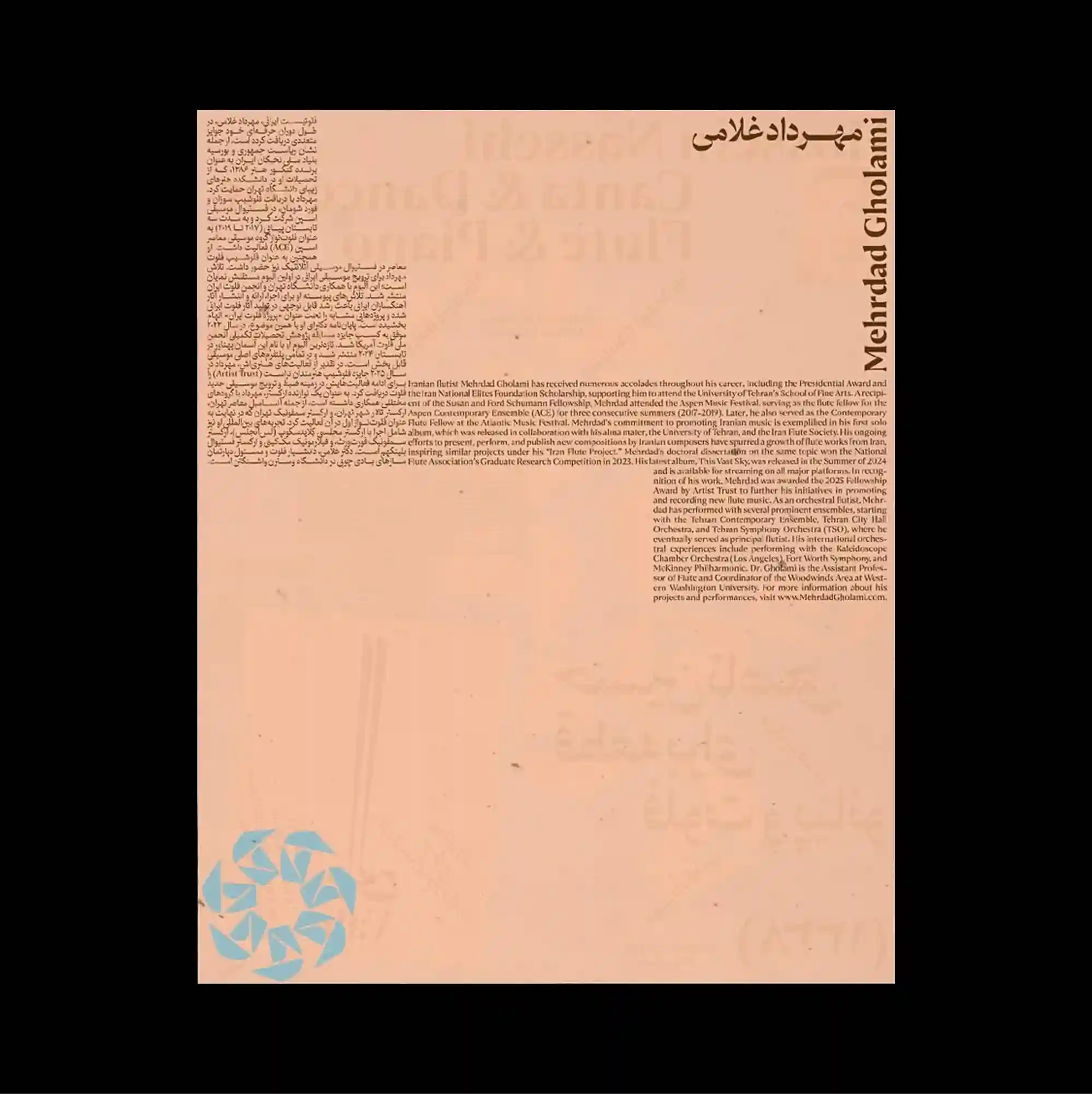
The layout is deliberately sparse, placing only a few compact elements across a broad open field so that distance and scale become active parts of the composition. Narrow columns of small sans-serif type establish a controlled rhythm, while occasional larger words interrupt the grid and create focal points. Dense text gathers along the upper and left areas of a pale peach sheet, leaving a broad empty center and lower field interrupted only by a turquoise geometric symbol near the bottom. Generous empty space and restrained detail create a quiet composition in which small shifts of placement become visually significant.
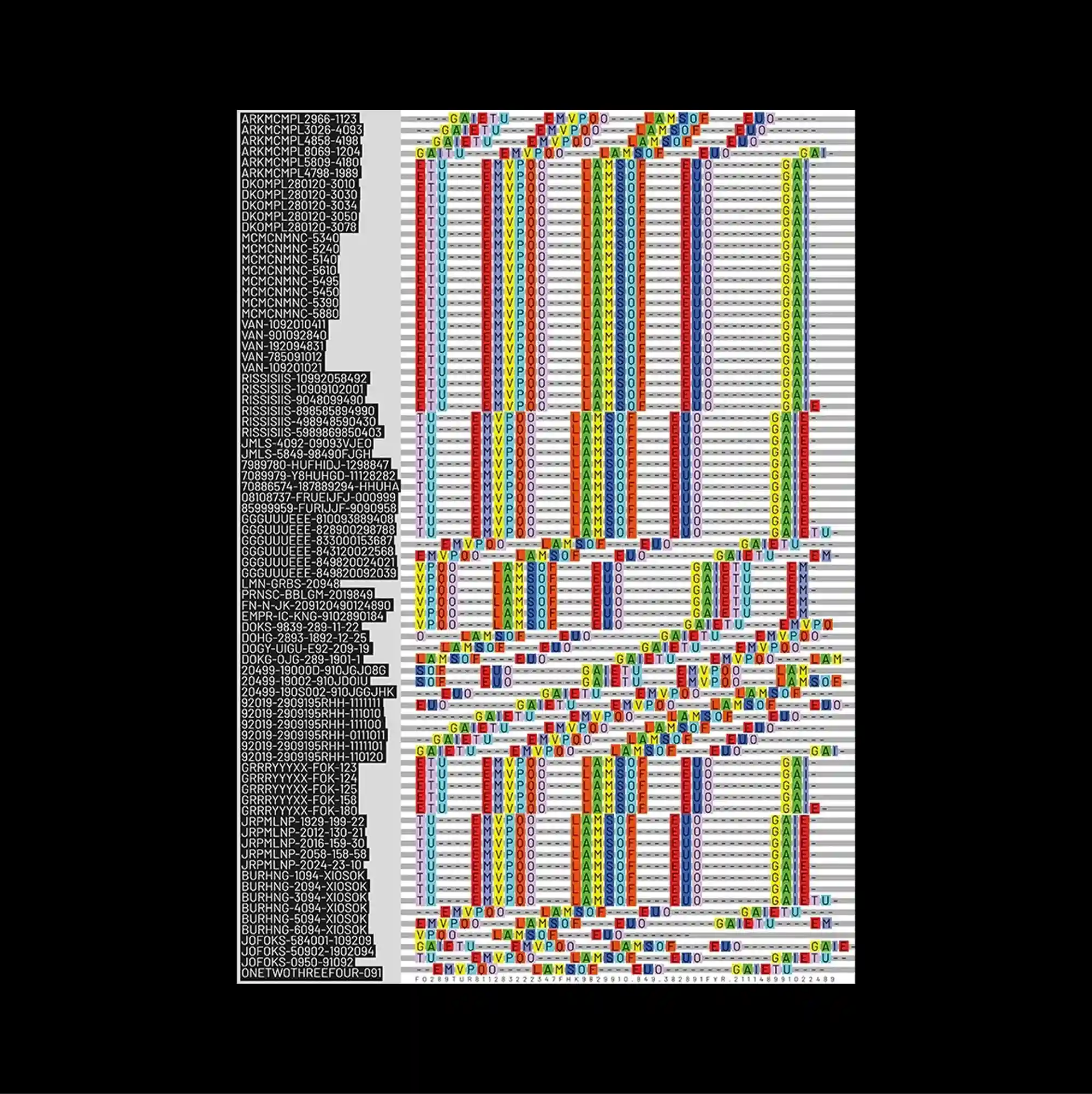
The design is divided into strongly contrasting color and image zones, using large rectangular fields to establish a clear structural hierarchy. Monospaced and data-like typography is arranged in repeated rows and columns, giving the text the character of measurements, indexes, or coded information. A dense column of tiny black coded text fills the left side, while the right half is occupied by repeated multicolored vertical lines, grids, and small rectangular markers. The result feels analytical and technical, using repetition and precise spacing to turn information into a structured visual system.
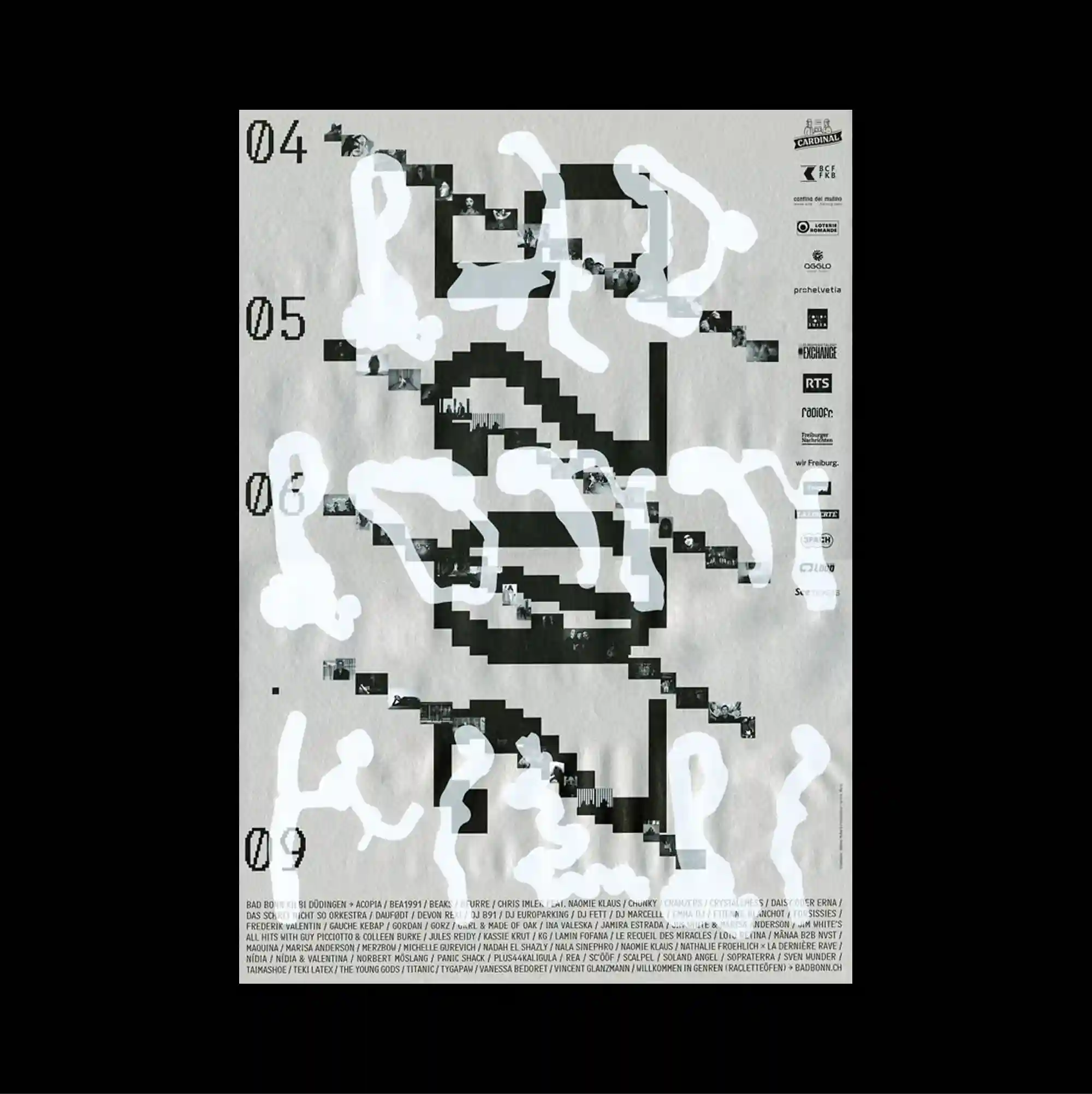
The surface is built from stacked rectangular panels of different sizes, producing a clear vertical rhythm through repeated blocks and abrupt transitions. Letterforms are stretched, distorted, cropped, or rotated until the typography begins to operate as an abstract graphic material. Grayscale pixel fragments form a distorted face-like or mechanical image through the center, crossed by thick white cloud-like strokes and large index numbers along the left side. The mixture of irregular fragments, changing scales, and layered surfaces gives the work an experimental collage quality without losing overall balance.
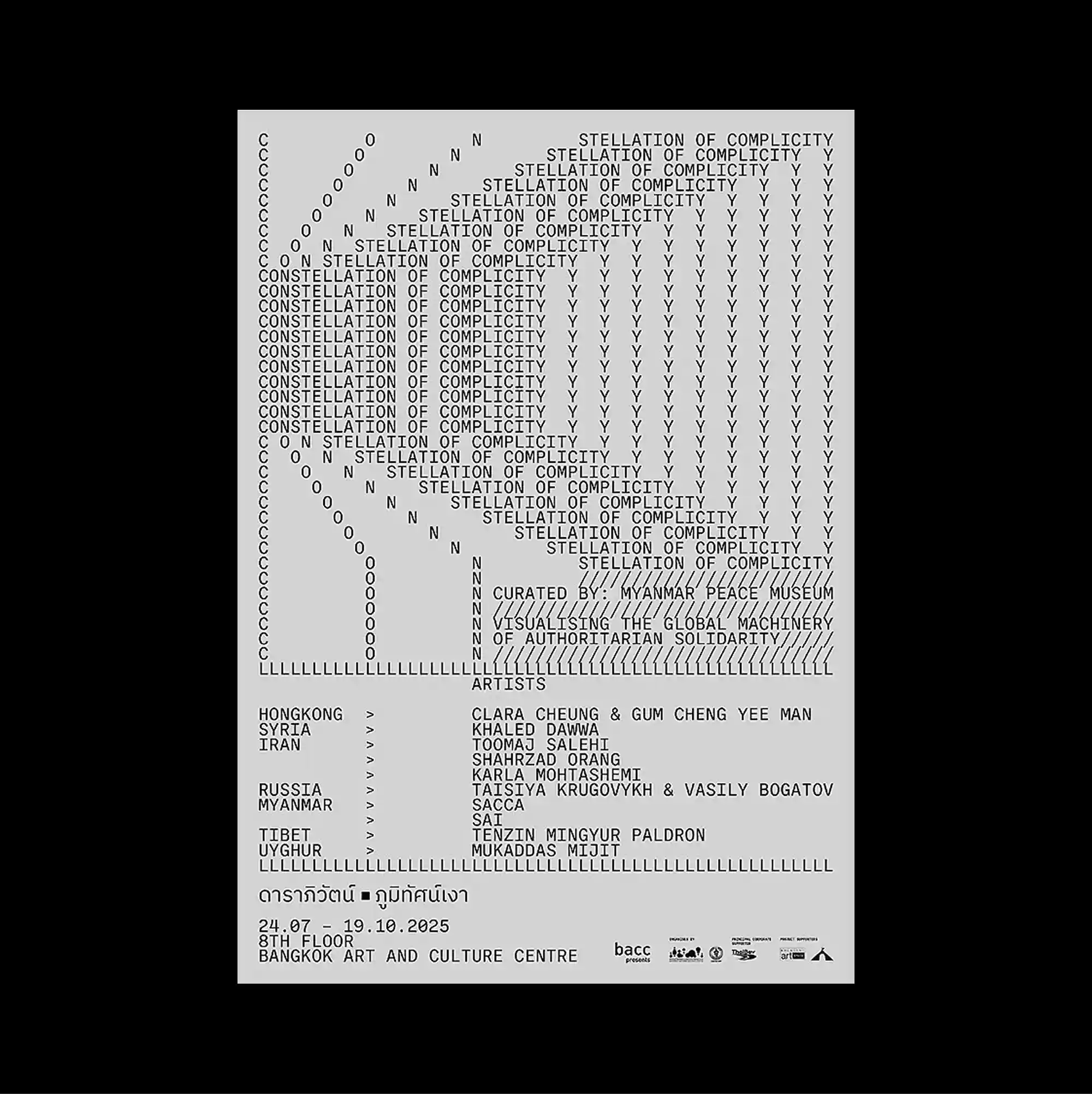
The entire surface is treated as a dense information field, with numerous small units packed closely enough to form an almost continuous visual texture. Monospaced and data-like typography is arranged in repeated rows and columns, giving the text the character of measurements, indexes, or coded information. Monospaced characters build a large hourglass-like geometric figure through repeated letters and spacing, while names and small information blocks sit quietly beneath the constructed form. The repeated structures make the poster read like a diagram or index, with visual meaning emerging from accumulation rather than a single focal image.
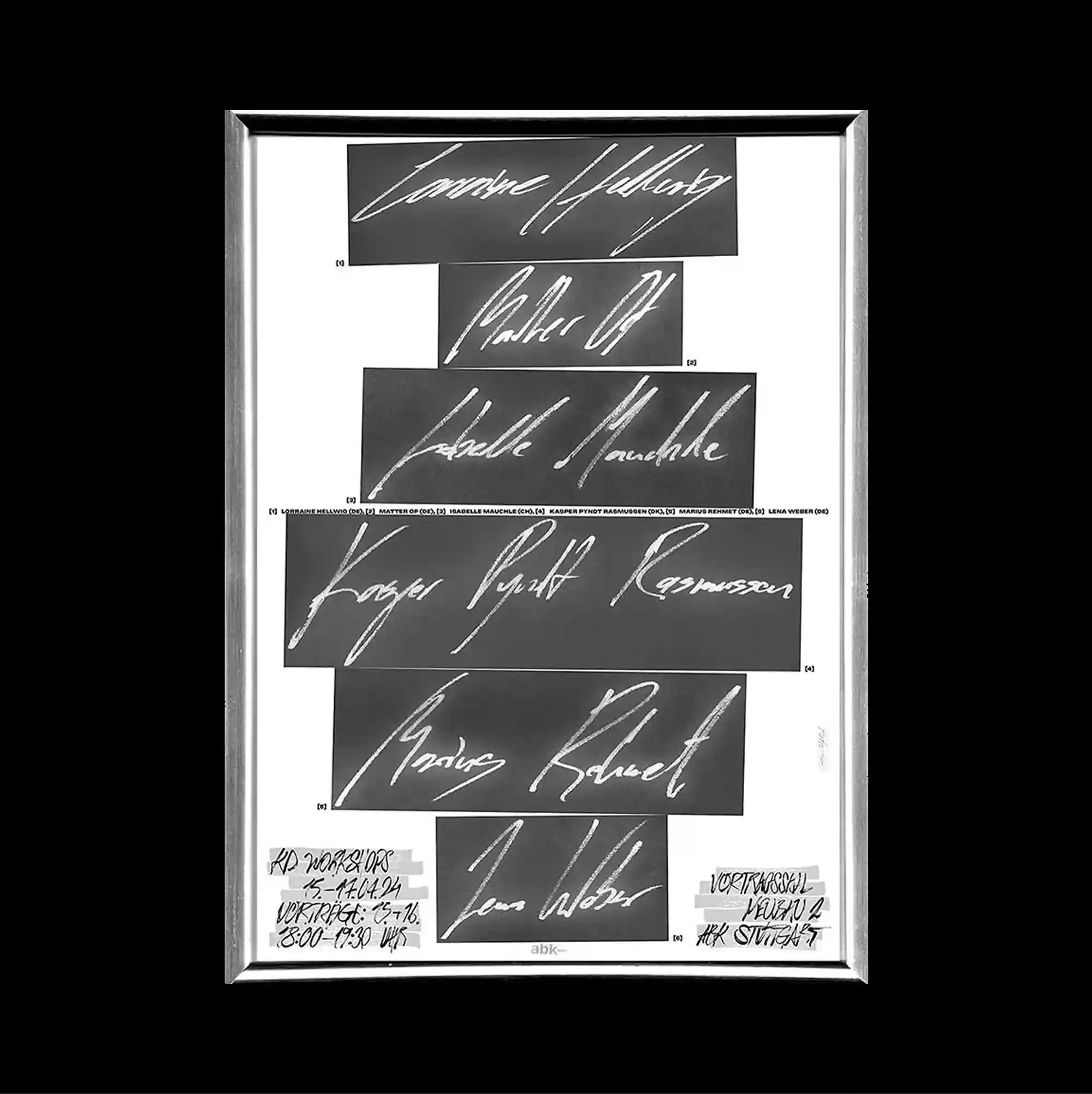
The surface is built from stacked rectangular panels of different sizes, producing a clear vertical rhythm through repeated blocks and abrupt transitions. Handwritten marks and informal annotations are layered over more systematic printed type, creating tension between spontaneous gestures and controlled typography. Several dark rectangular strips containing elegant handwritten signatures are stacked within a thin framed border, with small rough notes tucked into the lower corners. Visible grain, imperfect edges, and mixed image qualities introduce a tactile analog character that softens the underlying grid.
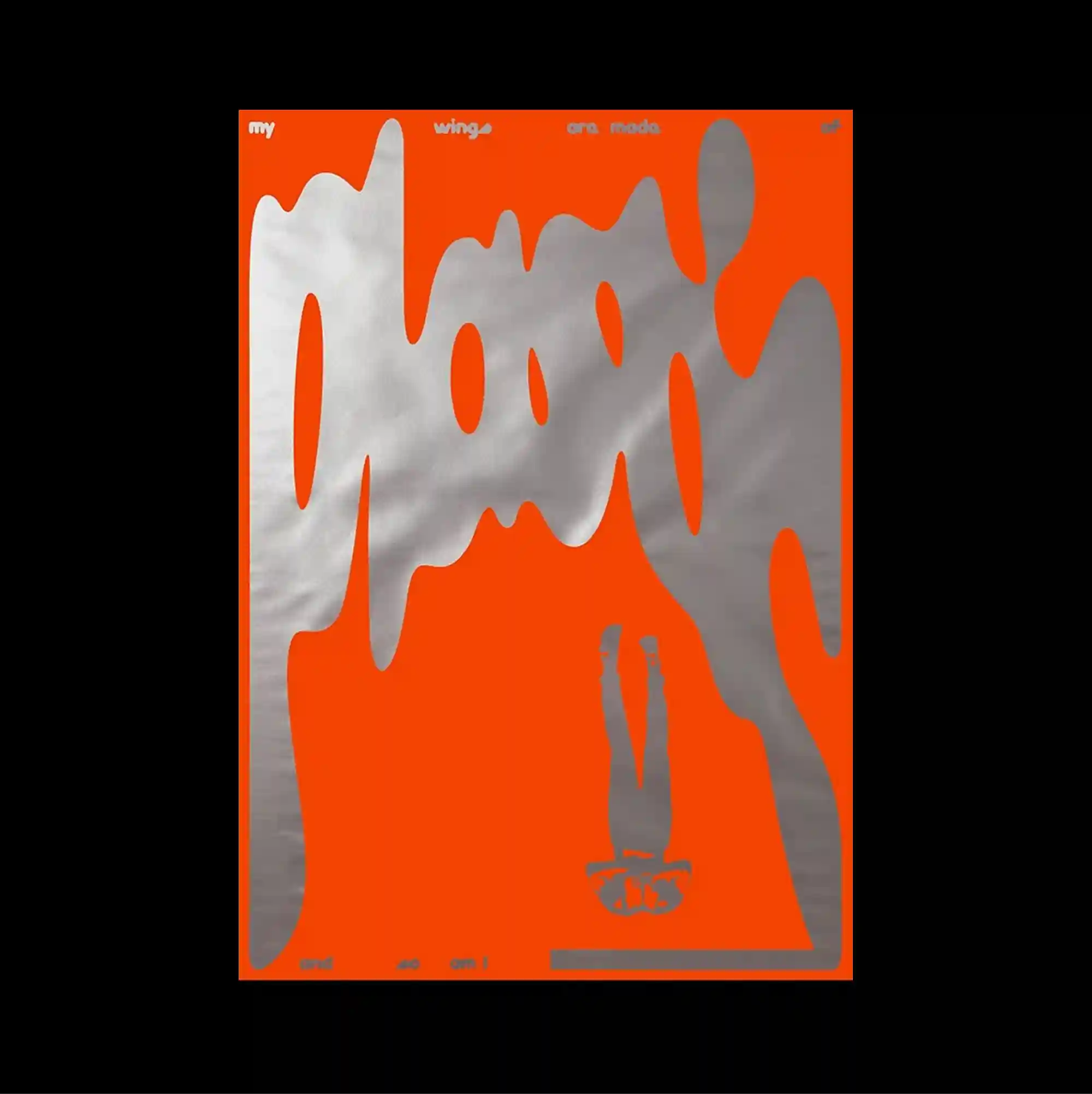
A centered composition leaves a substantial amount of open space around the main elements, allowing a small cluster of imagery and type to carry most of the visual weight. Letterforms are stretched, distorted, cropped, or rotated until the typography begins to operate as an abstract graphic material. A highly saturated orange field carries a large silver fluid letter-like form across most of the center, with only tiny labels and a short bottom bar remaining as secondary details. Strong scale contrast and simplified spatial relationships make the composition immediately readable while preserving a distinctive experimental edge.
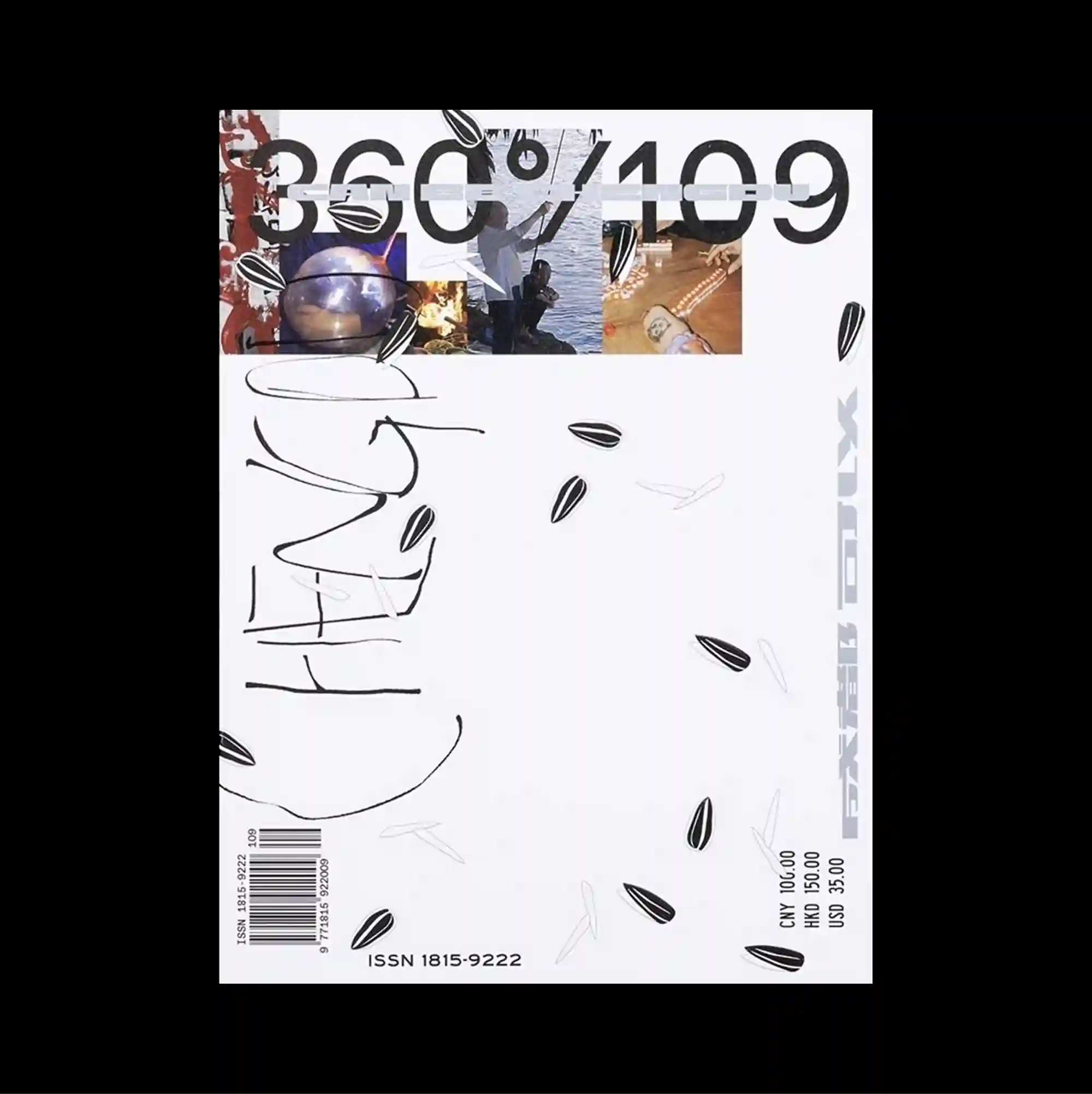
Several overlapping panels and cropped fragments are layered across the page, creating an assembled composition in which foreground and background continuously exchange roles. A strong hierarchy is created almost entirely through scale, with very large type set against miniature labels and finely printed supporting text. A narrow collage strip of photographs runs across the top, while a huge cropped number, loose black drawing, barcode, and scattered seed-like marks occupy the white lower field. The mixture of irregular fragments, changing scales, and layered surfaces gives the work an experimental collage quality without losing overall balance.
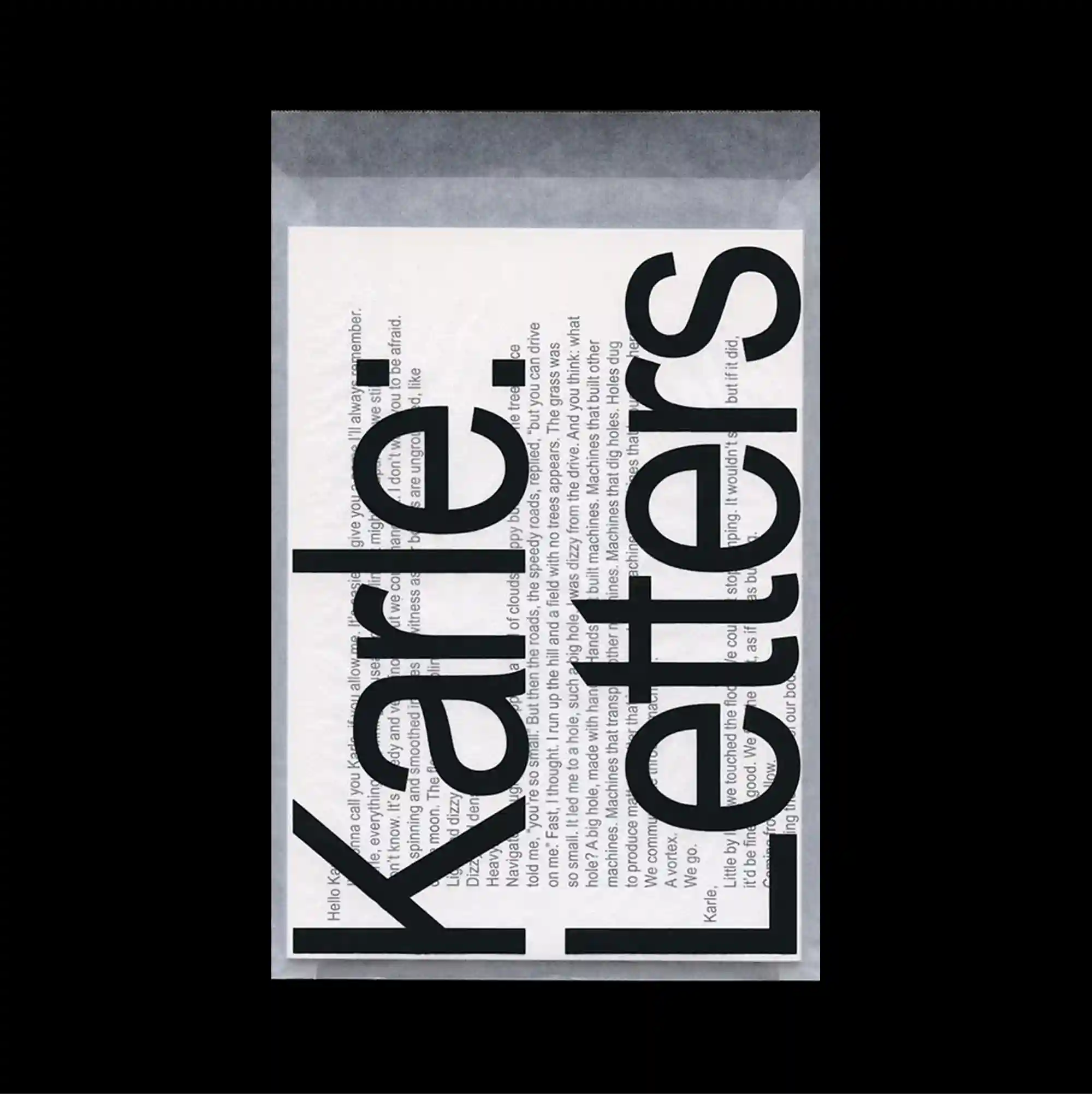
Several overlapping panels and cropped fragments are layered across the page, creating an assembled composition in which foreground and background continuously exchange roles. Oversized display lettering is paired with dense micro-typography, creating an extreme scale contrast between headline forms and secondary information. Several gray publication pages are stacked with slight offsets while enormous black sans-serif words rotate vertically across them and obscure much of the smaller underlying text. Large forms and compressed supporting information create a monumental hierarchy that feels assertive even within a tightly organized layout.
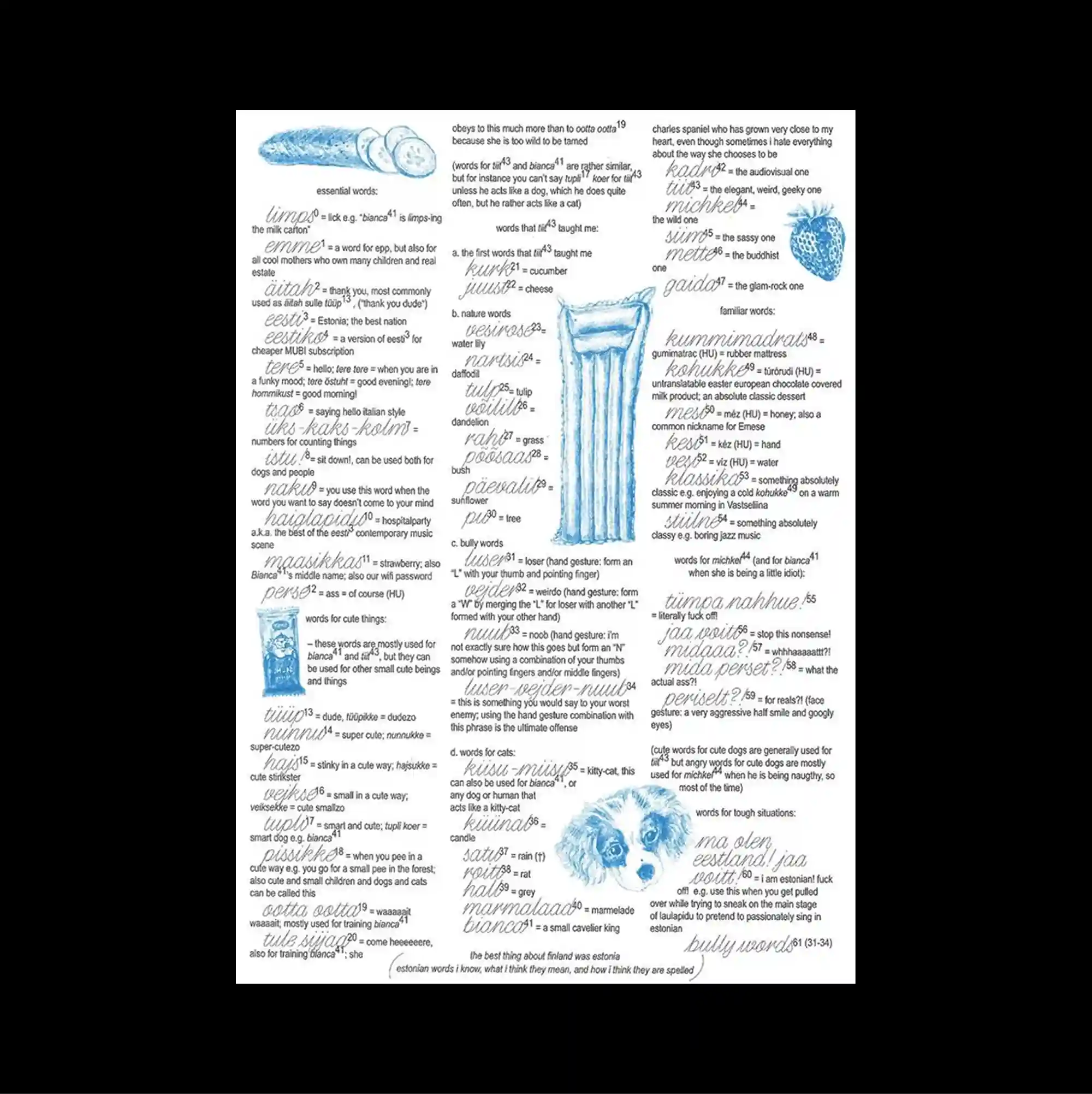
The entire surface is treated as a dense information field, with numerous small units packed closely enough to form an almost continuous visual texture. Handwritten marks and informal annotations are layered over more systematic printed type, creating tension between spontaneous gestures and controlled typography. Dense handwritten notes fill the sheet from top to bottom, interrupted by blue sketches of shells, columns, and circular diagrams that provide irregular visual pauses. Visible grain, imperfect edges, and mixed image qualities introduce a tactile analog character that softens the underlying grid.
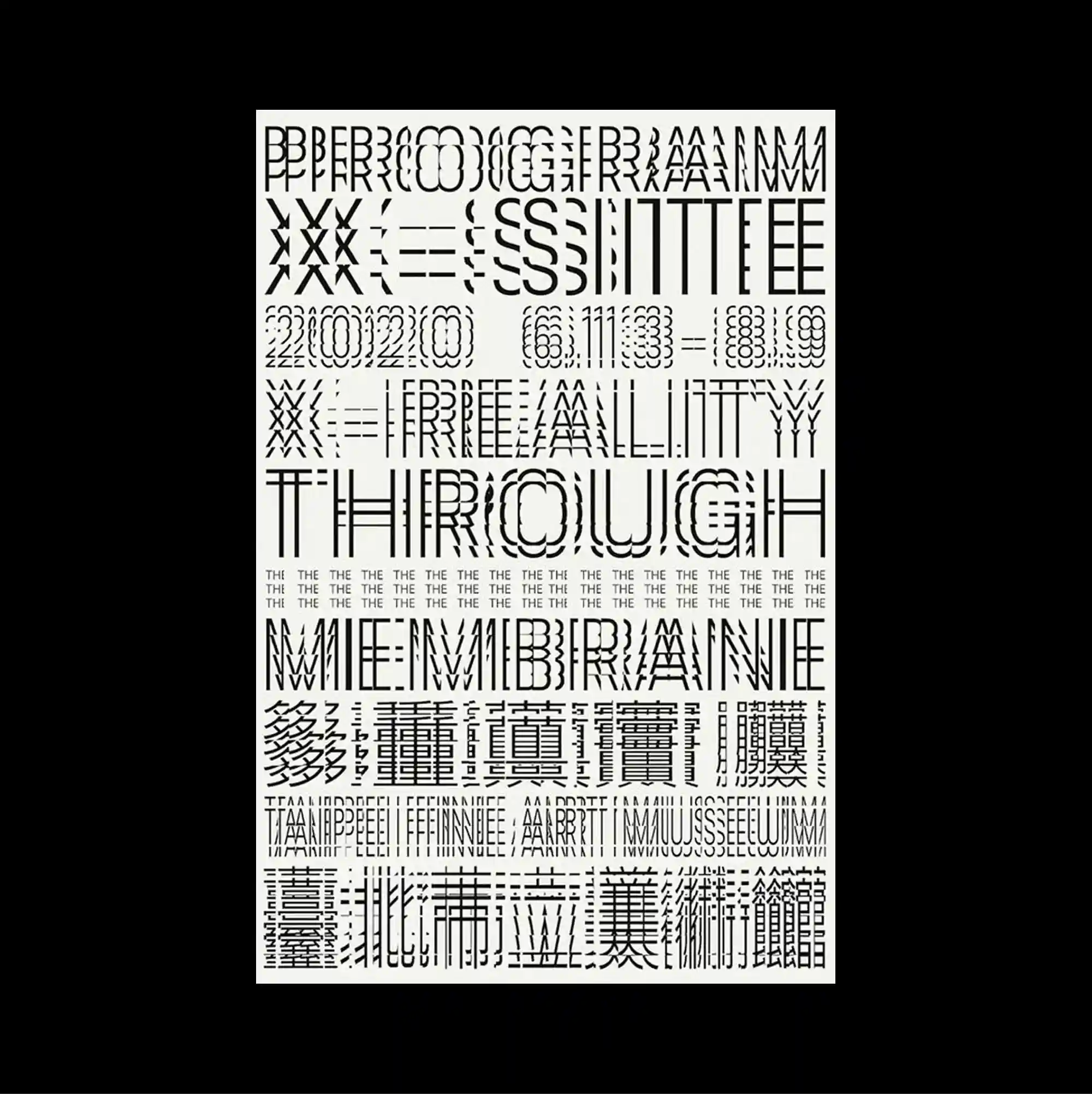
The entire surface is treated as a dense information field, with numerous small units packed closely enough to form an almost continuous visual texture. Letterforms are stretched, distorted, cropped, or rotated until the typography begins to operate as an abstract graphic material. The page is packed with repeated experimental alphabets, bars, grids, and compressed letter patterns that vary in density from row to row while remaining entirely monochrome. The compressed layering and hard contrasts produce a dense industrial character, with information behaving almost like a physical surface.
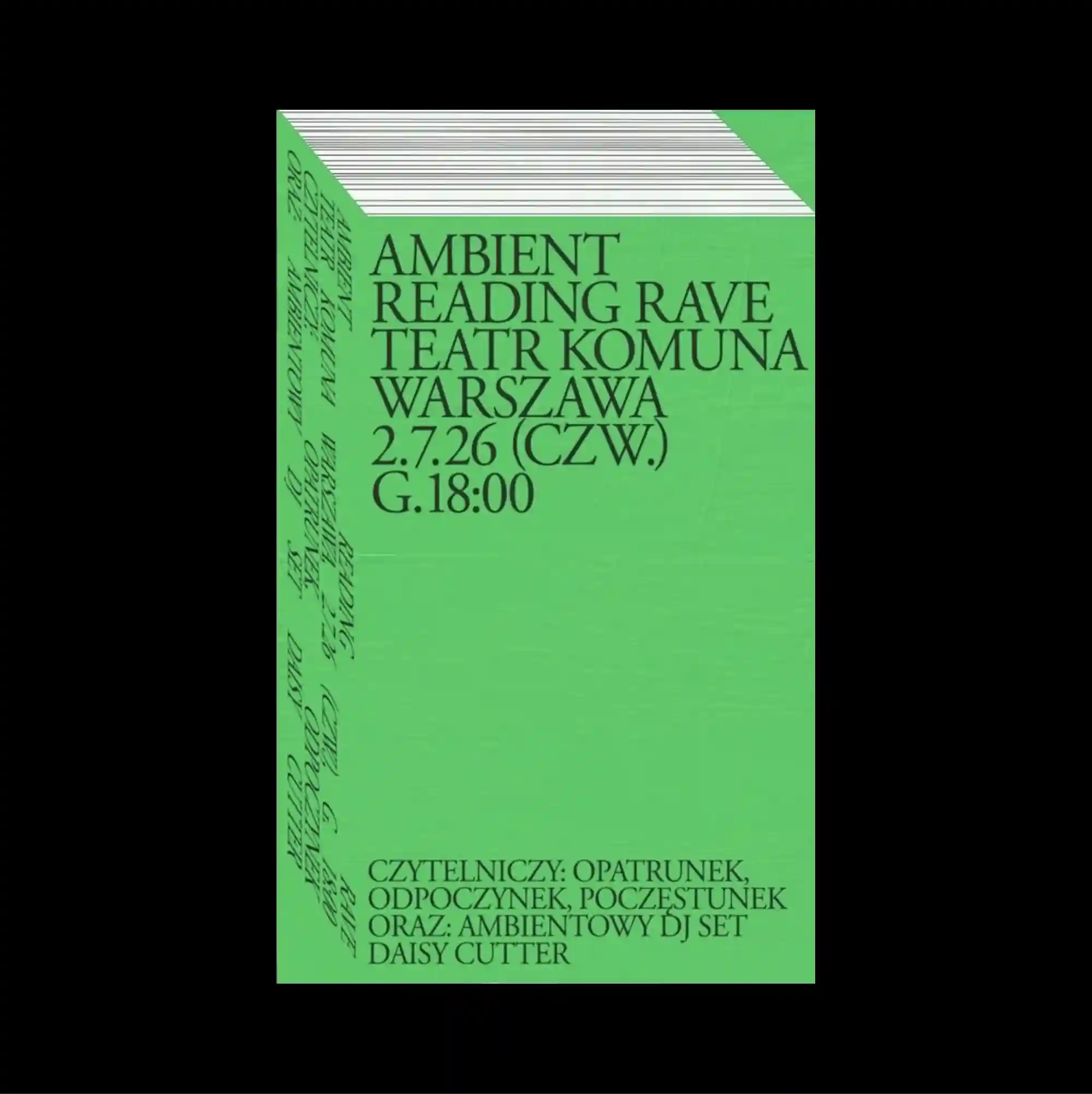
A centered composition leaves a substantial amount of open space around the main elements, allowing a small cluster of imagery and type to carry most of the visual weight. Serif and sans-serif styles are mixed with thin rules and compact captions, producing a layered hierarchy through changes in weight, width, and alignment. A flat bright green field is dominated by several large black serif lines near the upper half, with a small secondary text block positioned close to the bottom edge. Strong scale contrast and simplified spatial relationships make the composition immediately readable while preserving a distinctive experimental edge.
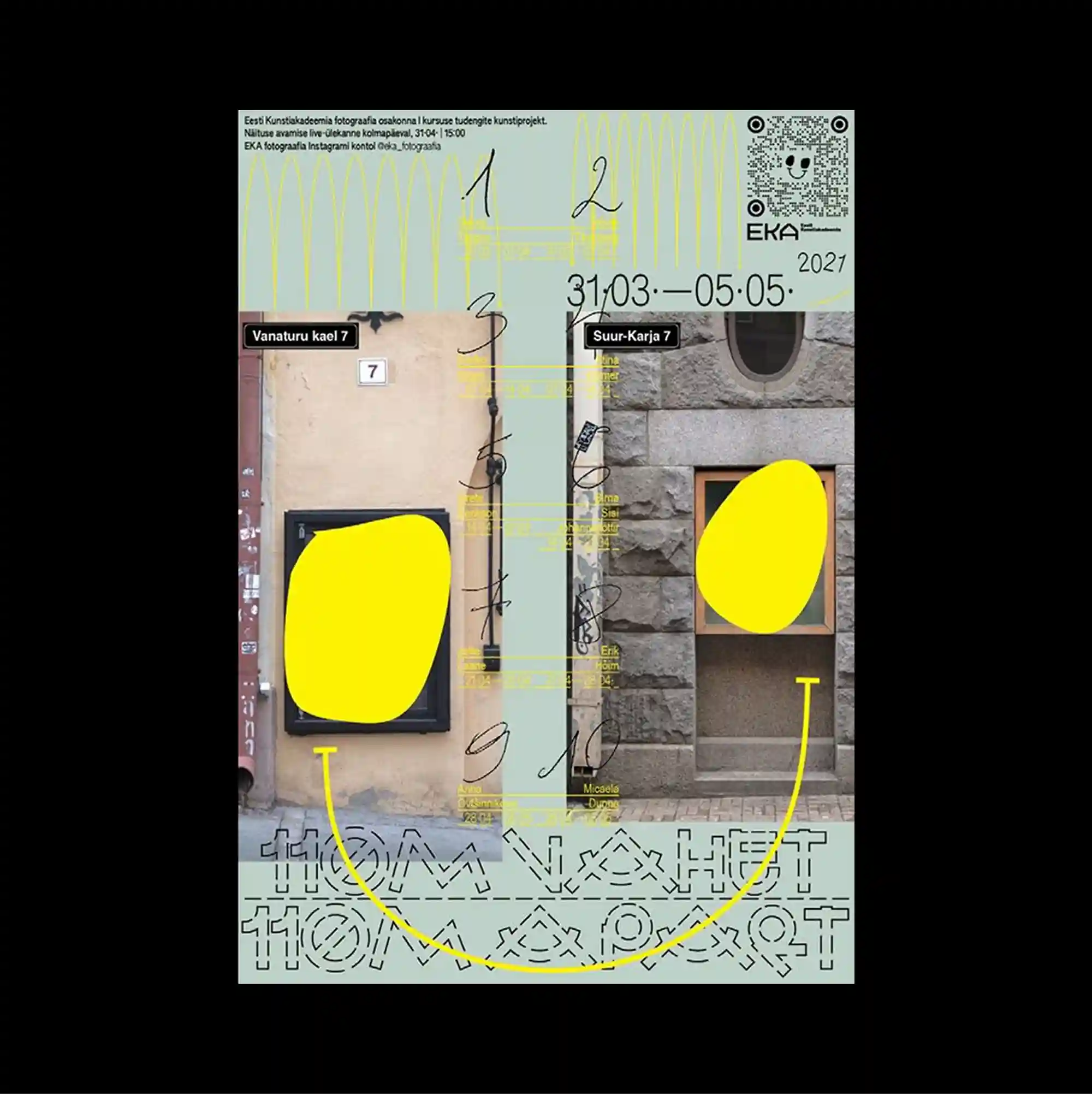
Several overlapping panels and cropped fragments are layered across the page, creating an assembled composition in which foreground and background continuously exchange roles. Handwritten marks and informal annotations are layered over more systematic printed type, creating tension between spontaneous gestures and controlled typography. Photographic fragments and translucent panels are layered through the center, while two large yellow blobs and a broad curved yellow line create a loose face-like arrangement without becoming fully figurative. Unexpected alignments, playful shapes, and uneven spacing create a deliberately irregular rhythm that keeps the surface visually active.
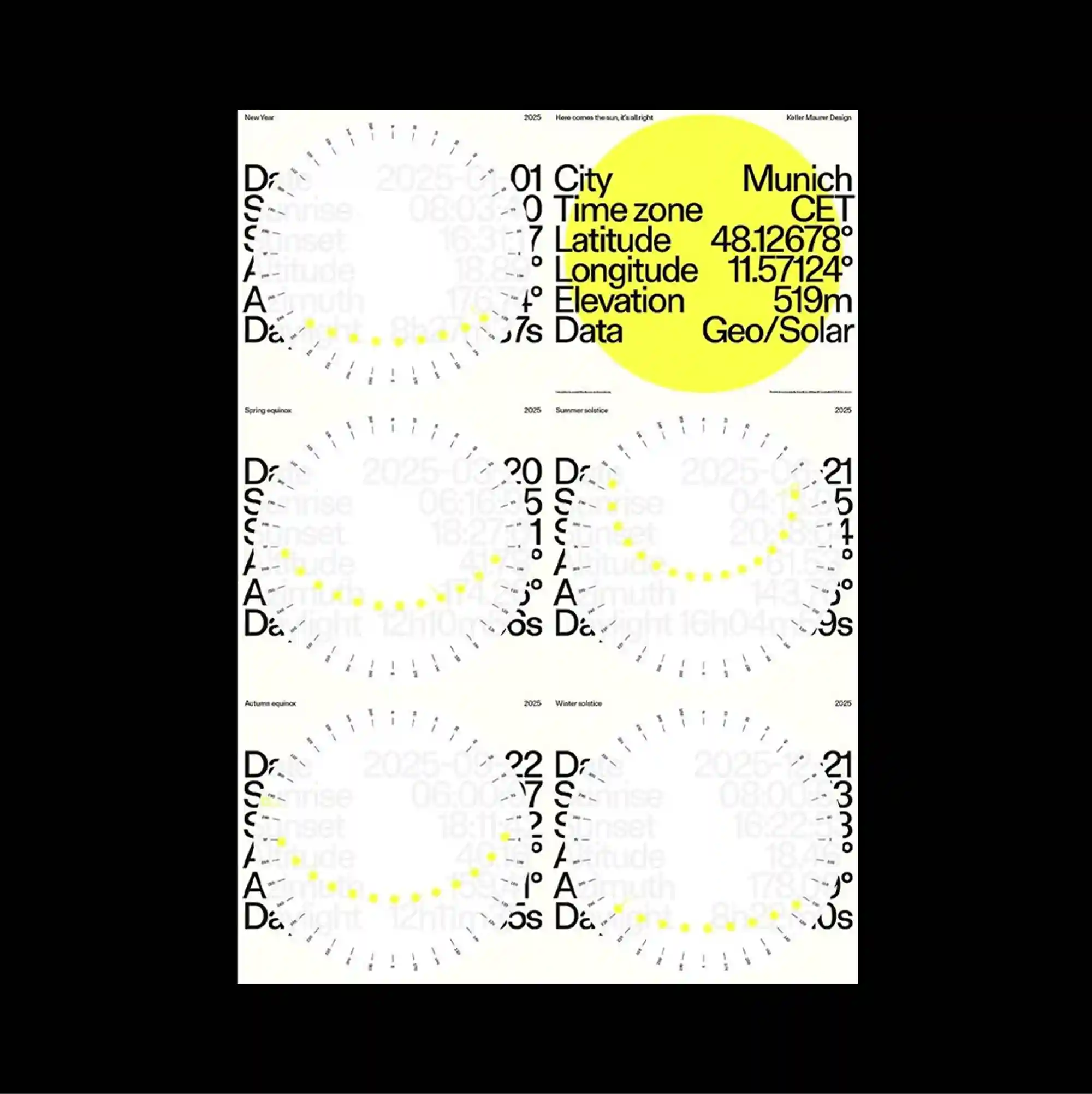
The page is organized as a sequence of modular bands and compartments, each functioning like a small technical panel within a larger information system. Typography is integrated with diagrams, coordinates, and graphic notation, so textual information and visual systems become difficult to separate. Three repeated circular diagrams are stacked vertically, each surrounded by small data labels and yellow dot sequences that turn the page into a measured scientific-looking system. The result feels analytical and technical, using repetition and precise spacing to turn information into a structured visual system.
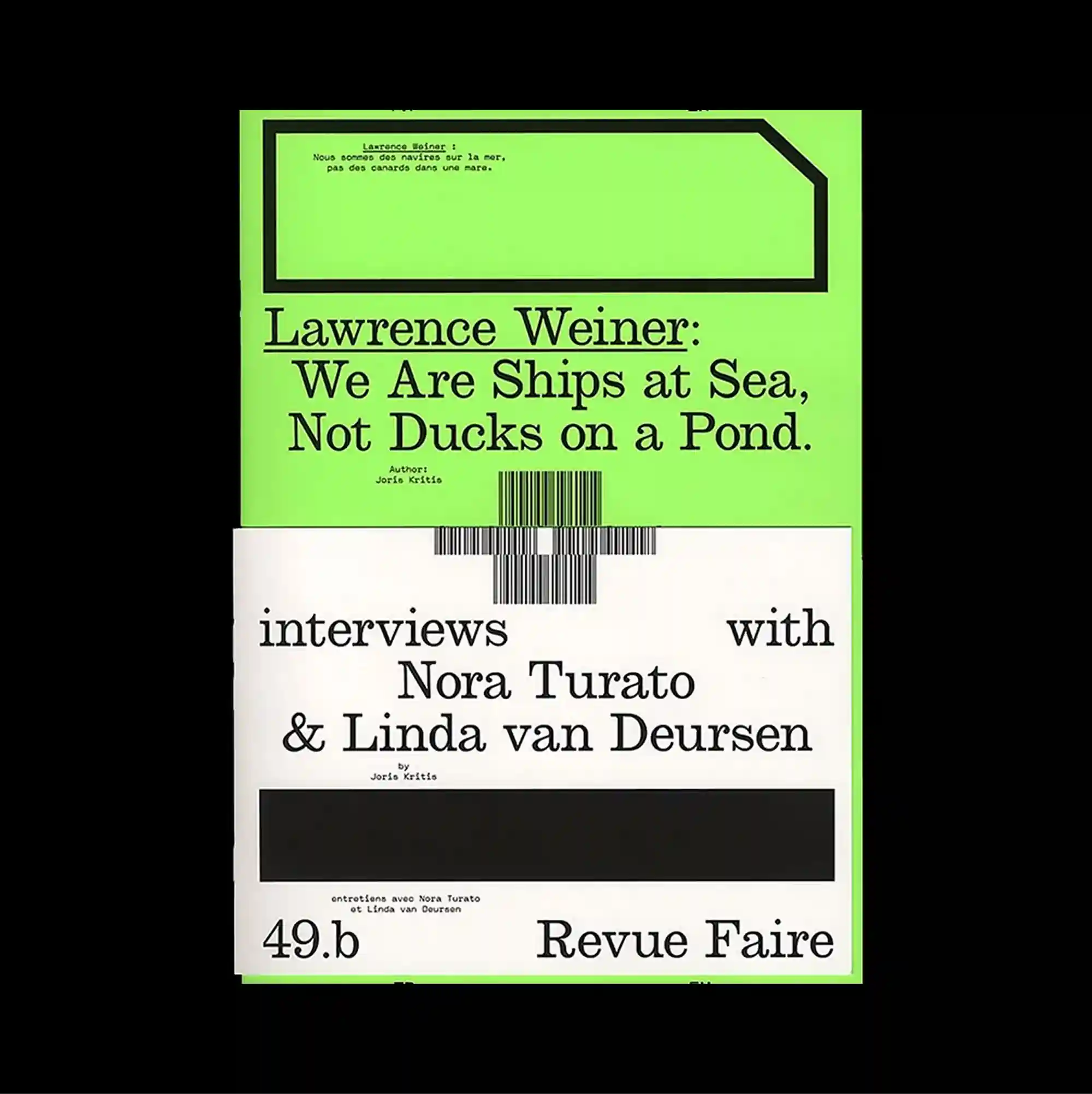
The surface is built from stacked rectangular panels of different sizes, producing a clear vertical rhythm through repeated blocks and abrupt transitions. Serif and sans-serif styles are mixed with thin rules and compact captions, producing a layered hierarchy through changes in weight, width, and alignment. A neon green upper panel contains large serif text within a rectangular frame, while the lower white section combines a barcode, black blocks, and widely spaced interview-style typography. Bold color contrasts and abrupt shifts in scale produce an energetic graphic rhythm that remains legible despite the density of the elements.
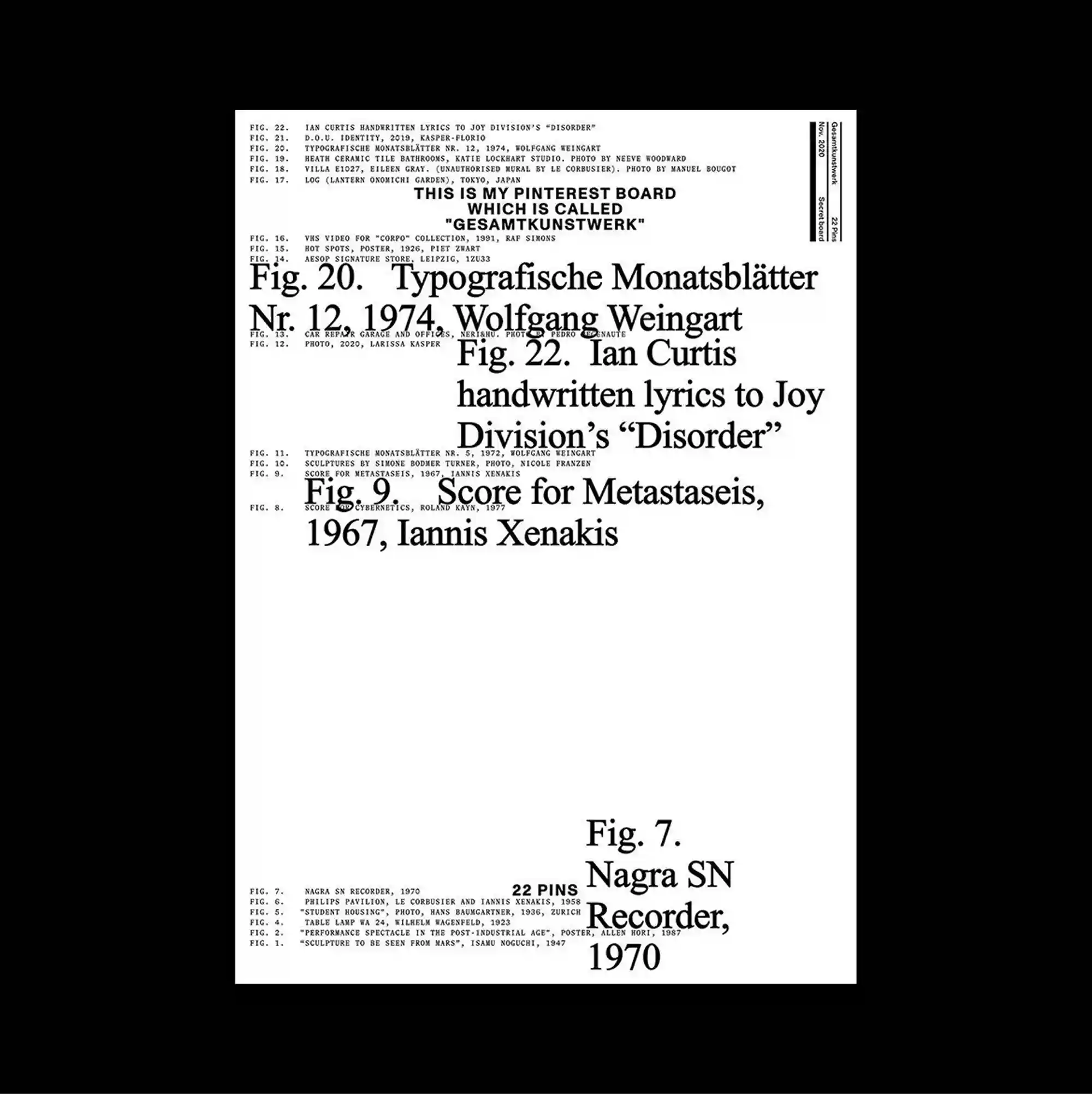
A centered composition leaves a substantial amount of open space around the main elements, allowing a small cluster of imagery and type to carry most of the visual weight. Serif and sans-serif styles are mixed with thin rules and compact captions, producing a layered hierarchy through changes in weight, width, and alignment. Dense typographic clusters occupy the top and lower sections while a very large white center remains untouched, making two figure captions and isolated lines feel unusually prominent. Generous empty space and restrained detail create a quiet composition in which small shifts of placement become visually significant.
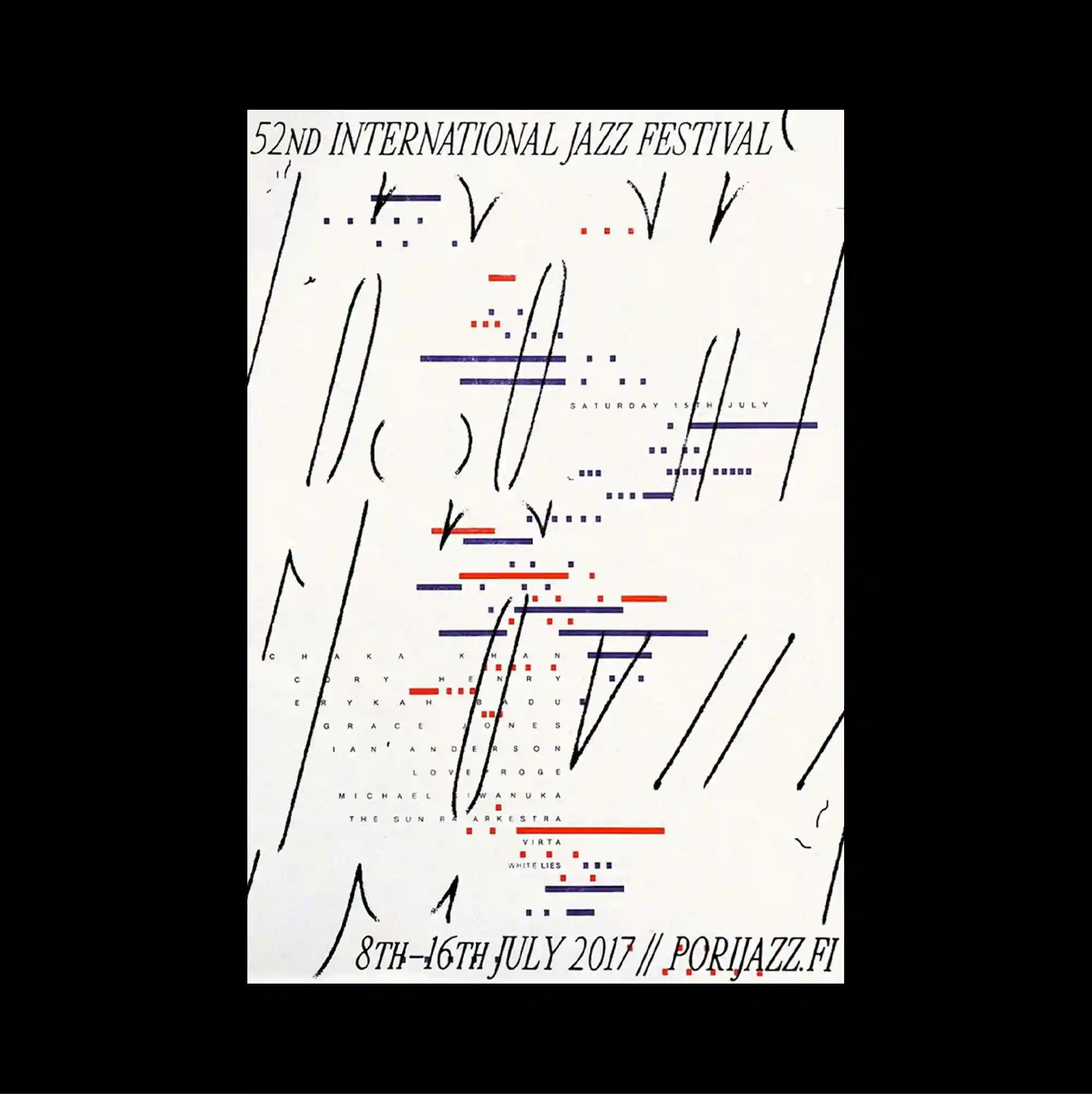
A centered composition leaves a substantial amount of open space around the main elements, allowing a small cluster of imagery and type to carry most of the visual weight. Typography is integrated with diagrams, coordinates, and graphic notation, so textual information and visual systems become difficult to separate. Thin black strokes, scattered dots, and short red and blue bars are distributed like musical notation across the center, with small condensed information held close to the perimeter. The repeated structures make the poster read like a diagram or index, with visual meaning emerging from accumulation rather than a single focal image.
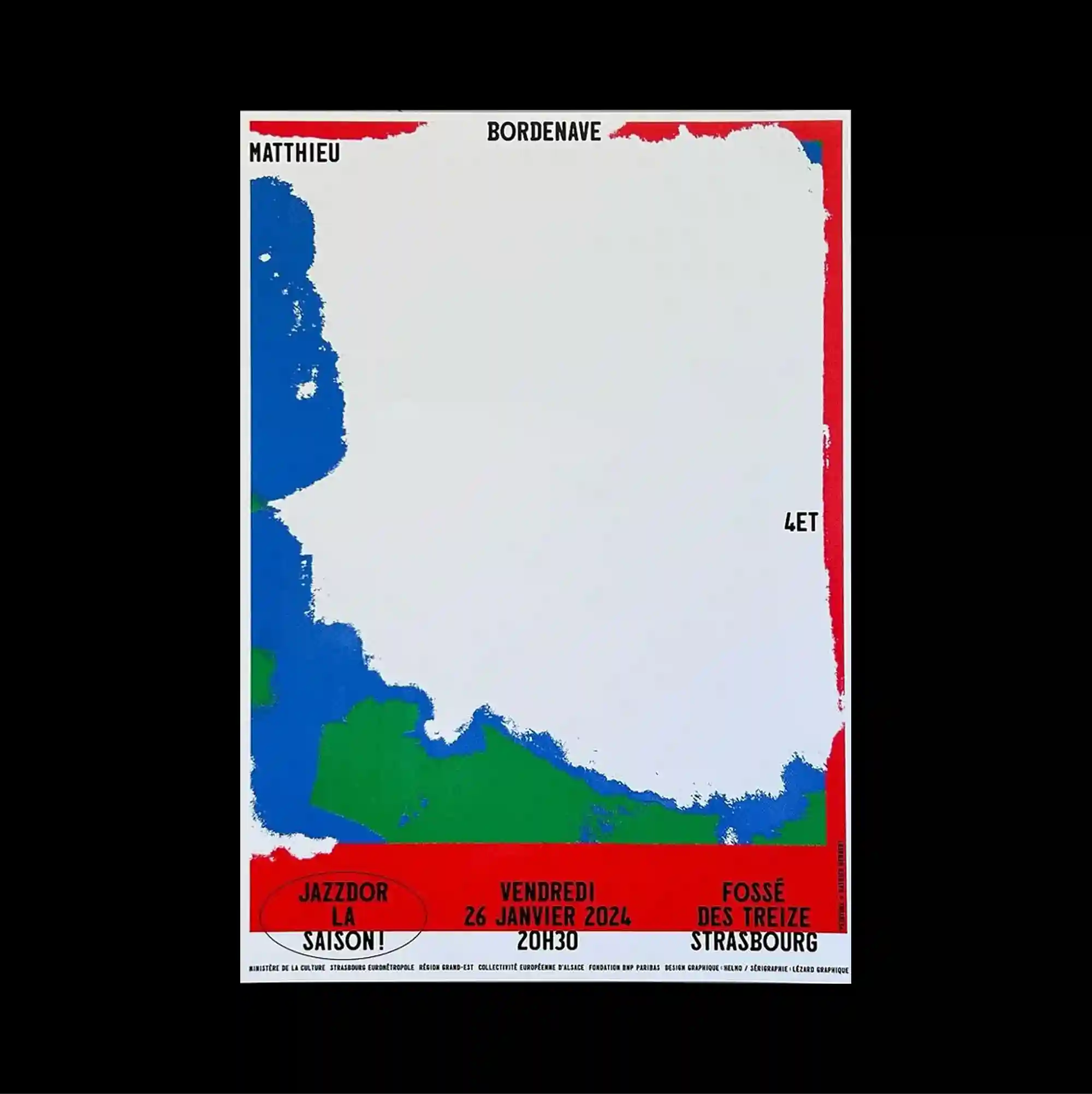
The composition is framed by elements positioned close to the outer edges, leaving the center comparatively open and emphasizing the perimeter as an active zone. Restrained serif typography is used at a relatively small scale, allowing generous spacing and subtle alignment shifts to define the hierarchy. An irregular blue-and-green map-like shape hugs the left and lower edges of a mostly empty sheet, enclosed by a thin red frame and a few small typographic anchors. Generous empty space and restrained detail create a quiet composition in which small shifts of placement become visually significant.
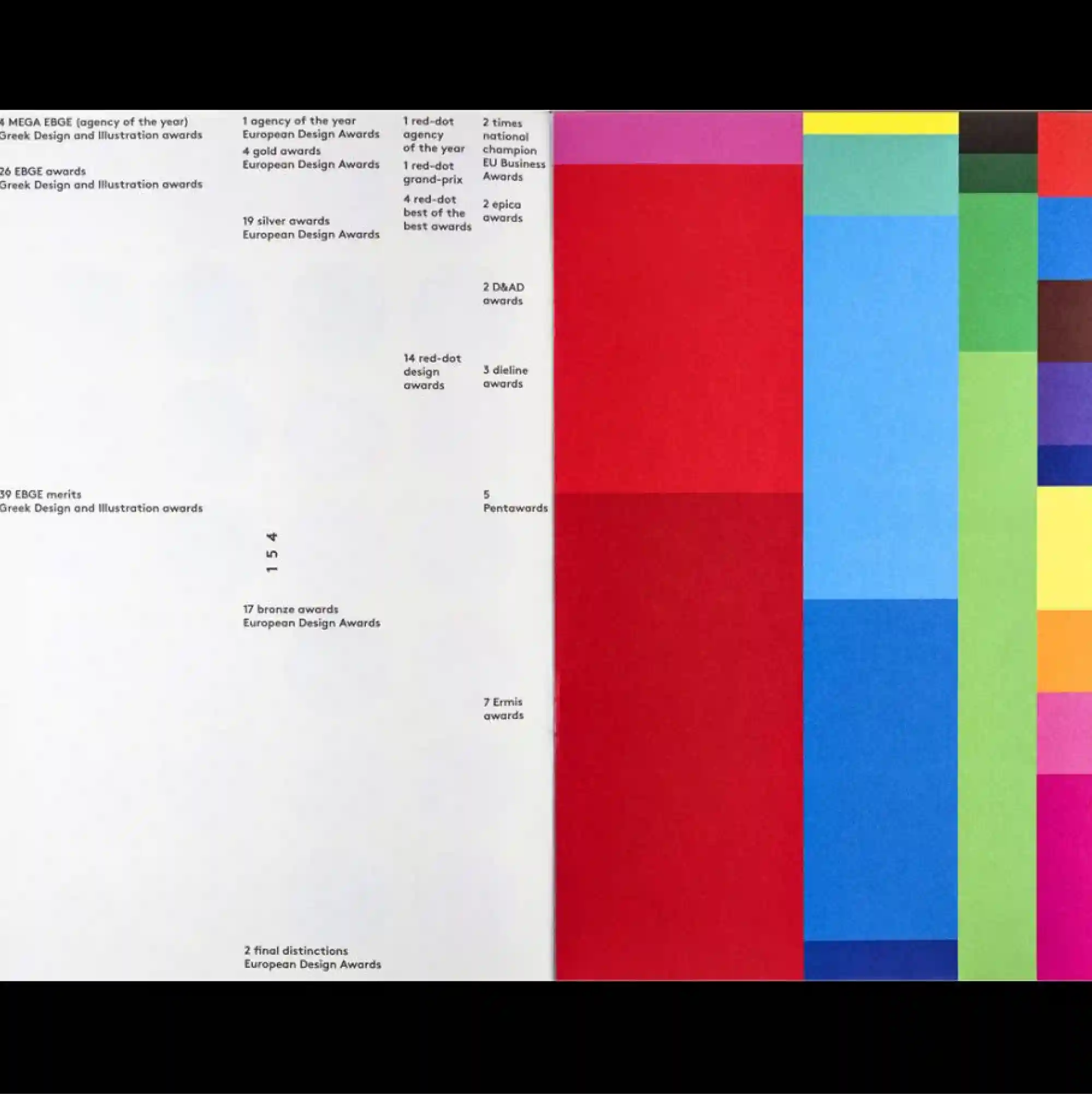
The design is divided into strongly contrasting color and image zones, using large rectangular fields to establish a clear structural hierarchy. Monospaced and data-like typography is arranged in repeated rows and columns, giving the text the character of measurements, indexes, or coded information. A compact list of small black information occupies the left side, while tall vertical color bars in red, blue, green, yellow, and dark tones dominate the right half. Precise alignment and dense secondary information give the design a highly functional appearance while preserving a distinctive graphic hierarchy.
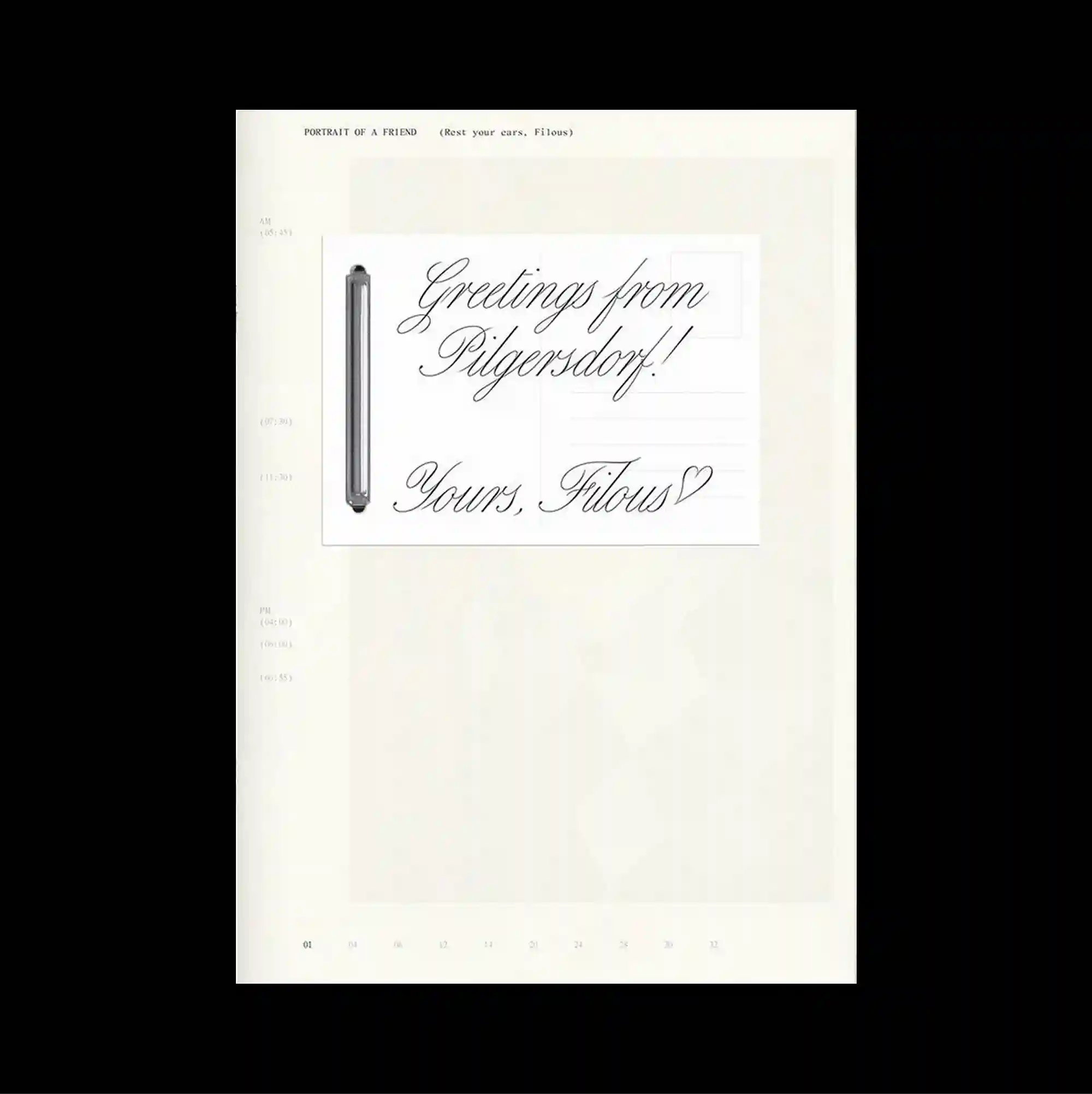
A centered composition leaves a substantial amount of open space around the main elements, allowing a small cluster of imagery and type to carry most of the visual weight. Restrained serif typography is used at a relatively small scale, allowing generous spacing and subtle alignment shifts to define the hierarchy. A small inset card with ornate script sits near the upper center of a pale sheet, while faint peripheral marks and tiny bottom details keep the rest exceptionally restrained. Generous empty space and restrained detail create a quiet composition in which small shifts of placement become visually significant.
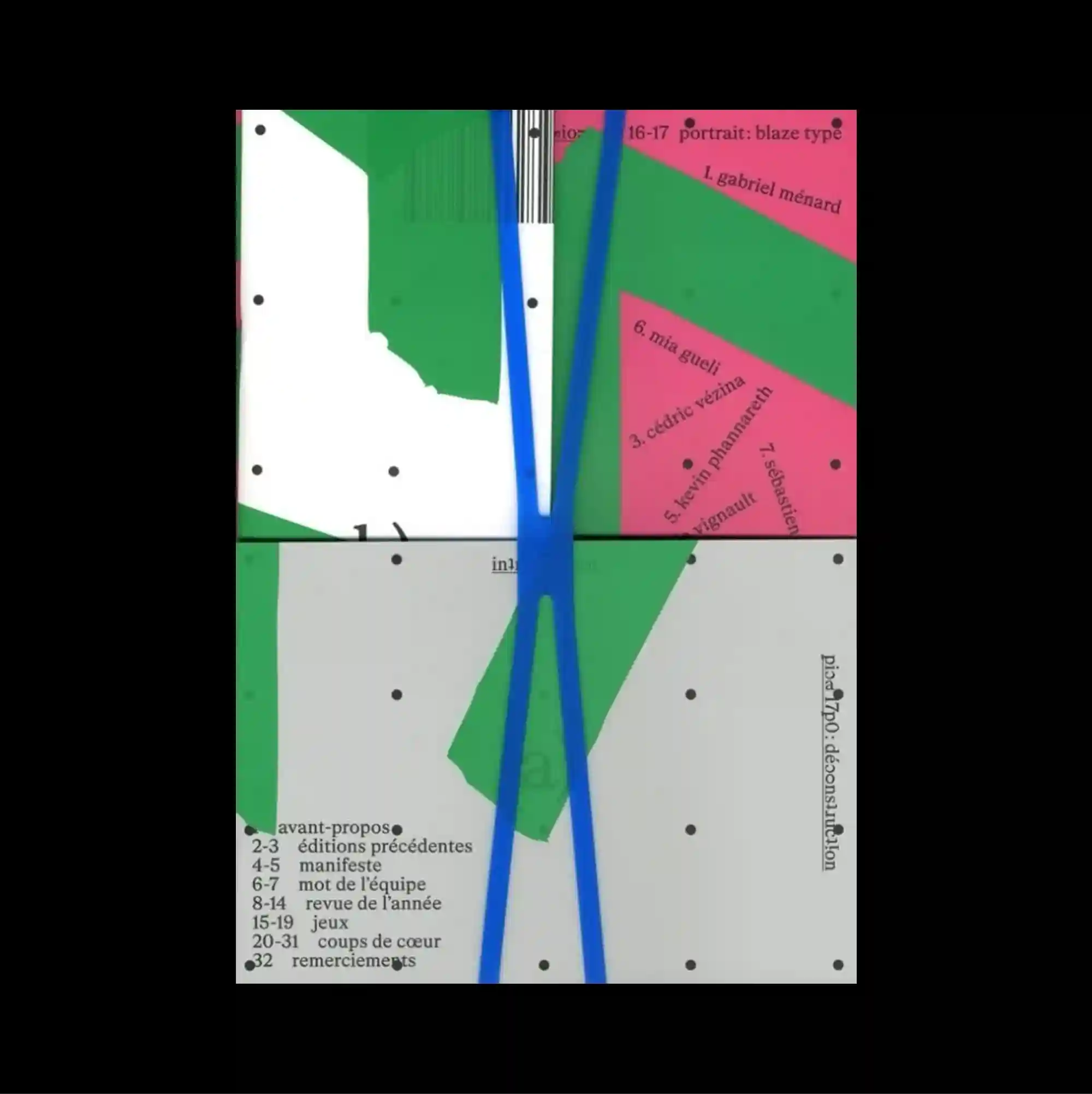
Several overlapping panels and cropped fragments are layered across the page, creating an assembled composition in which foreground and background continuously exchange roles. Different scripts, orientations, and typographic weights are mixed freely, producing a layered reading experience with no single dominant direction. Green, pink, blue, and gray geometric fragments overlap through the page, with thin vertical bars, small dots, and compact text inserted between the intersecting color planes. The mixture of irregular fragments, changing scales, and layered surfaces gives the work an experimental collage quality without losing overall balance.
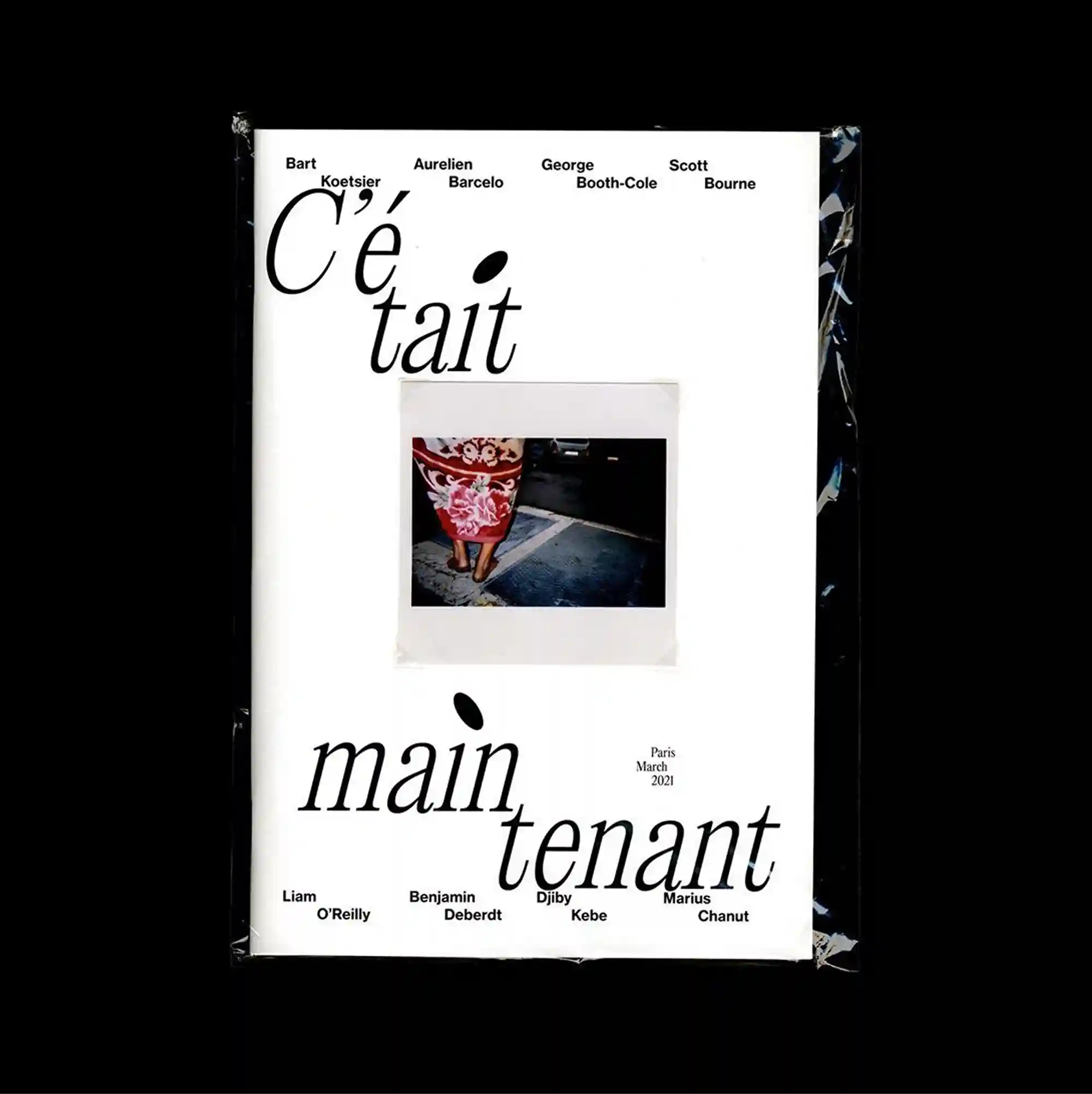
A centered composition leaves a substantial amount of open space around the main elements, allowing a small cluster of imagery and type to carry most of the visual weight. Serif and sans-serif styles are mixed with thin rules and compact captions, producing a layered hierarchy through changes in weight, width, and alignment. A small Polaroid-like photograph sits near the center beneath an elegant serif heading, while oversized italic words stretch across the lower half and small names remain aligned near the edges. The careful sequencing of headings, captions, and images gives the piece the discipline of a publication page while retaining the impact of a poster.
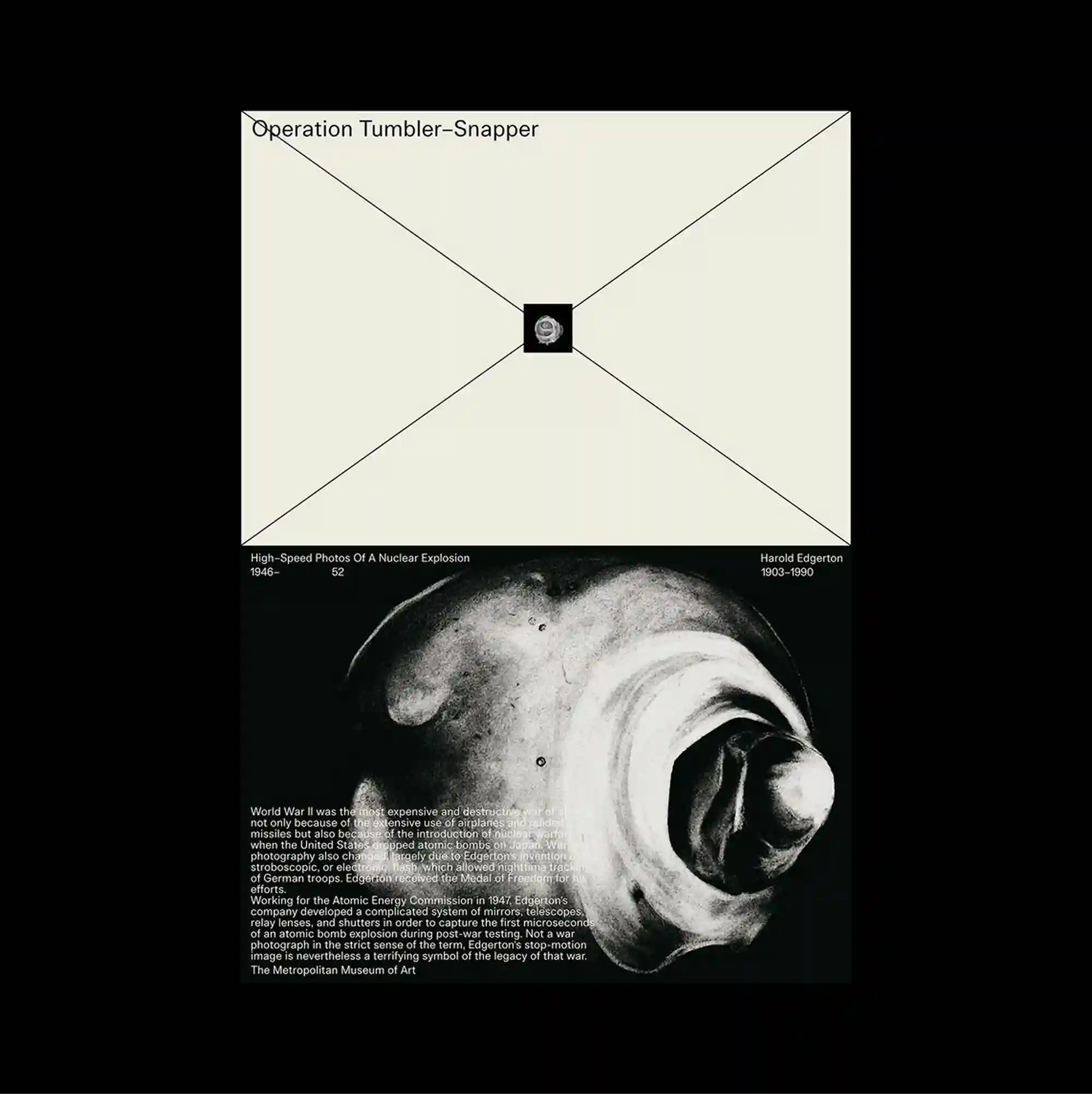
The surface is built from stacked rectangular panels of different sizes, producing a clear vertical rhythm through repeated blocks and abrupt transitions. Restrained serif typography is used at a relatively small scale, allowing generous spacing and subtle alignment shifts to define the hierarchy. A pale upper panel is crossed by diagonal construction lines that converge on a tiny central square, while the lower section contains a large grayscale shell-like photograph and a compact text block. The contrast between image fragments and restrained type creates a cinematic pacing, with the eye moving between isolated moments rather than a continuous field.
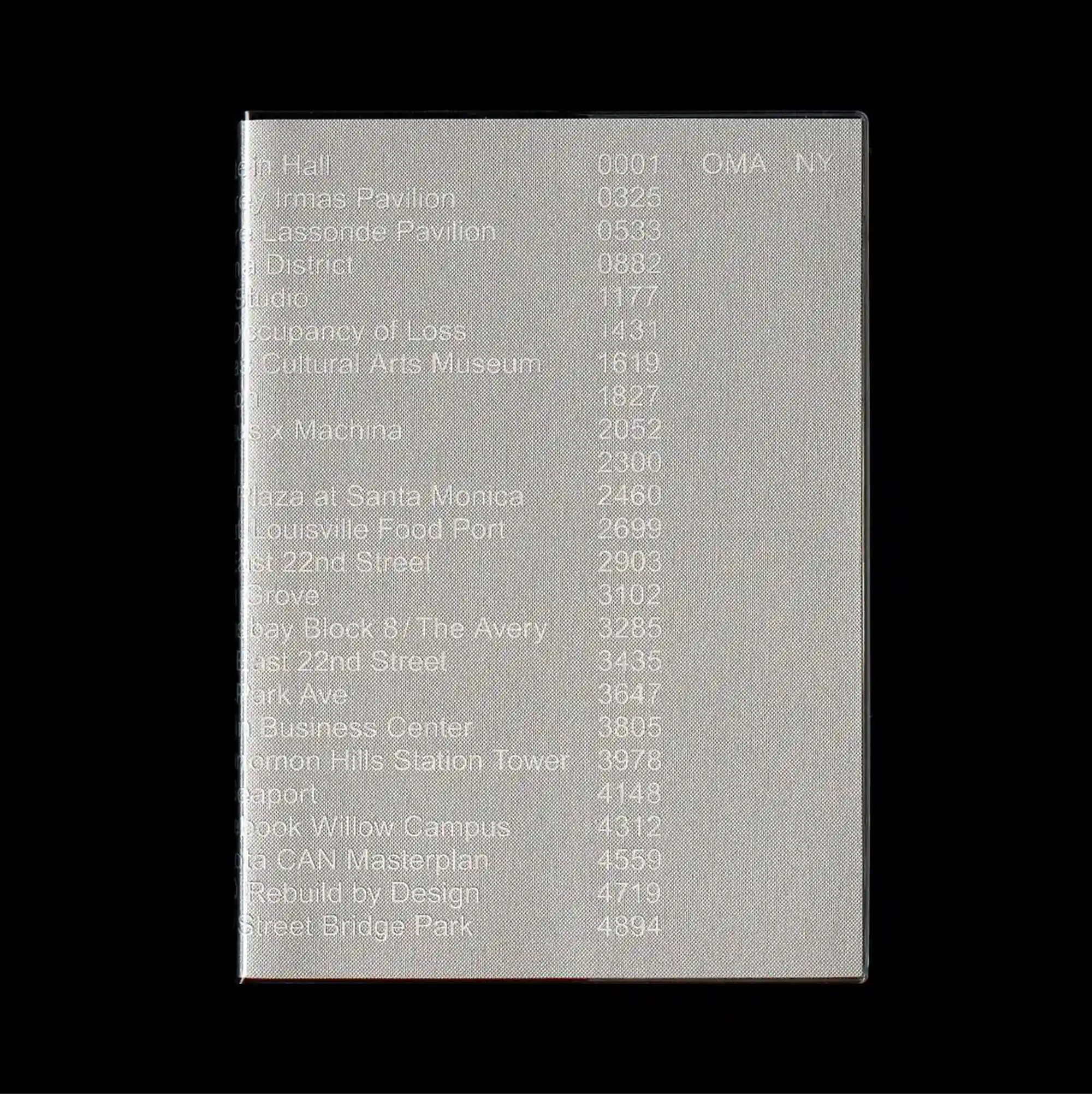
Typography occupies most of the page and functions as the primary image, with letterforms treated as large spatial masses rather than only carriers of information. Monospaced and data-like typography is arranged in repeated rows and columns, giving the text the character of measurements, indexes, or coded information. A long list of names and numbers is printed over a softly blurred gray surface, with uneven tonal patches and low-contrast texture making the data appear partially embedded in the material. Soft tonal transitions and selective color accents create an atmospheric surface where texture and spacing carry as much weight as typography.
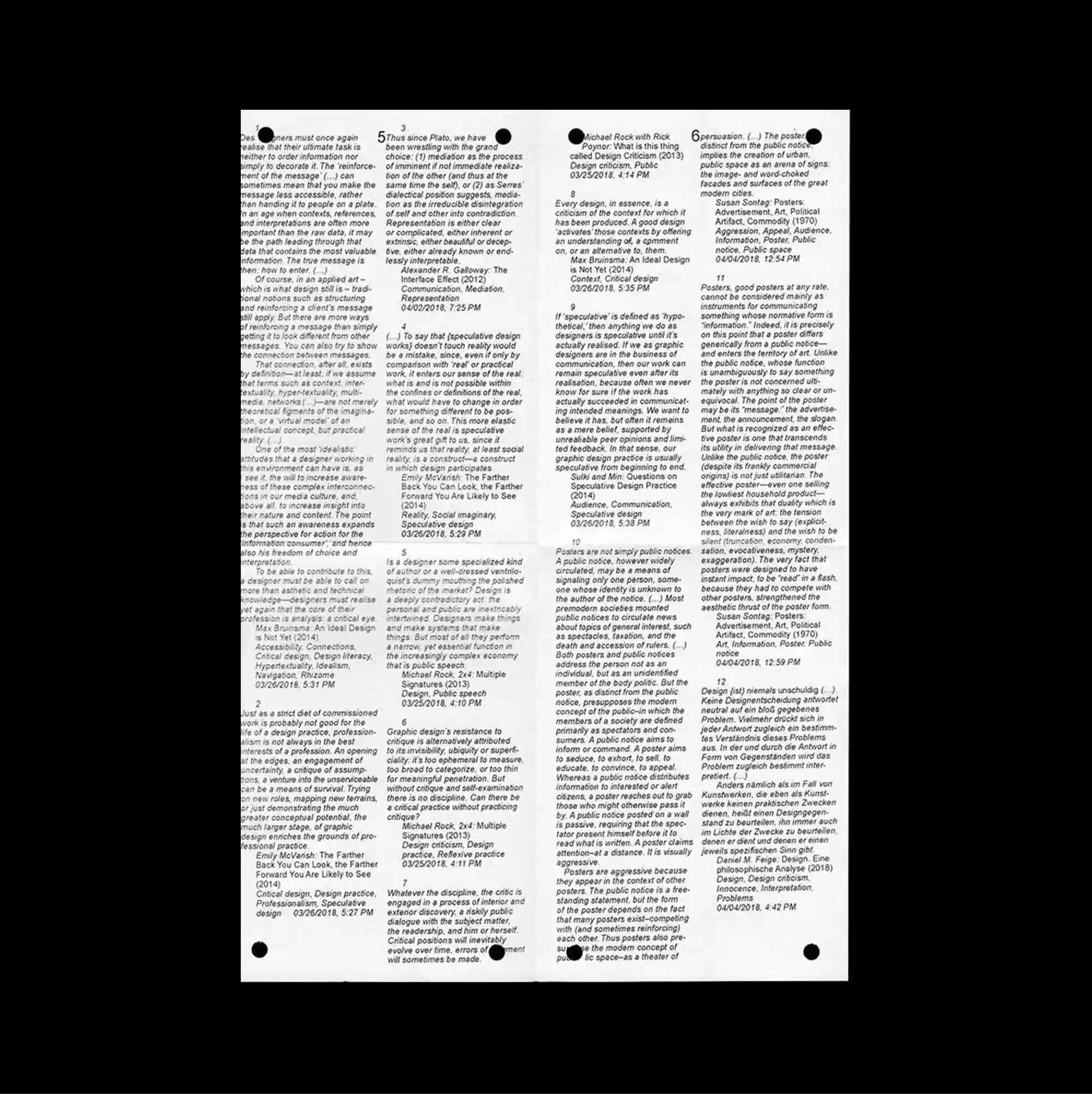
The entire surface is treated as a dense information field, with numerous small units packed closely enough to form an almost continuous visual texture. Narrow columns of small sans-serif type establish a controlled rhythm, while occasional larger words interrupt the grid and create focal points. Four narrow columns of tightly set text are divided by thin rules and dotted markers, giving the page the appearance of a dense newspaper or reference sheet. The careful sequencing of headings, captions, and images gives the piece the discipline of a publication page while retaining the impact of a poster.
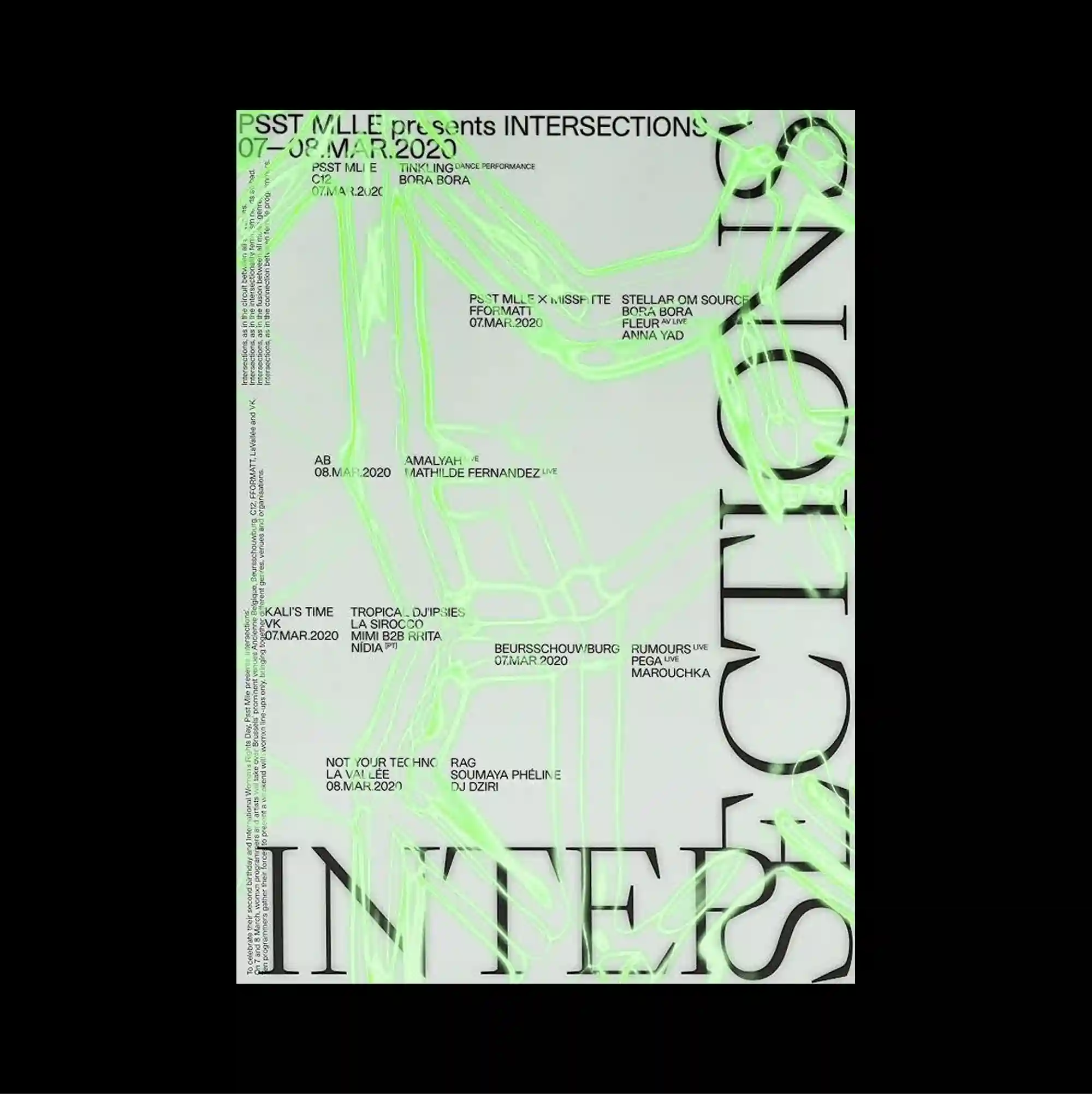
An asymmetrical arrangement is anchored by one oversized geometric or typographic form, while smaller supporting elements are pushed toward the edges. Thin outlined lettering and delicate strokes keep the typography visually light, even when the letterforms extend to a large scale. Pale green contour lines and small coordinate-like labels spread across the sheet, while huge outlined letters run vertically along the sides and extend beyond the frame. The result feels analytical and technical, using repetition and precise spacing to turn information into a structured visual system.
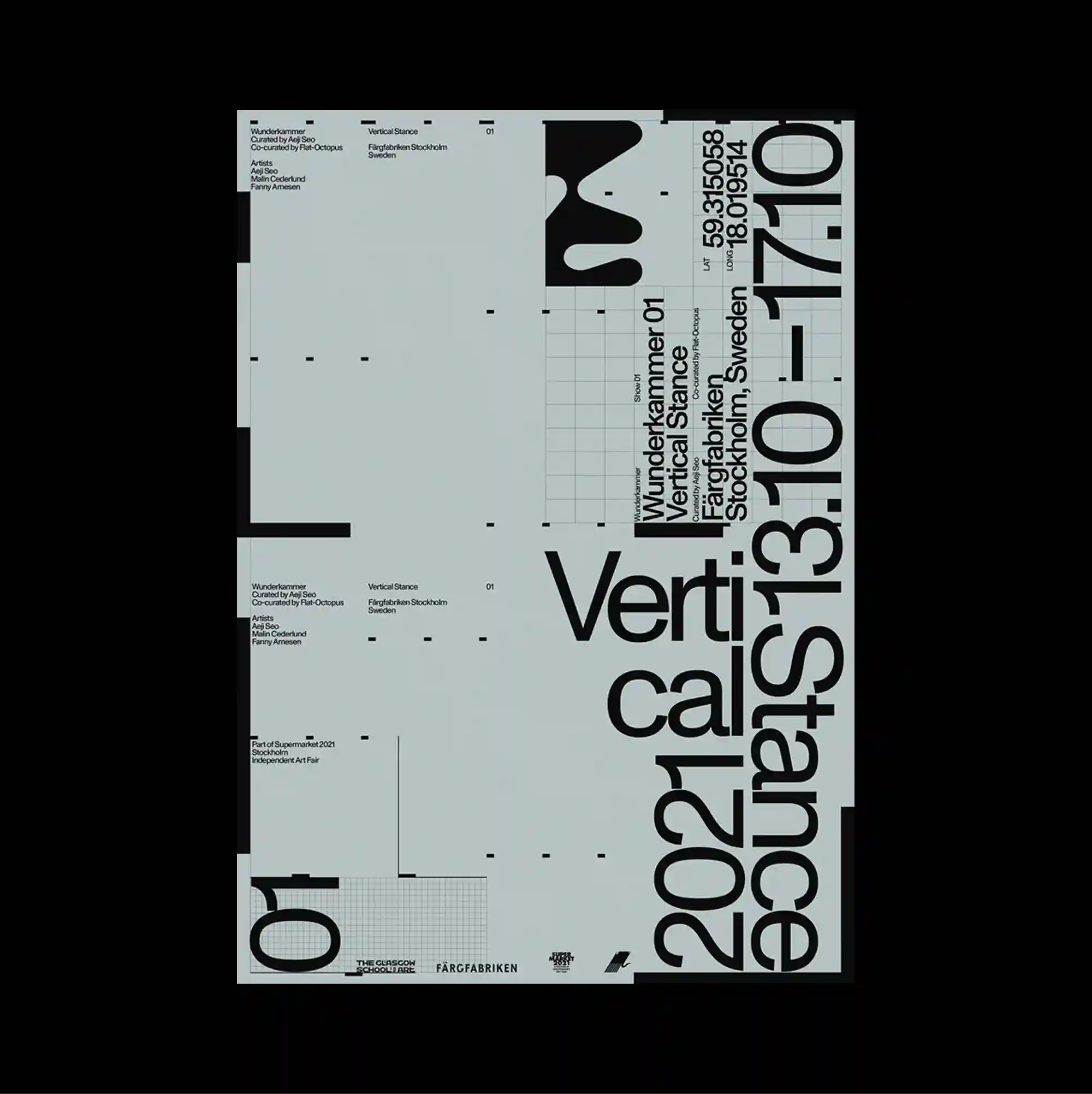
An asymmetrical arrangement is anchored by one oversized geometric or typographic form, while smaller supporting elements are pushed toward the edges. Text is tightly aligned to grids, rules, and modular divisions, reinforcing the sense of a carefully engineered information structure. A pale technical grid is overrun by huge rotated black words along the right and lower edges, while small charts, dots, and aligned captions remain embedded in the quieter central area. Precise alignment and dense secondary information give the design a highly functional appearance while preserving a distinctive graphic hierarchy.
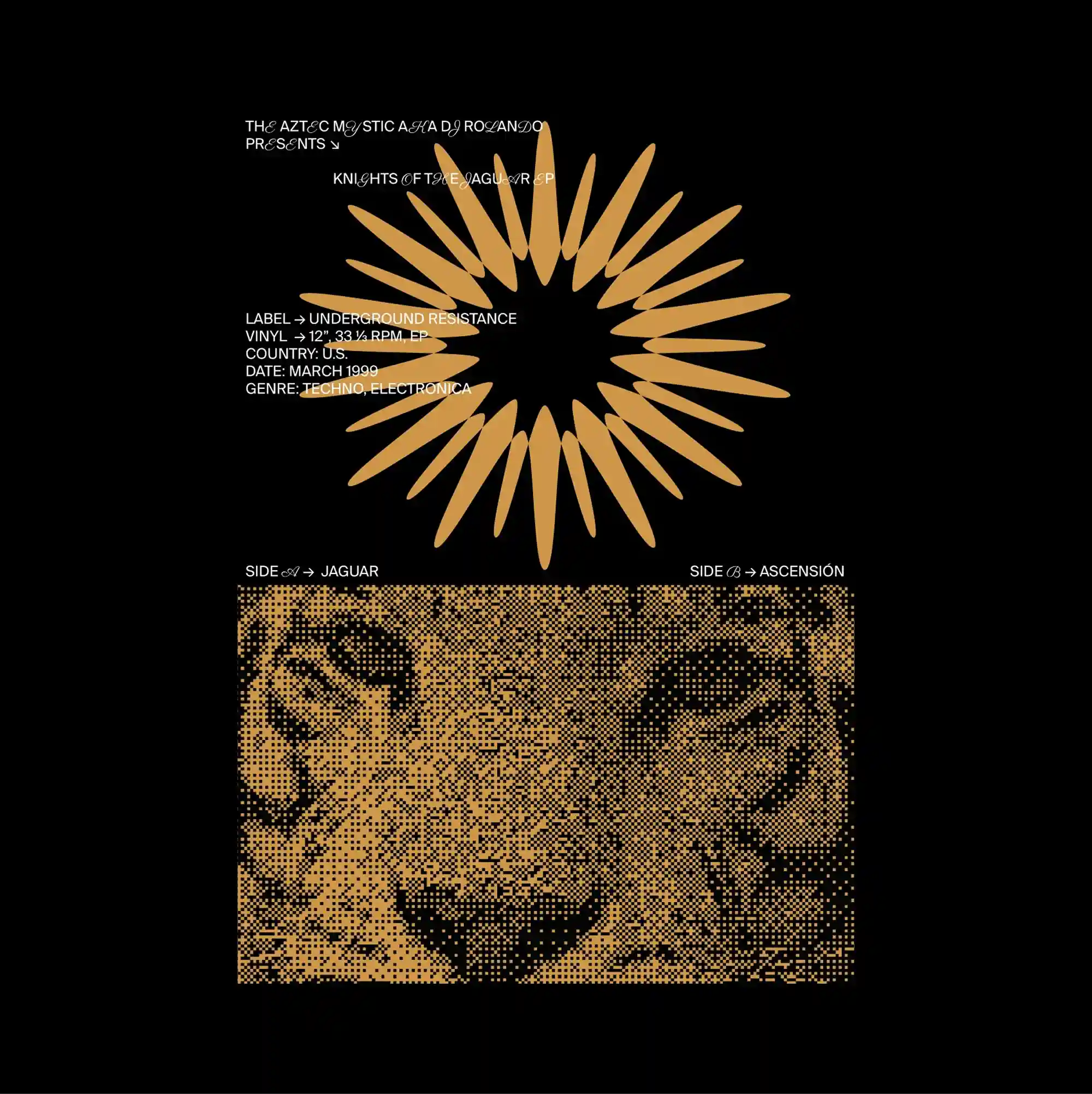
The surface is built from stacked rectangular panels of different sizes, producing a clear vertical rhythm through repeated blocks and abrupt transitions. Oversized display lettering is paired with dense micro-typography, creating an extreme scale contrast between headline forms and secondary information. A gold radial burst opens across the upper section while a heavily pixelated gold-toned animal image fills a rectangular panel below, both held within a dark, highly contrasted structure. Large forms and compressed supporting information create a monumental hierarchy that feels assertive even within a tightly organized layout.
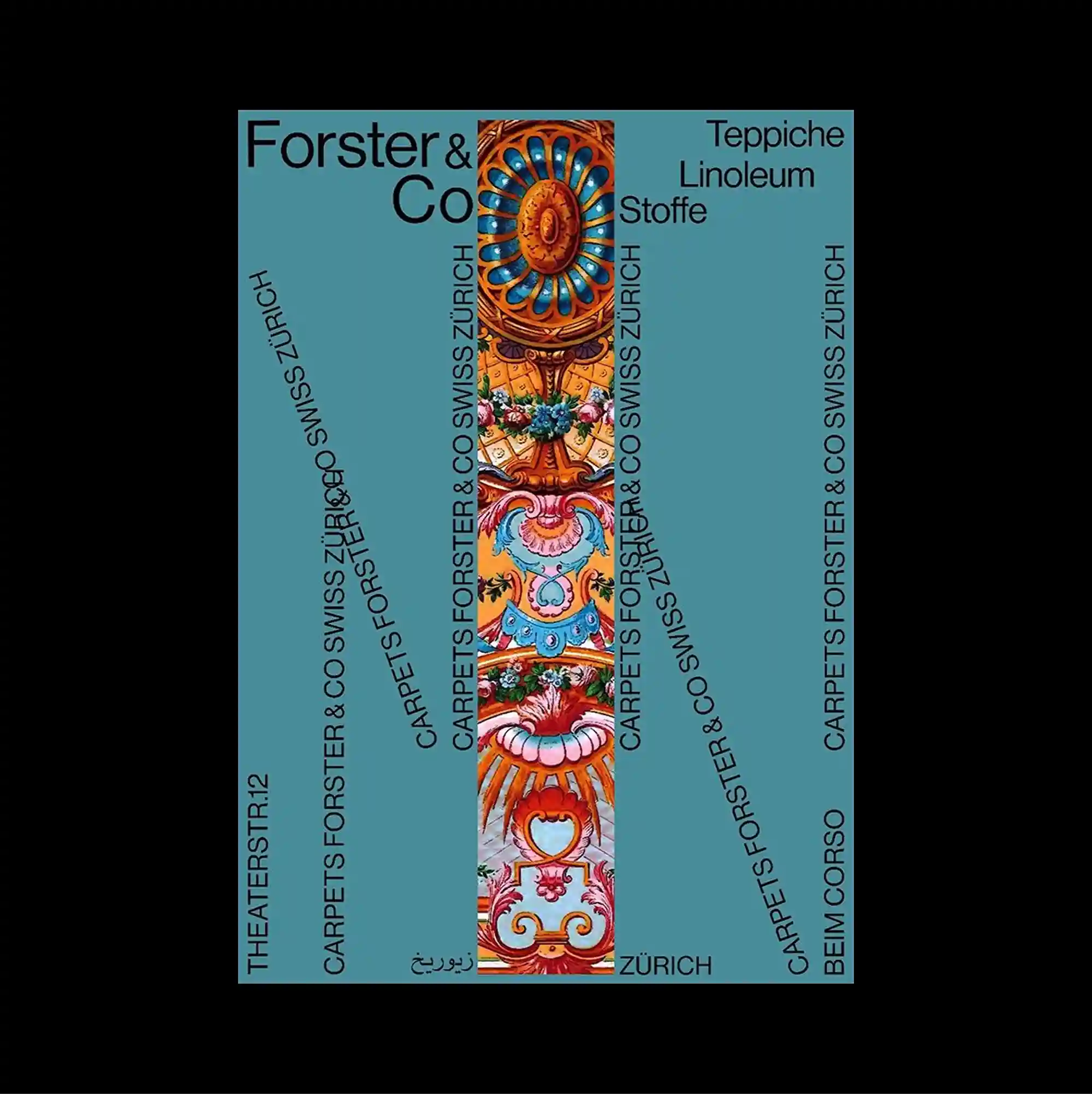
A centered composition leaves a substantial amount of open space around the main elements, allowing a small cluster of imagery and type to carry most of the visual weight. Repeated words and characters accumulate into a patterned surface, allowing typography to function simultaneously as information and texture. A tall ornate artifact photograph occupies the center of a muted blue field, wrapped by repeated vertical wording and a few large black circular letterforms. Large forms and compressed supporting information create a monumental hierarchy that feels assertive even within a tightly organized layout.
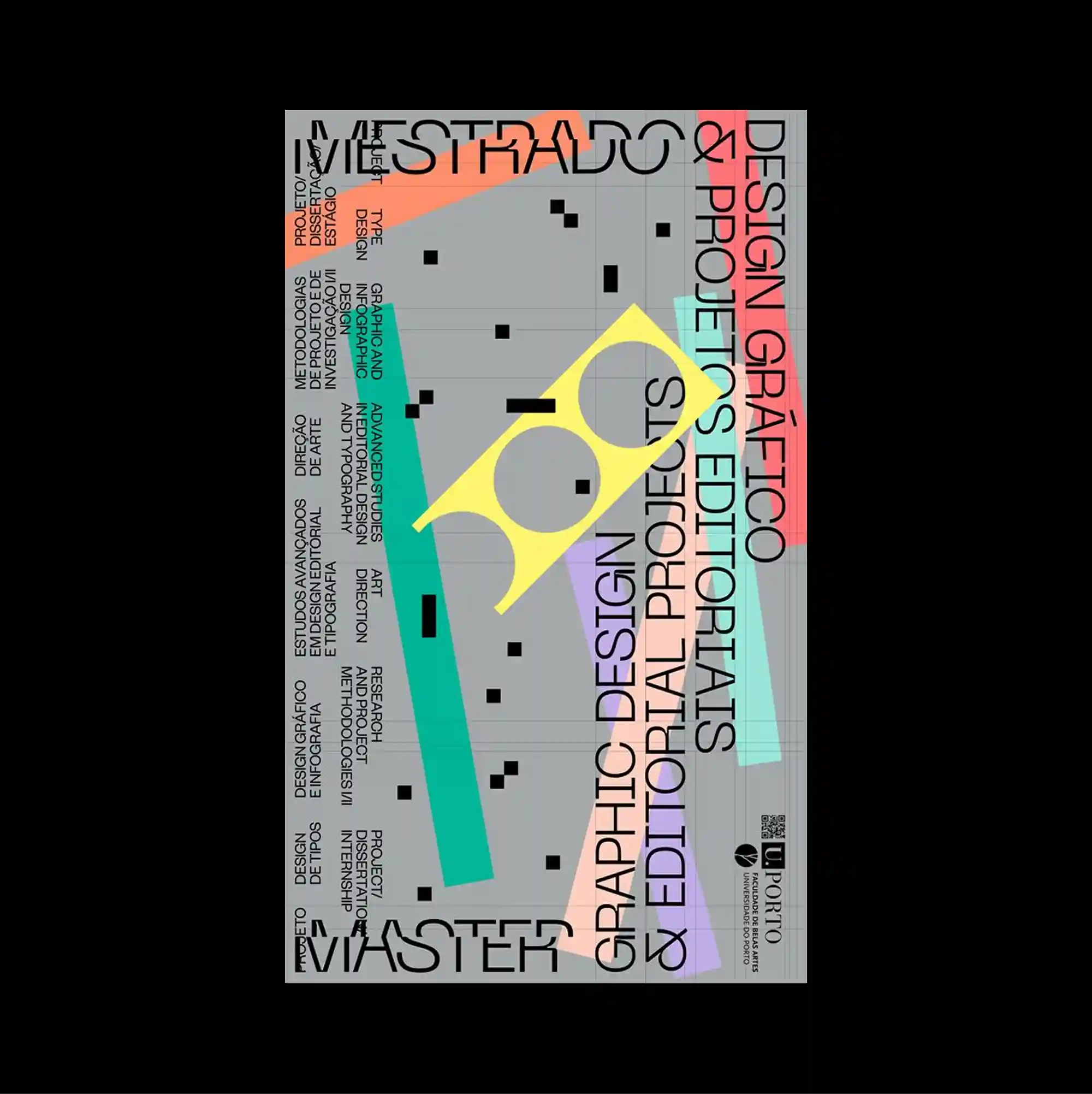
Diagonal and rotated elements interrupt the normal reading direction, turning the page into a dynamic field of crossing axes and displaced blocks. Different scripts, orientations, and typographic weights are mixed freely, producing a layered reading experience with no single dominant direction. Rotated words run along the perimeter while teal and yellow geometric shapes cut through the gray field, producing a composition built from crossing directions and offset blocks. Unexpected alignments, playful shapes, and uneven spacing create a deliberately irregular rhythm that keeps the surface visually active.
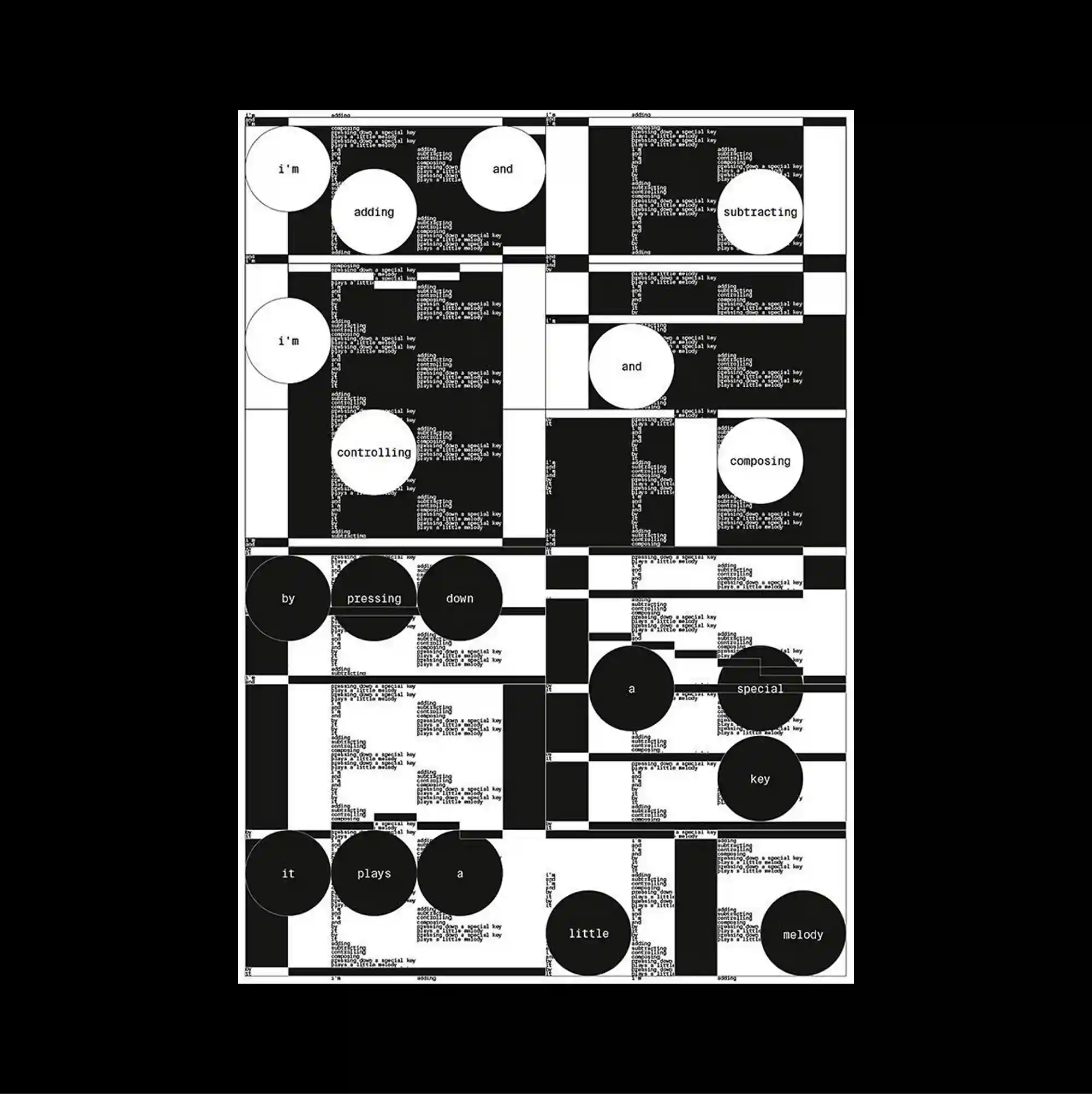
The entire surface is treated as a dense information field, with numerous small units packed closely enough to form an almost continuous visual texture. Monospaced and data-like typography is arranged in repeated rows and columns, giving the text the character of measurements, indexes, or coded information. A strict black-and-white modular grid is punctuated by large white circles and smaller black discs, with compact paragraphs and labels filling the rectangular cells between them. Precise alignment and dense secondary information give the design a highly functional appearance while preserving a distinctive graphic hierarchy.
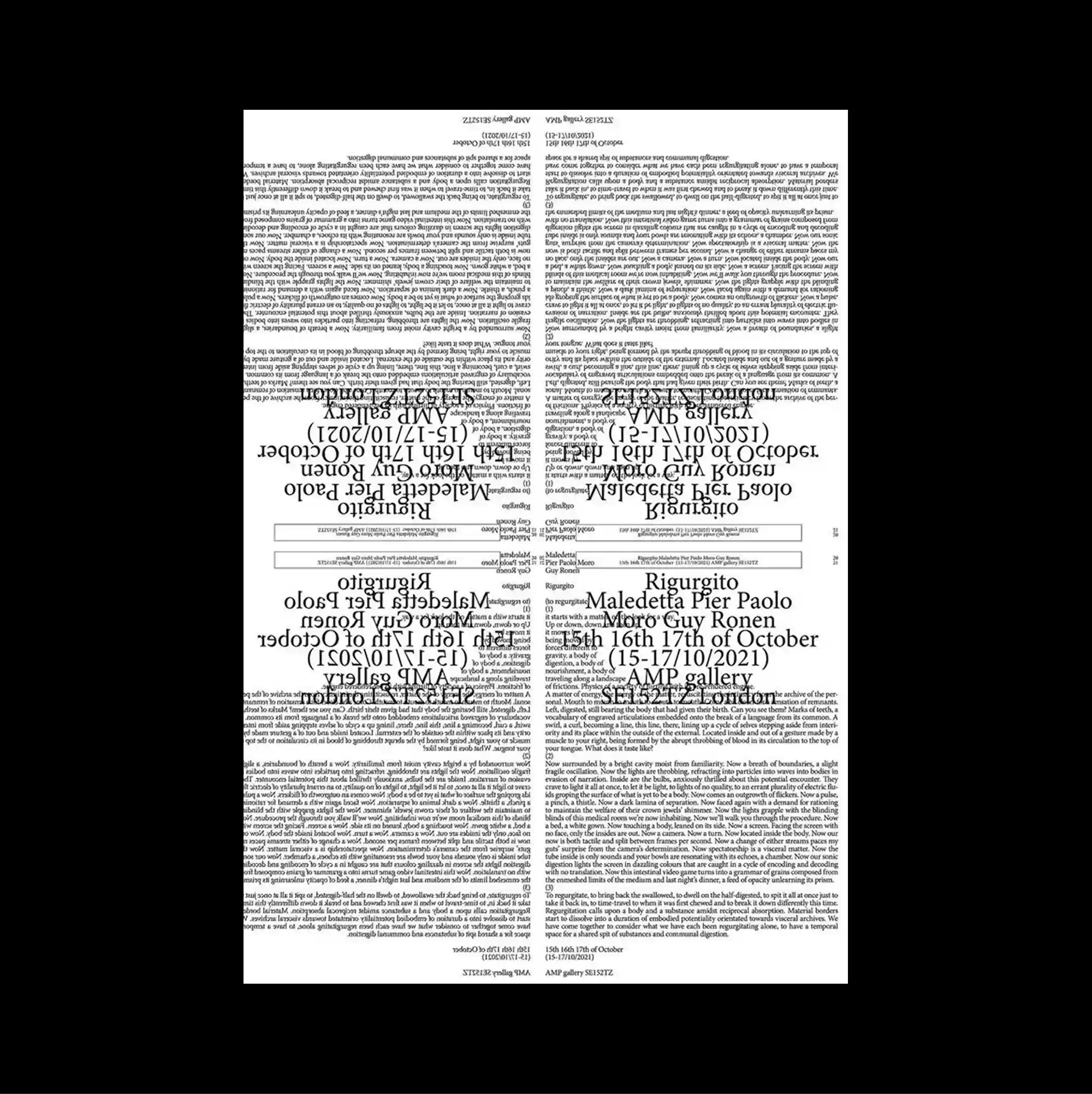
The entire surface is treated as a dense information field, with numerous small units packed closely enough to form an almost continuous visual texture. Letterforms are stretched, distorted, cropped, or rotated until the typography begins to operate as an abstract graphic material. Dense columns of serif text appear mirrored and inverted across the page, meeting around a narrow central gap and producing a disorienting but highly symmetrical typographic field. Large forms and compressed supporting information create a monumental hierarchy that feels assertive even within a tightly organized layout.
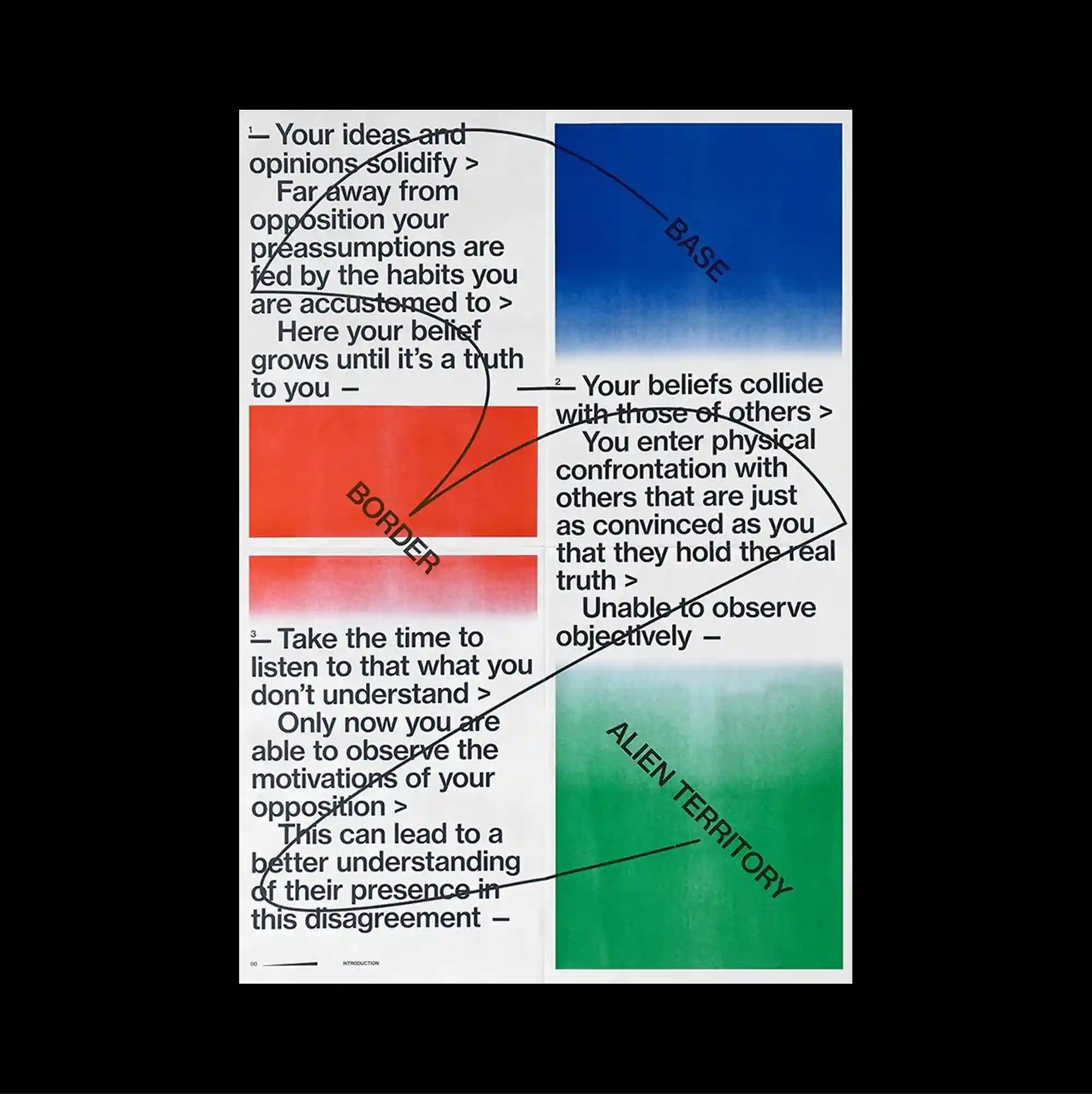
The surface is built from stacked rectangular panels of different sizes, producing a clear vertical rhythm through repeated blocks and abrupt transitions. Typography is integrated with diagrams, coordinates, and graphic notation, so textual information and visual systems become difficult to separate. Three stacked gradient rectangles in blue, red, and green are crossed by large black text, directional arrows, and smaller explanatory lines that connect the blocks conceptually. The result feels analytical and technical, using repetition and precise spacing to turn information into a structured visual system.
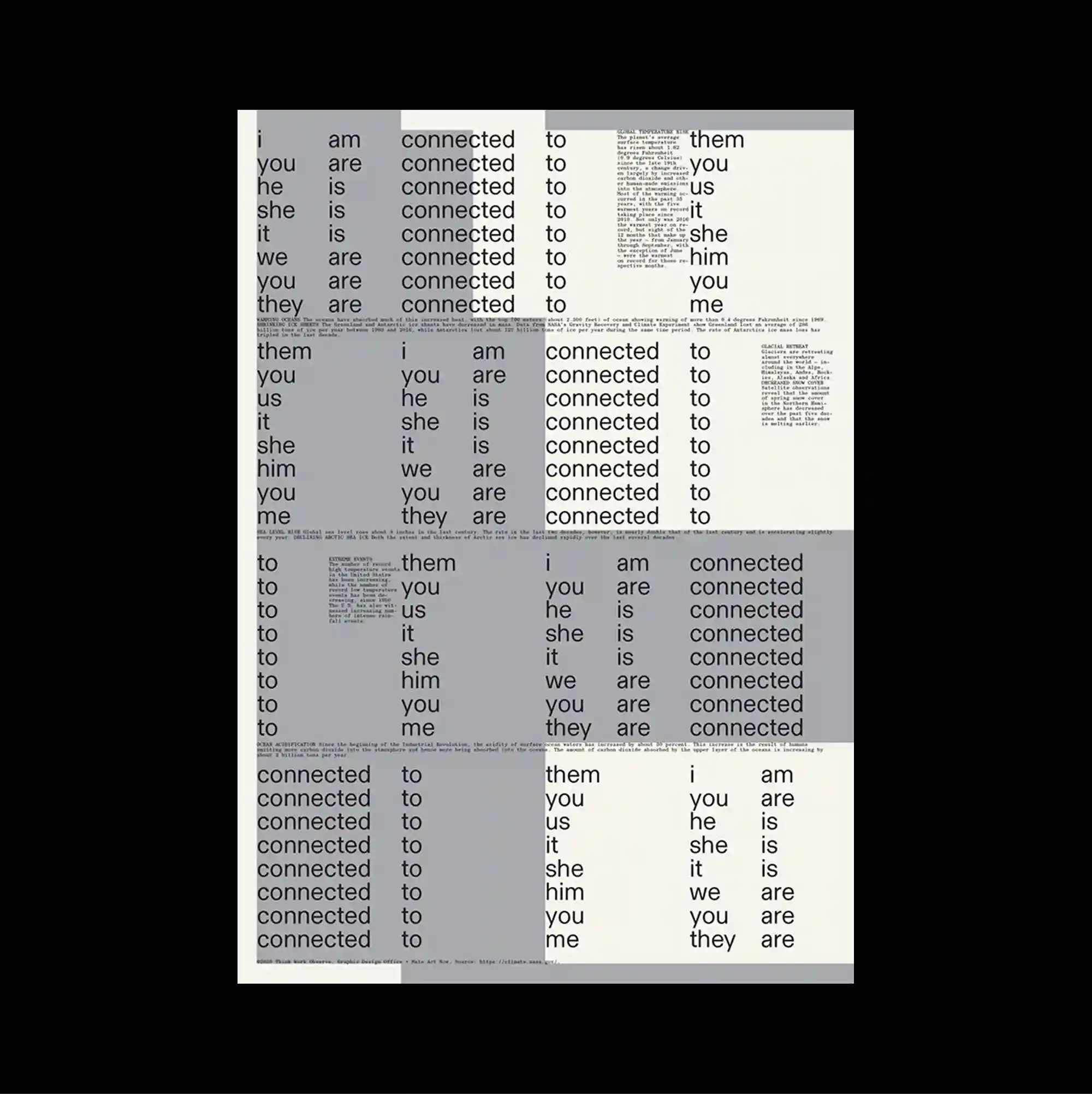
The entire surface is treated as a dense information field, with numerous small units packed closely enough to form an almost continuous visual texture. Repeated words and characters accumulate into a patterned surface, allowing typography to function simultaneously as information and texture. Repeated short phrases are arranged in a checkerboard of pale gray and white cells, with each block changing line breaks and alignment while maintaining the same limited vocabulary. The repeated structures make the poster read like a diagram or index, with visual meaning emerging from accumulation rather than a single focal image.
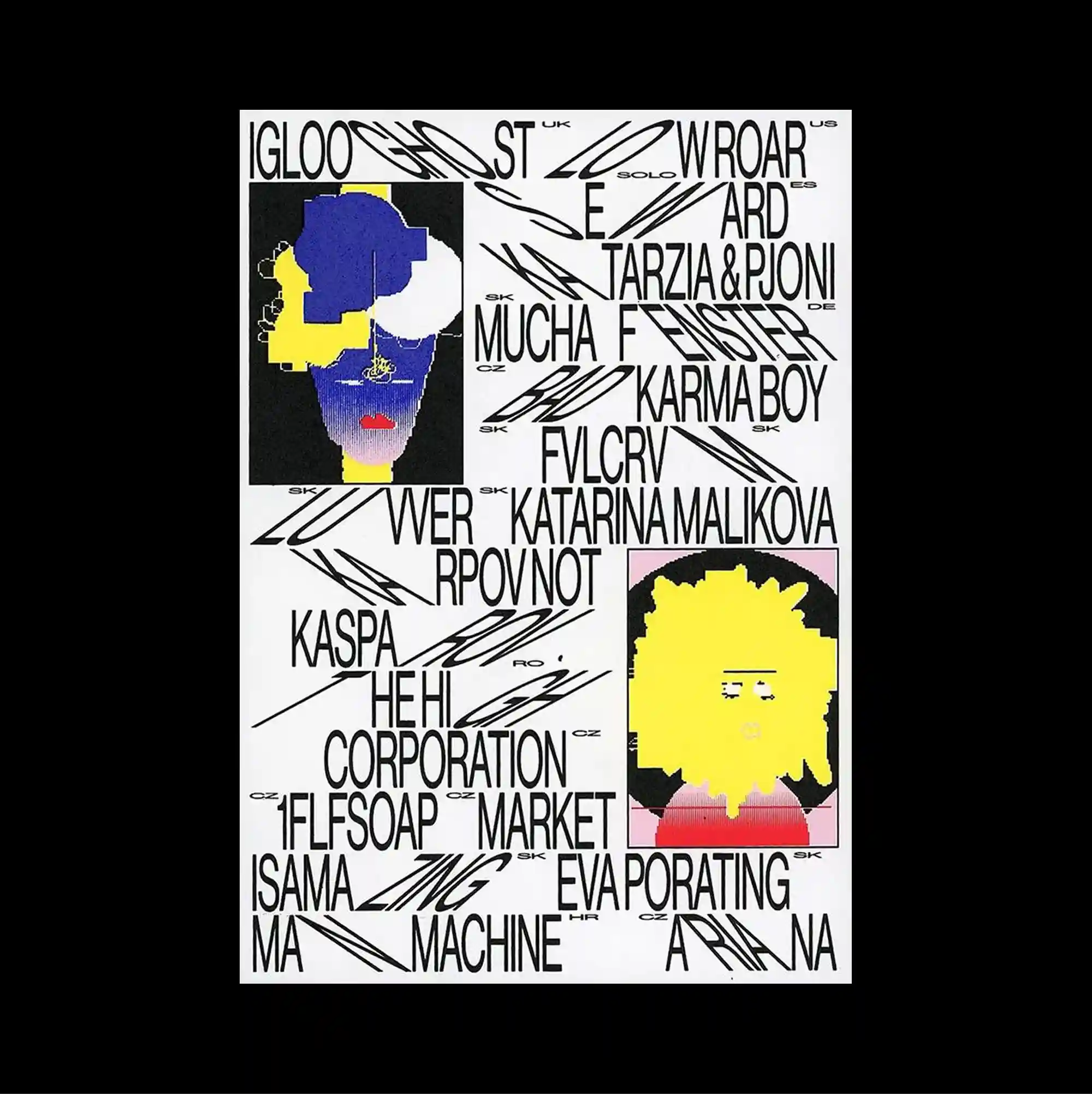
The entire surface is treated as a dense information field, with numerous small units packed closely enough to form an almost continuous visual texture. Different scripts, orientations, and typographic weights are mixed freely, producing a layered reading experience with no single dominant direction. Thin hand-drawn arrows and energetic black lines weave through tightly packed names, while blocky blue and yellow character-like figures punctuate the busy white surface. Unexpected alignments, playful shapes, and uneven spacing create a deliberately irregular rhythm that keeps the surface visually active.
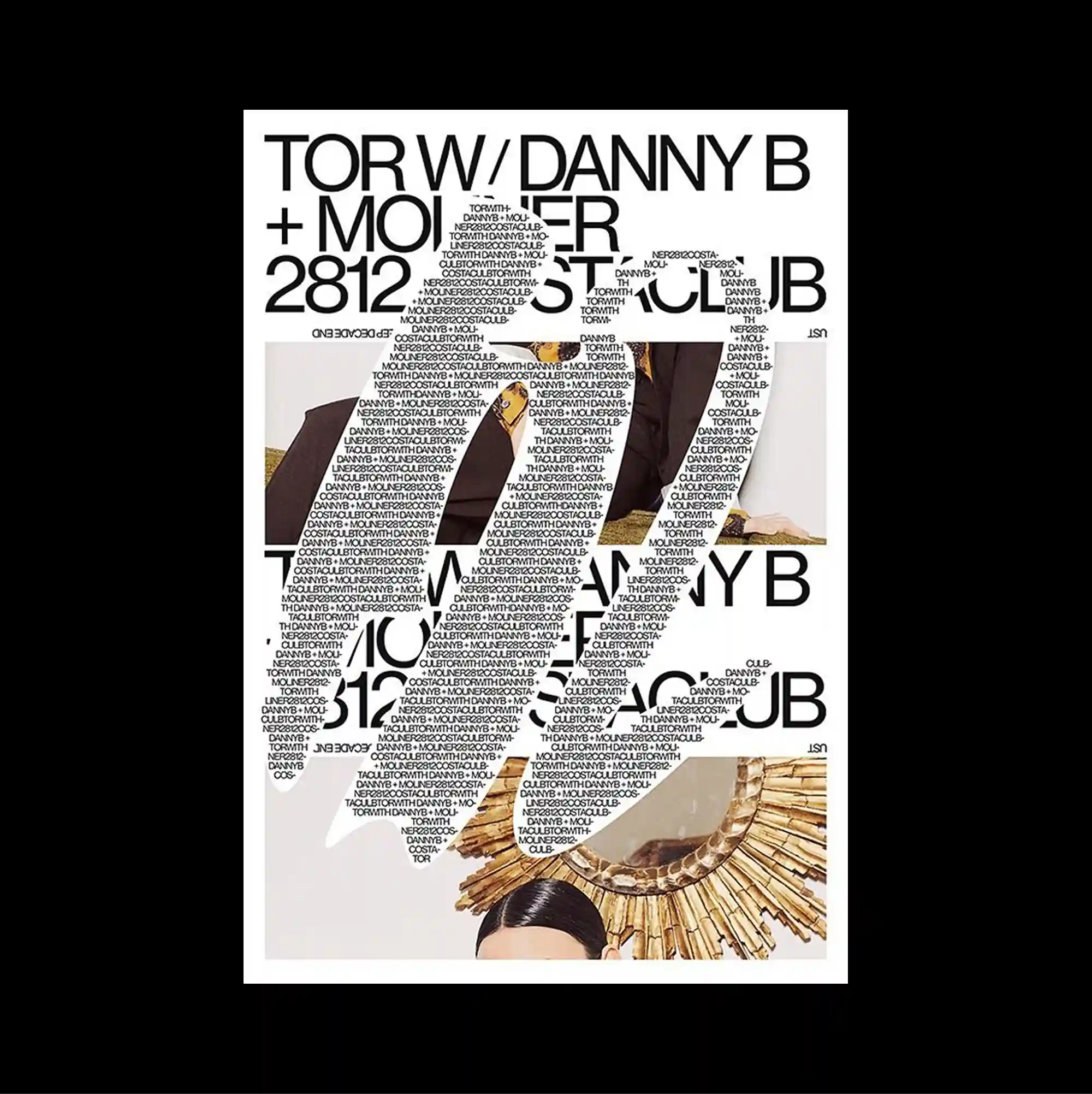
Several overlapping panels and cropped fragments are layered across the page, creating an assembled composition in which foreground and background continuously exchange roles. Oversized display lettering is paired with dense micro-typography, creating an extreme scale contrast between headline forms and secondary information. Dense black text is interrupted by oversized slanted numerals and cropped grayscale object imagery, creating an aggressive overlap where reading and image recognition compete. The compressed layering and hard contrasts produce a dense industrial character, with information behaving almost like a physical surface.
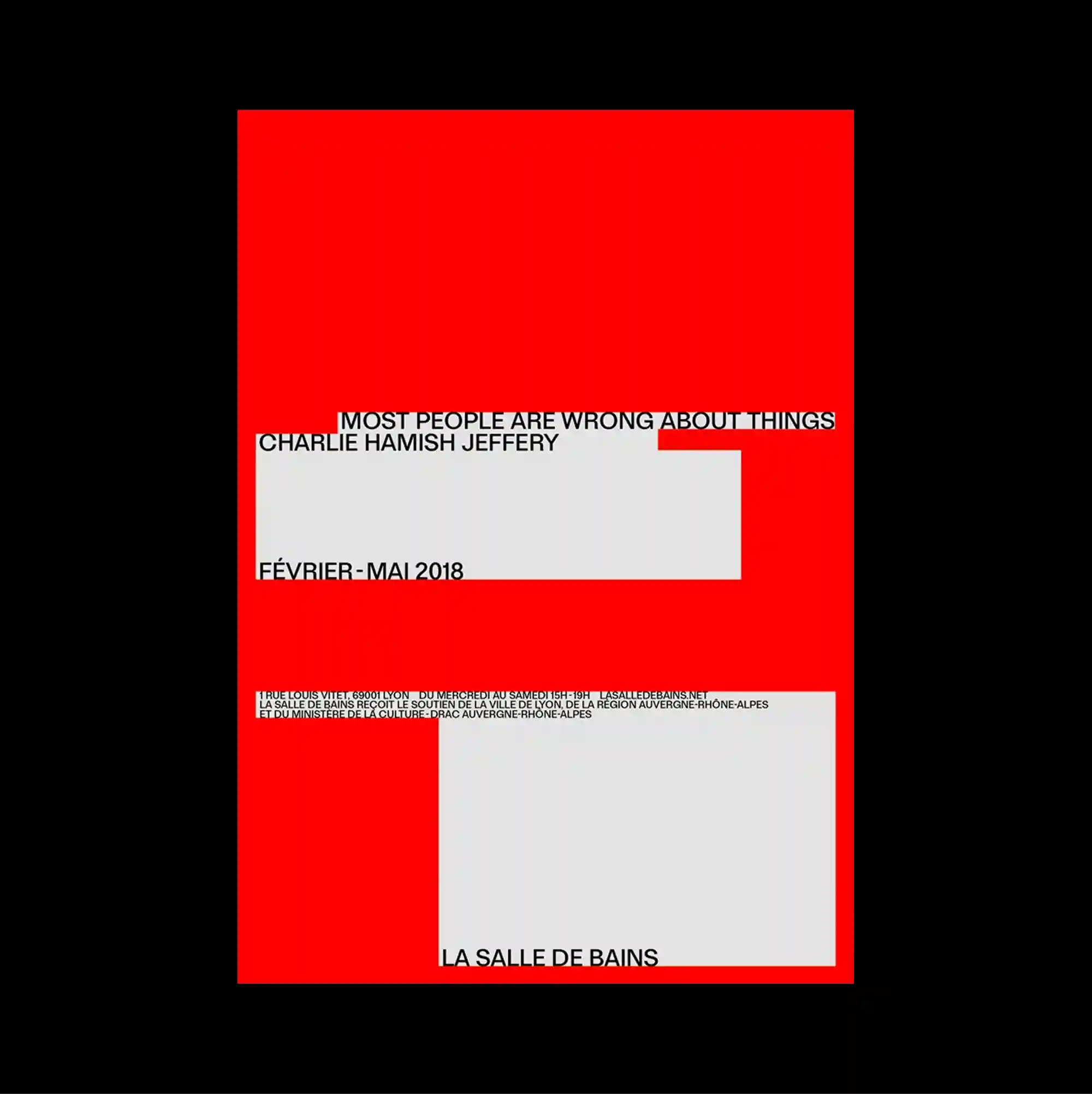
The design is divided into strongly contrasting color and image zones, using large rectangular fields to establish a clear structural hierarchy. Narrow columns of small sans-serif type establish a controlled rhythm, while occasional larger words interrupt the grid and create focal points. A saturated red field holds two pale rectangular panels and several thin bands of small text, creating a severe composition based almost entirely on flat color and proportion. Strong scale contrast and simplified spatial relationships make the composition immediately readable while preserving a distinctive experimental edge.
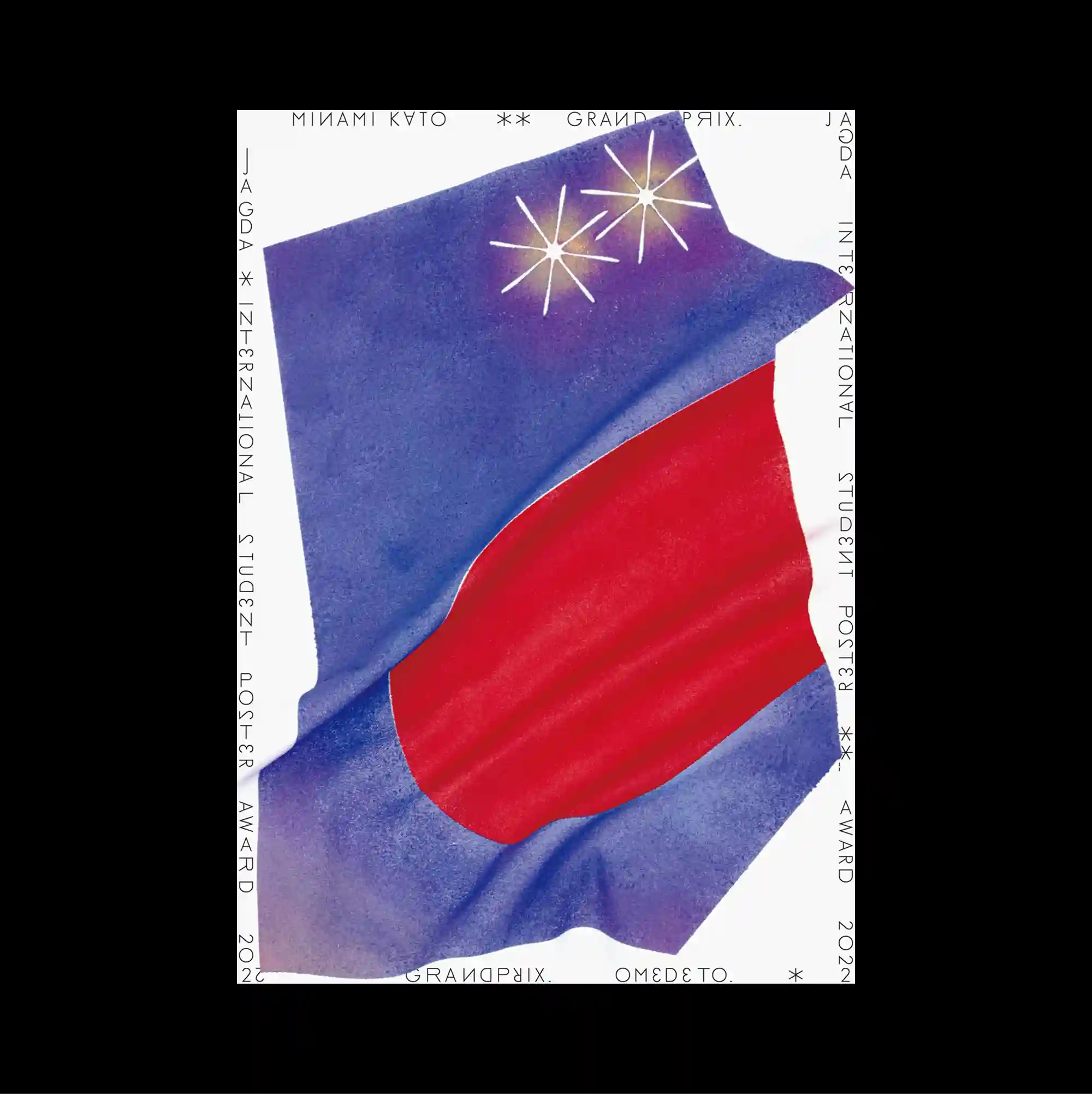
A centered composition leaves a substantial amount of open space around the main elements, allowing a small cluster of imagery and type to carry most of the visual weight. Thin outlined lettering and delicate strokes keep the typography visually light, even when the letterforms extend to a large scale. A large folded-looking blue and red abstract shape occupies the center, surrounded by a thin typographic border and a few star-like highlights near the upper area. Soft tonal transitions and selective color accents create an atmospheric surface where texture and spacing carry as much weight as typography.
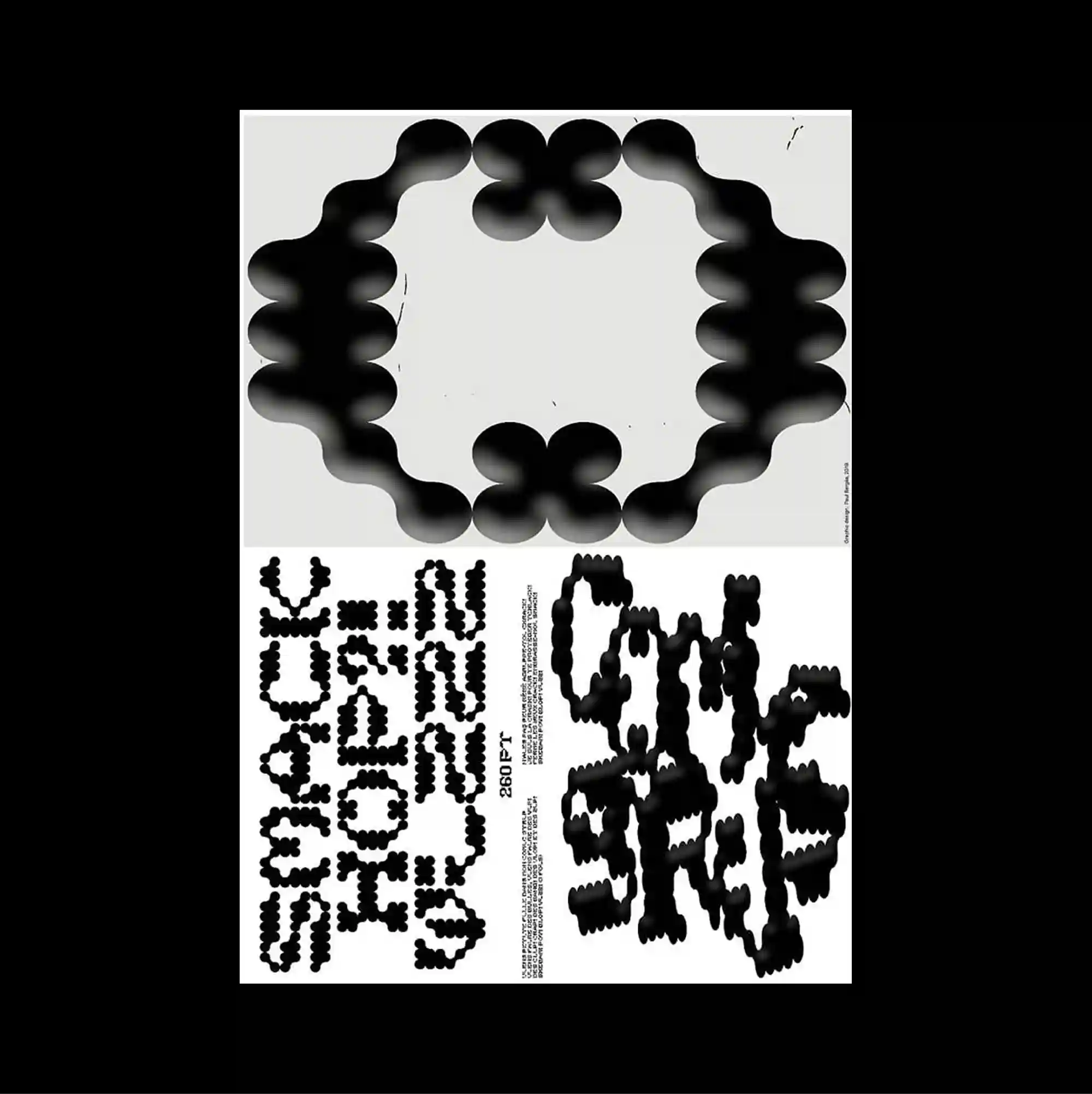
The surface is built from stacked rectangular panels of different sizes, producing a clear vertical rhythm through repeated blocks and abrupt transitions. Letterforms are stretched, distorted, cropped, or rotated until the typography begins to operate as an abstract graphic material. A ring of soft black organic blobs forms an open circular shape in the upper half, while heavily pixelated letterforms gather into two dense blocks below. Unexpected alignments, playful shapes, and uneven spacing create a deliberately irregular rhythm that keeps the surface visually active.
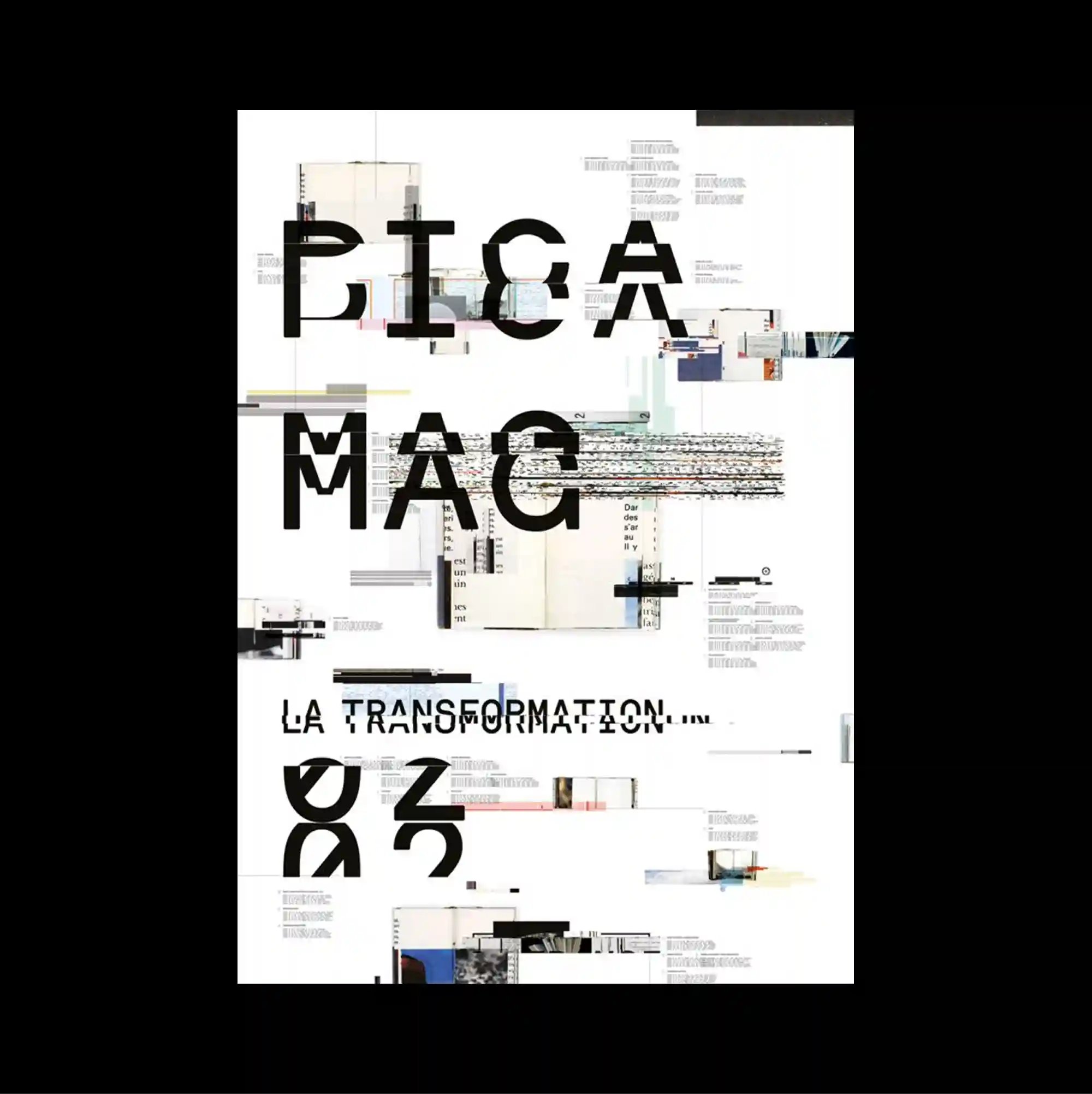
Several overlapping panels and cropped fragments are layered across the page, creating an assembled composition in which foreground and background continuously exchange roles. Oversized display lettering is paired with dense micro-typography, creating an extreme scale contrast between headline forms and secondary information. Large black letter fragments cut across a field of tiny screenshots, lines, and image snippets, producing a layered collision between editorial typography and fragmented digital material. The mixture of irregular fragments, changing scales, and layered surfaces gives the work an experimental collage quality without losing overall balance.
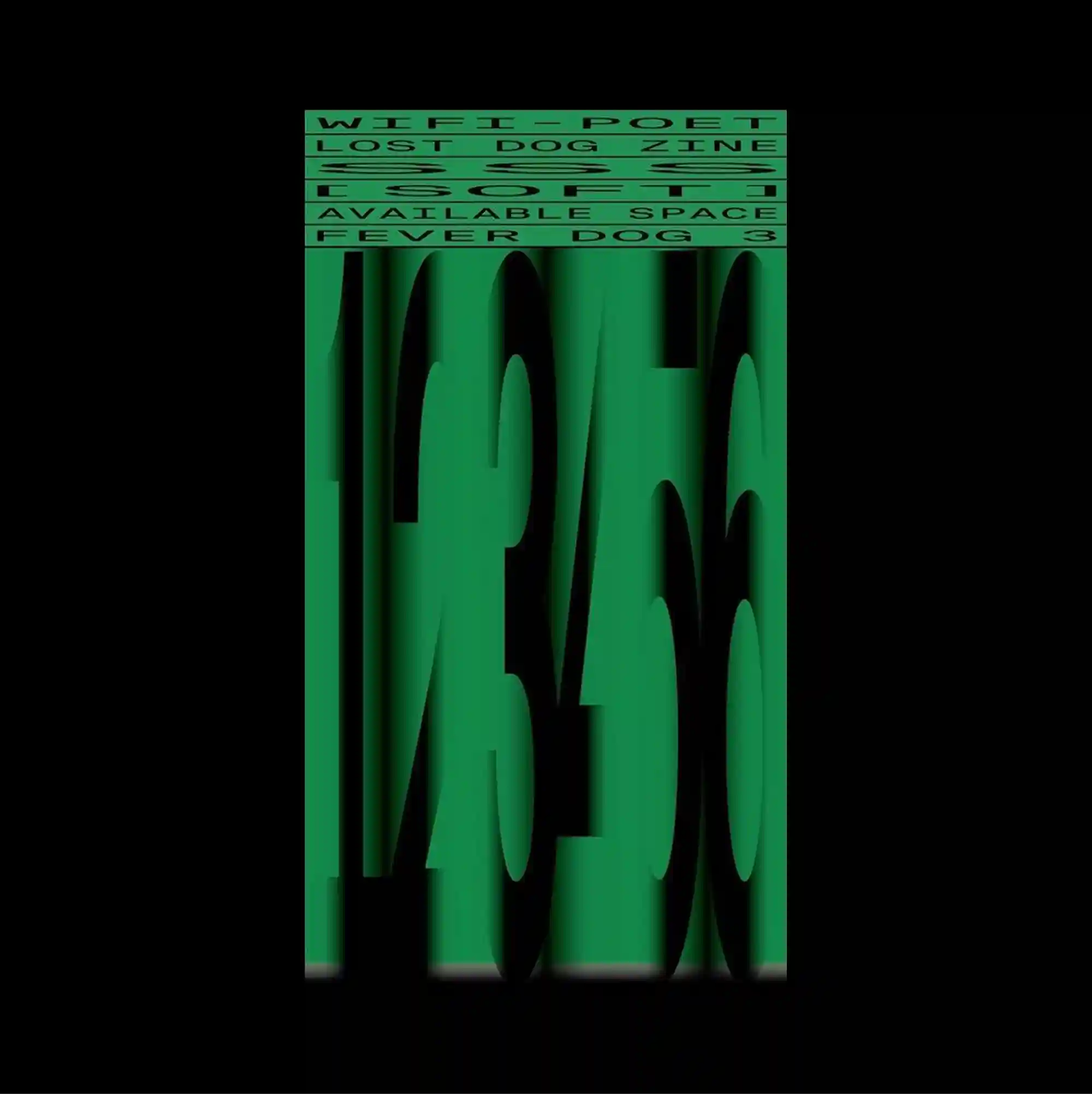
An asymmetrical arrangement is anchored by one oversized geometric or typographic form, while smaller supporting elements are pushed toward the edges. Letterforms are stretched, distorted, cropped, or rotated until the typography begins to operate as an abstract graphic material. Tall black extruded forms stretch vertically through a dark green field, resembling compressed letterforms or shadows, while small horizontal labels sit quietly along the top. The compressed layering and hard contrasts produce a dense industrial character, with information behaving almost like a physical surface.
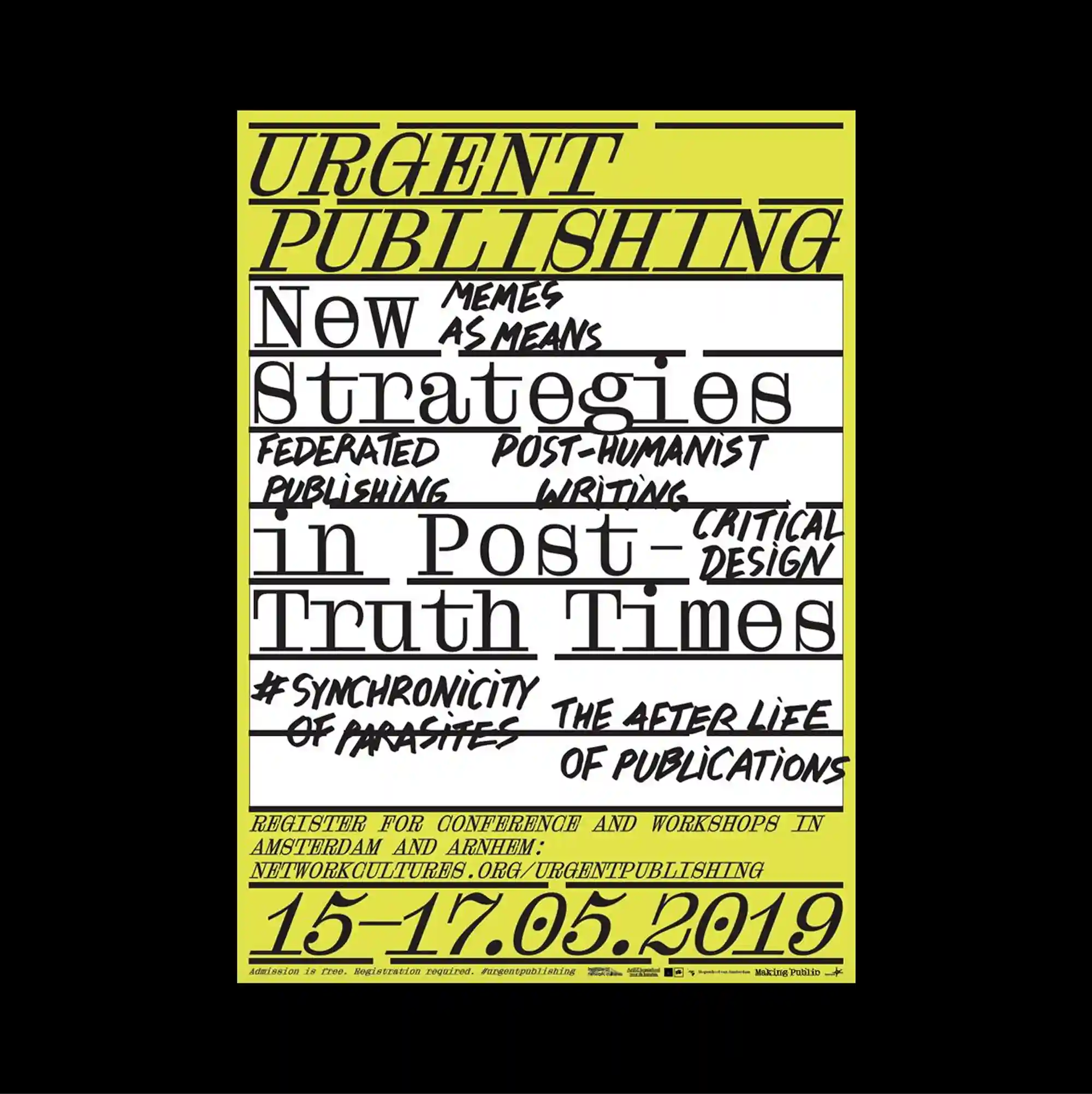
Typography occupies most of the page and functions as the primary image, with letterforms treated as large spatial masses rather than only carriers of information. Handwritten marks and informal annotations are layered over more systematic printed type, creating tension between spontaneous gestures and controlled typography. Handwritten and serif letterforms crowd a fluorescent yellow field, with thick underlines, uneven baselines, and stacked phrases creating an intentionally urgent visual texture. Bold color contrasts and abrupt shifts in scale produce an energetic graphic rhythm that remains legible despite the density of the elements.
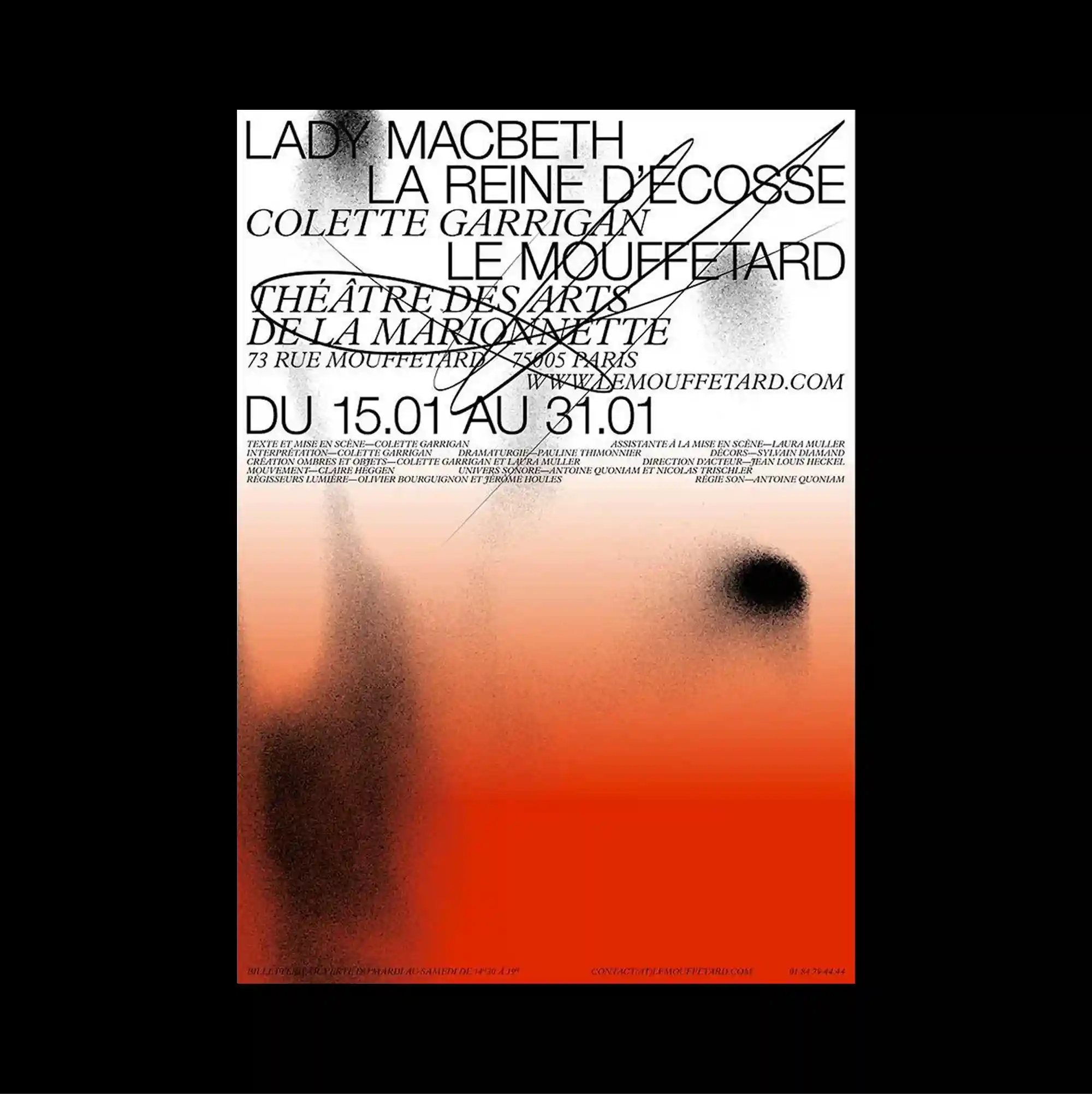
The design is divided into strongly contrasting color and image zones, using large rectangular fields to establish a clear structural hierarchy. Serif and sans-serif styles are mixed with thin rules and compact captions, producing a layered hierarchy through changes in weight, width, and alignment. Dense black serif text is concentrated at the top, while the lower half shifts into a soft orange gradient containing blurred dark silhouettes and one isolated circular spot. Soft tonal transitions and selective color accents create an atmospheric surface where texture and spacing carry as much weight as typography.
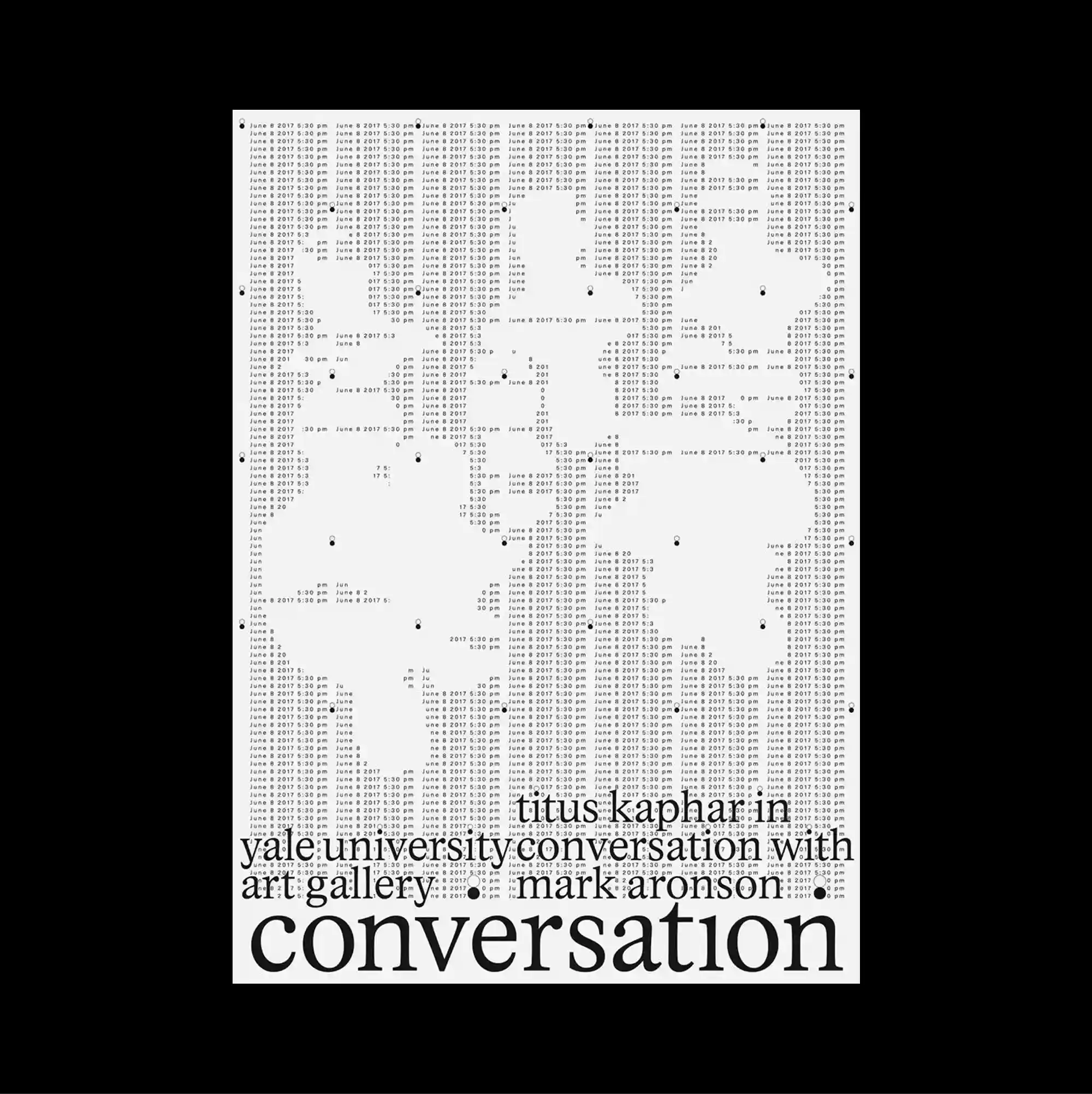
The entire surface is treated as a dense information field, with numerous small units packed closely enough to form an almost continuous visual texture. Monospaced and data-like typography is arranged in repeated rows and columns, giving the text the character of measurements, indexes, or coded information. Tiny typographic marks build a large halftone-like silhouette across the upper and central area, while a much larger serif word anchors the bottom edge with a sharp change of scale. The repeated structures make the poster read like a diagram or index, with visual meaning emerging from accumulation rather than a single focal image.
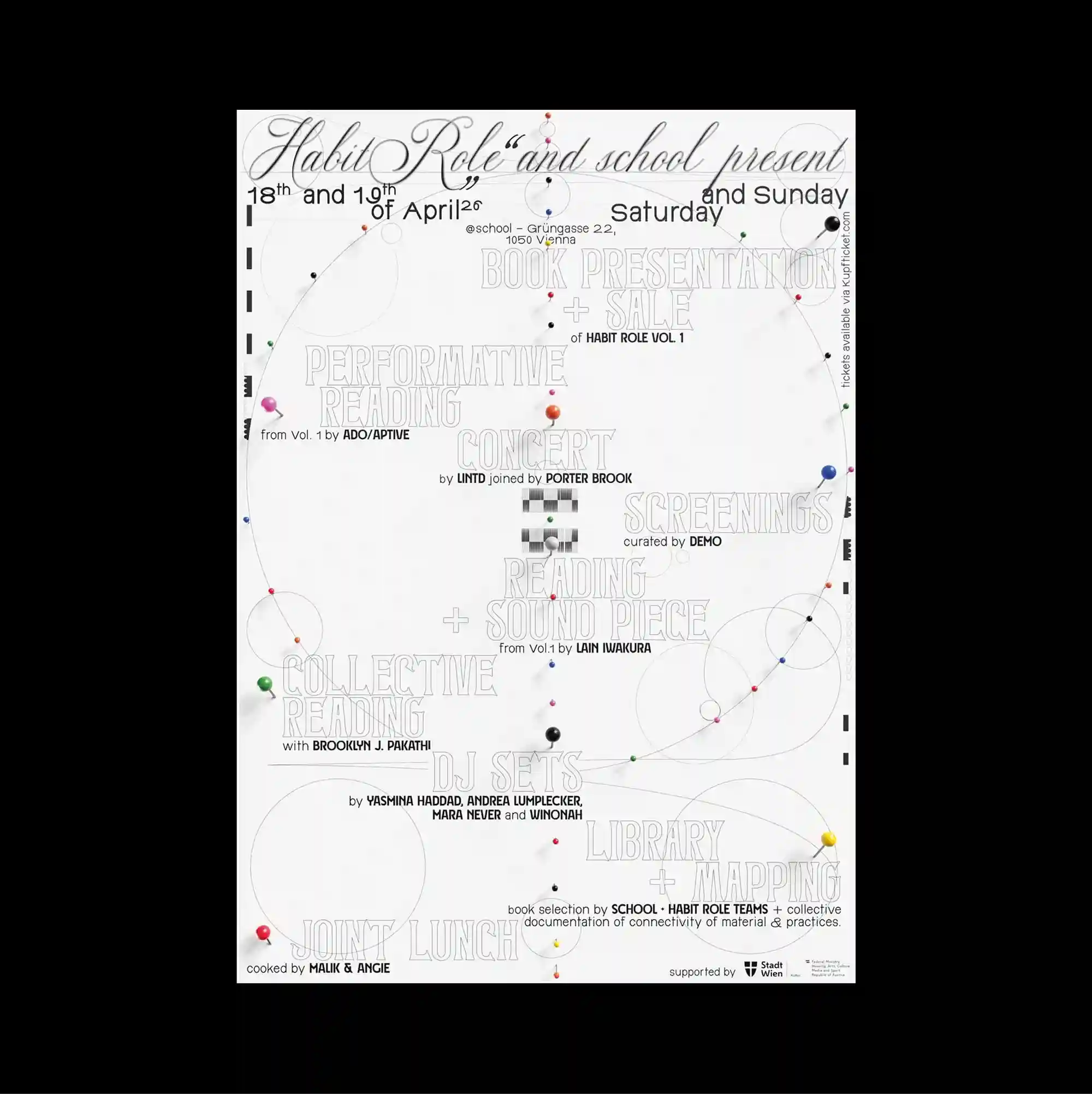
The entire surface is treated as a dense information field, with numerous small units packed closely enough to form an almost continuous visual texture. Typography is integrated with diagrams, coordinates, and graphic notation, so textual information and visual systems become difficult to separate. Faint repeated text covers the page beneath thin curved paths, small colored nodes, and circular diagram fragments, creating a layered network-like structure with a pale overall tone. The repeated structures make the poster read like a diagram or index, with visual meaning emerging from accumulation rather than a single focal image.
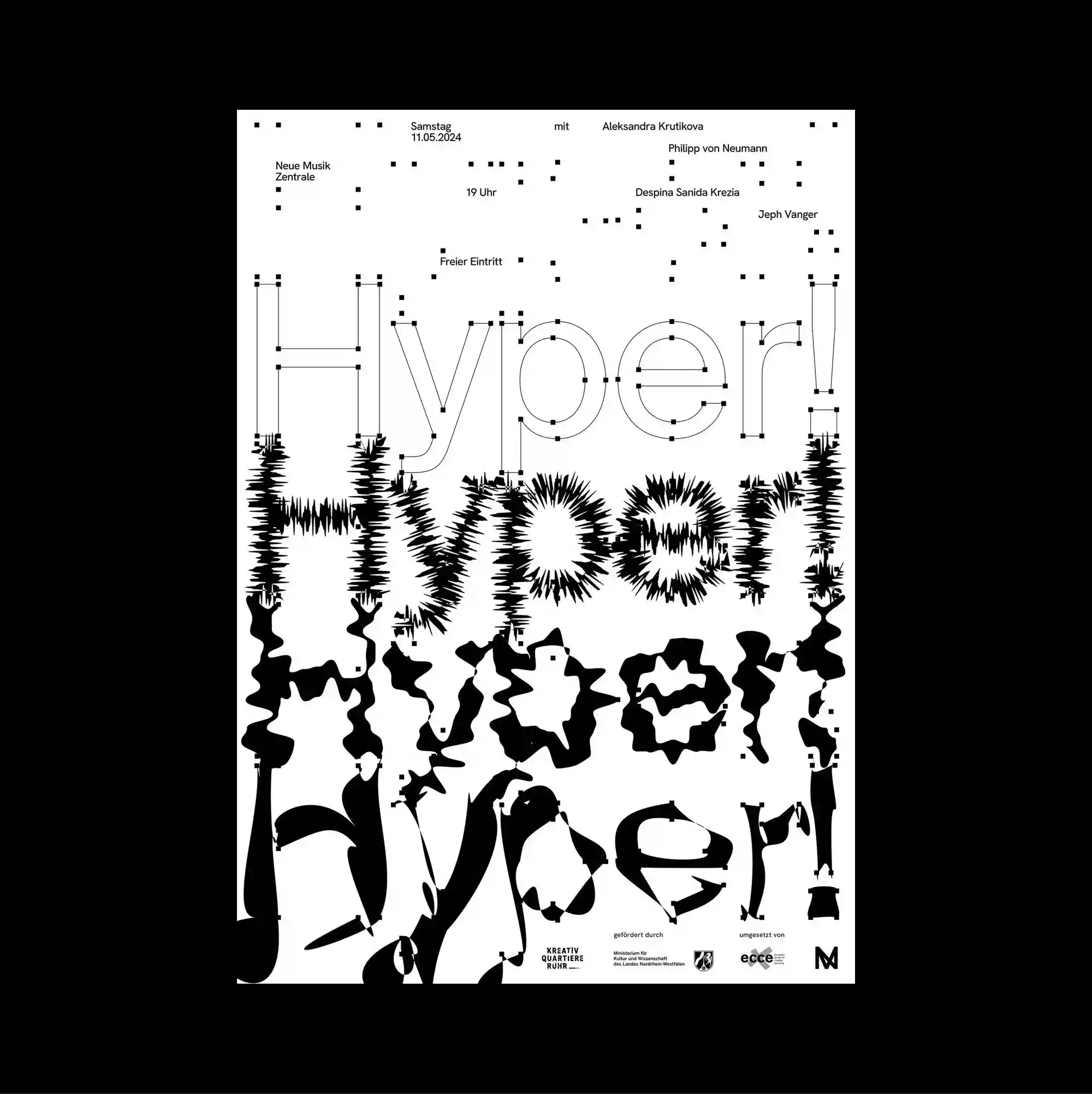
Typography occupies most of the page and functions as the primary image, with letterforms treated as large spatial masses rather than only carriers of information. Letterforms are stretched, distorted, cropped, or rotated until the typography begins to operate as an abstract graphic material. The lower half is filled with heavily distorted black display lettering whose edges become jagged and textured, while small metadata-like type remains comparatively calm above. The compressed layering and hard contrasts produce a dense industrial character, with information behaving almost like a physical surface.
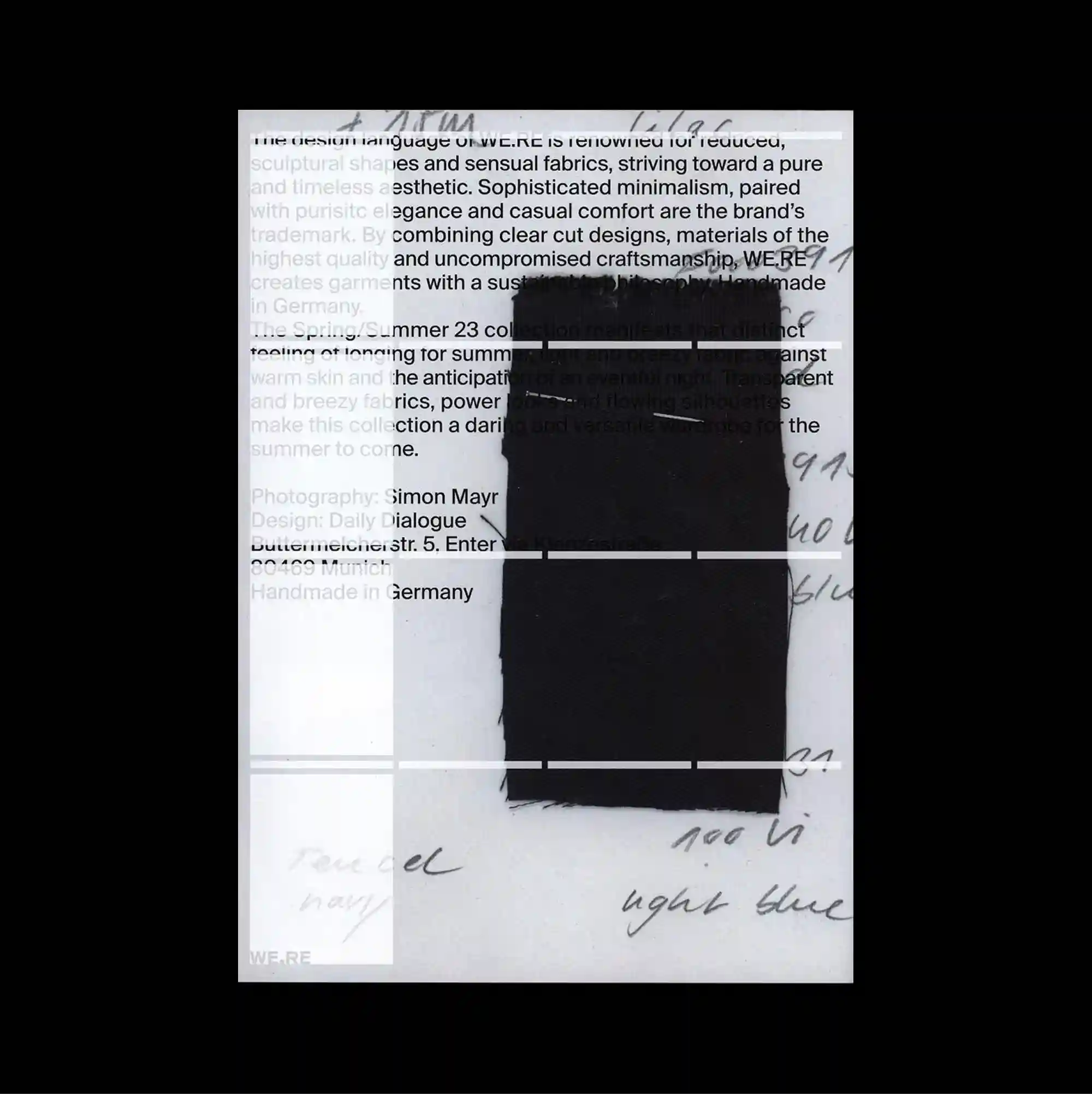
Several overlapping panels and cropped fragments are layered across the page, creating an assembled composition in which foreground and background continuously exchange roles. Narrow columns of small sans-serif type establish a controlled rhythm, while occasional larger words interrupt the grid and create focal points. Layered gray text and faint handwriting cover the page, with a tall dark rectangular window cutting through the center and thin white rules dividing the surface into sections. The mixture of irregular fragments, changing scales, and layered surfaces gives the work an experimental collage quality without losing overall balance.
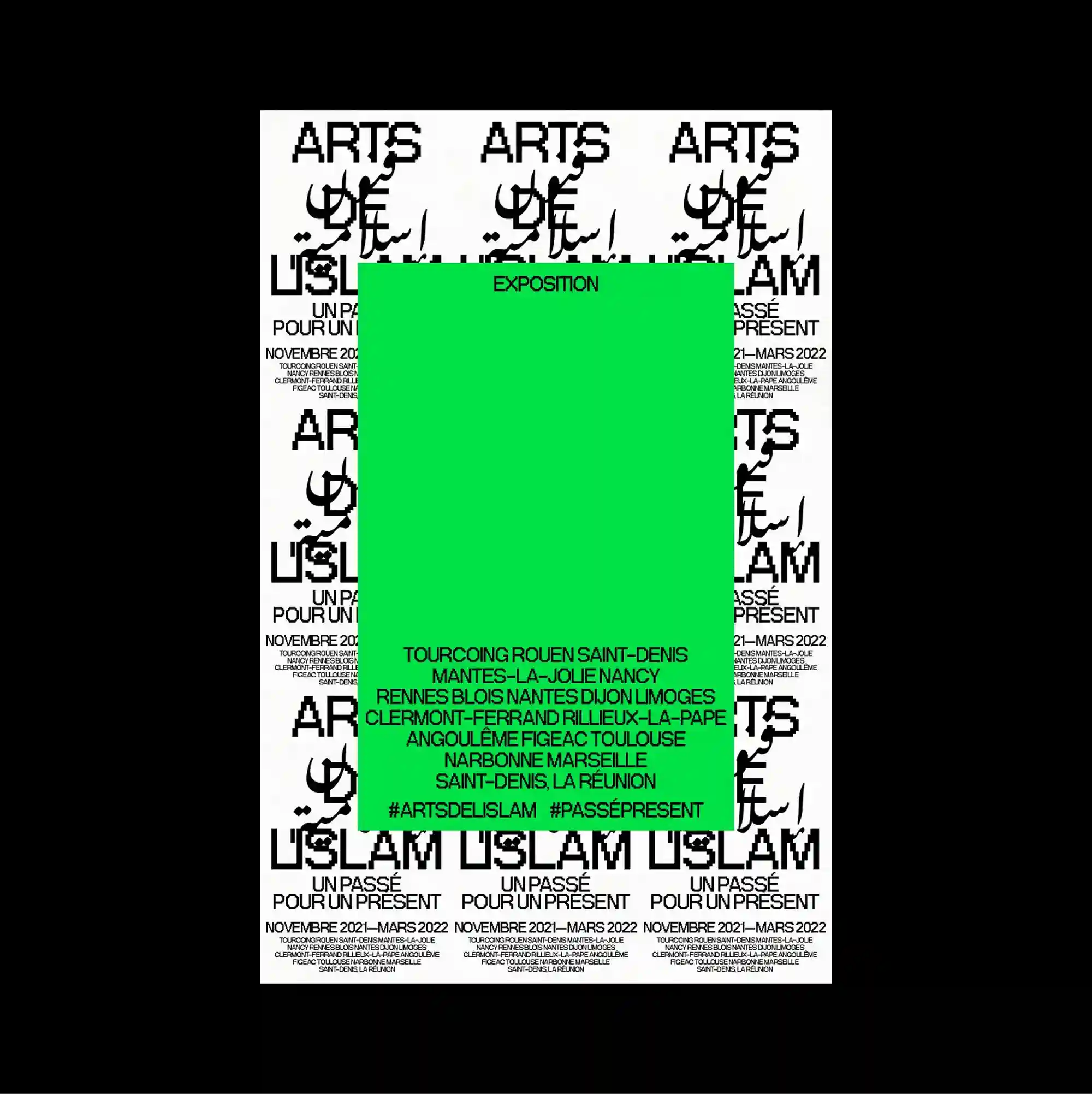
A centered composition leaves a substantial amount of open space around the main elements, allowing a small cluster of imagery and type to carry most of the visual weight. Repeated words and characters accumulate into a patterned surface, allowing typography to function simultaneously as information and texture. A vivid green rectangle sits in the center while repeated black-and-white typographic units form a dense border-like field around it on all sides. Large forms and compressed supporting information create a monumental hierarchy that feels assertive even within a tightly organized layout.
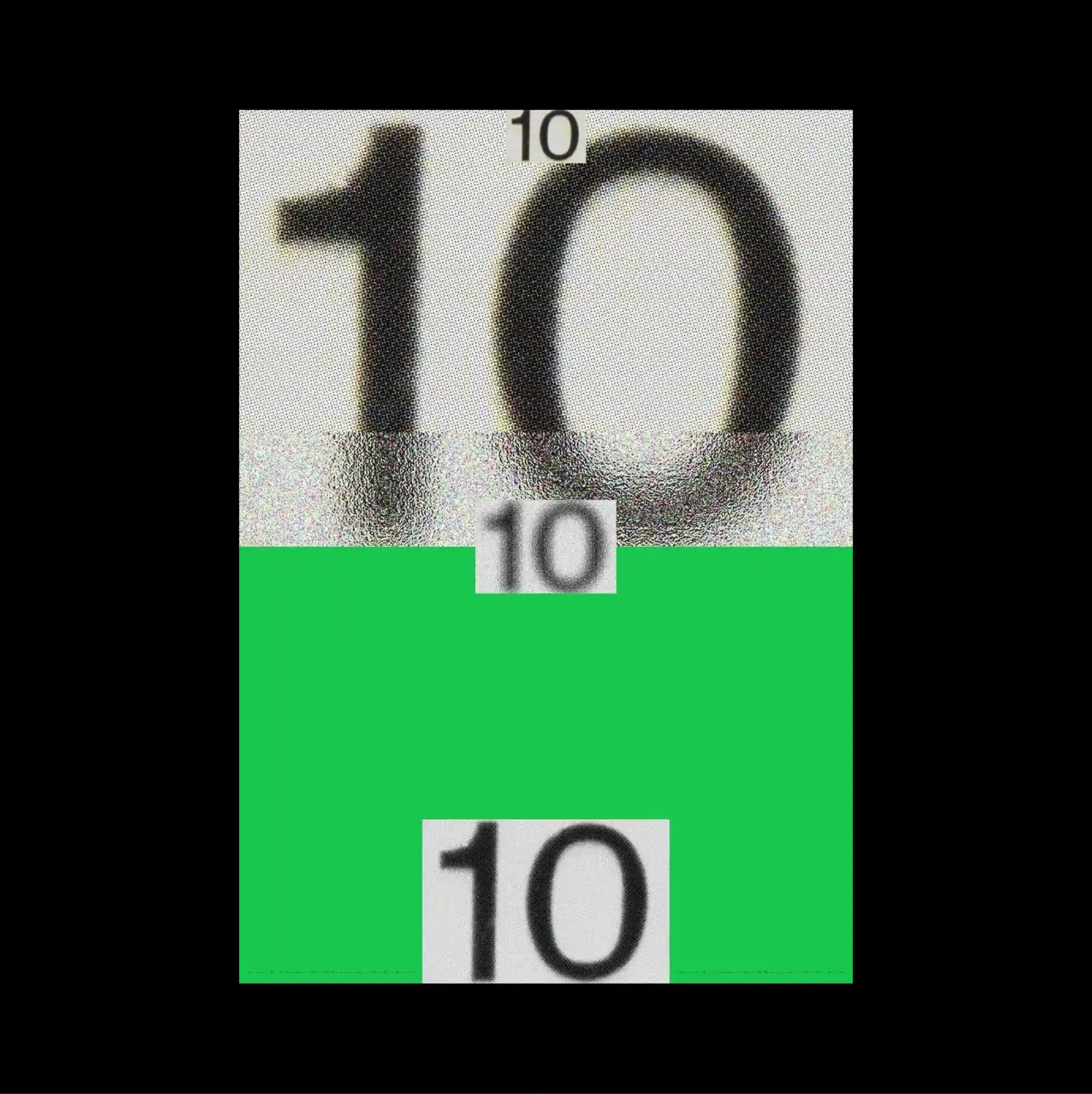
The design is divided into strongly contrasting color and image zones, using large rectangular fields to establish a clear structural hierarchy. Oversized display lettering is paired with dense micro-typography, creating an extreme scale contrast between headline forms and secondary information. A giant blurred numeral occupies the upper half and dissolves into a bright green lower block, where two smaller repeated number cards interrupt the flat color field. Strong scale contrast and simplified spatial relationships make the composition immediately readable while preserving a distinctive experimental edge.
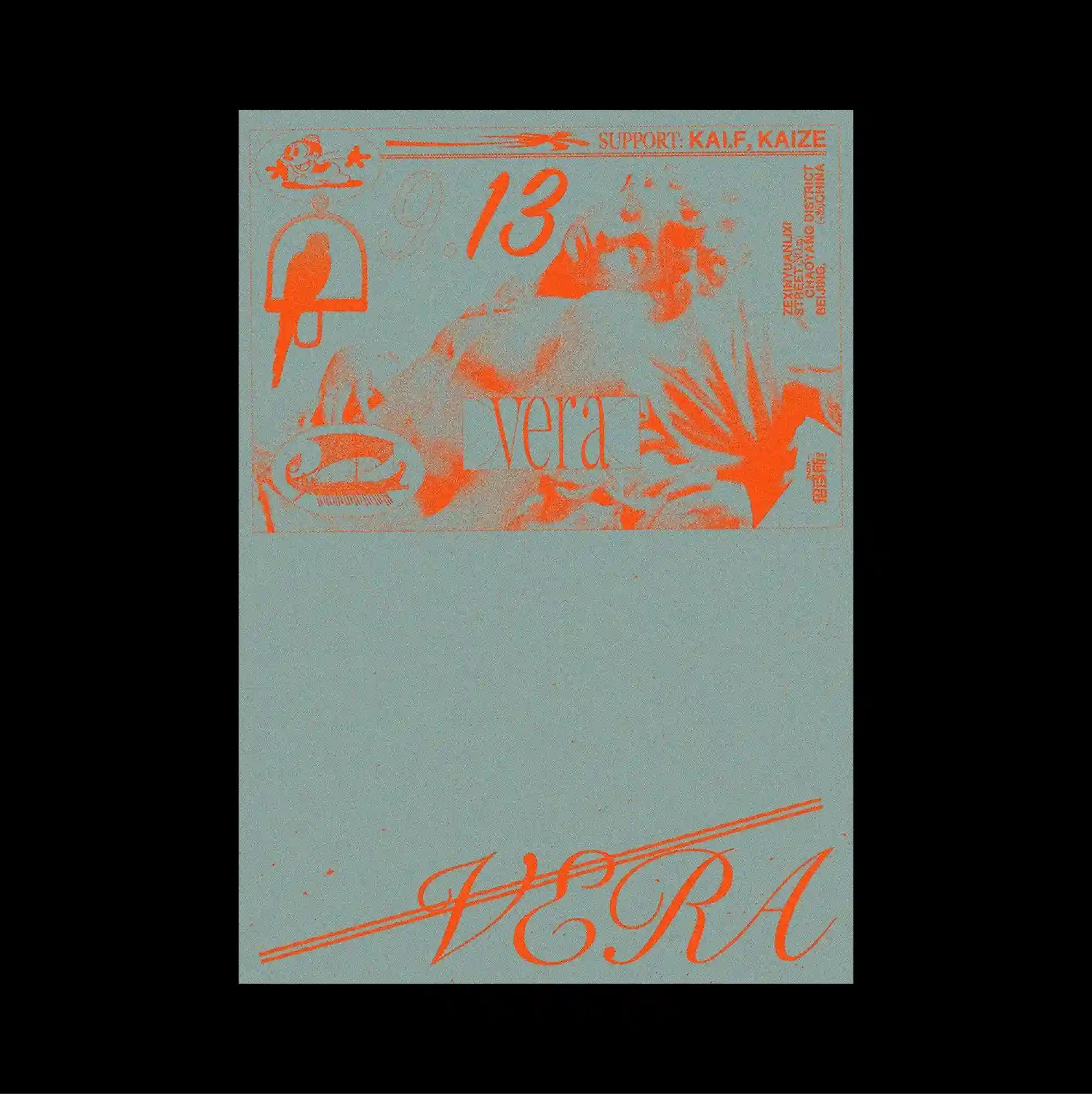
The poster separates a compact image band from a larger lower field, creating a two-part structure with a pronounced shift in density between the sections. Handwritten marks and informal annotations are layered over more systematic printed type, creating tension between spontaneous gestures and controlled typography. Orange sketches, fragments of illustration, and hand-drawn lettering gather across the top of a muted gray-green sheet, while a large sweeping script line anchors the lower edge. Visible grain, imperfect edges, and mixed image qualities introduce a tactile analog character that softens the underlying grid.
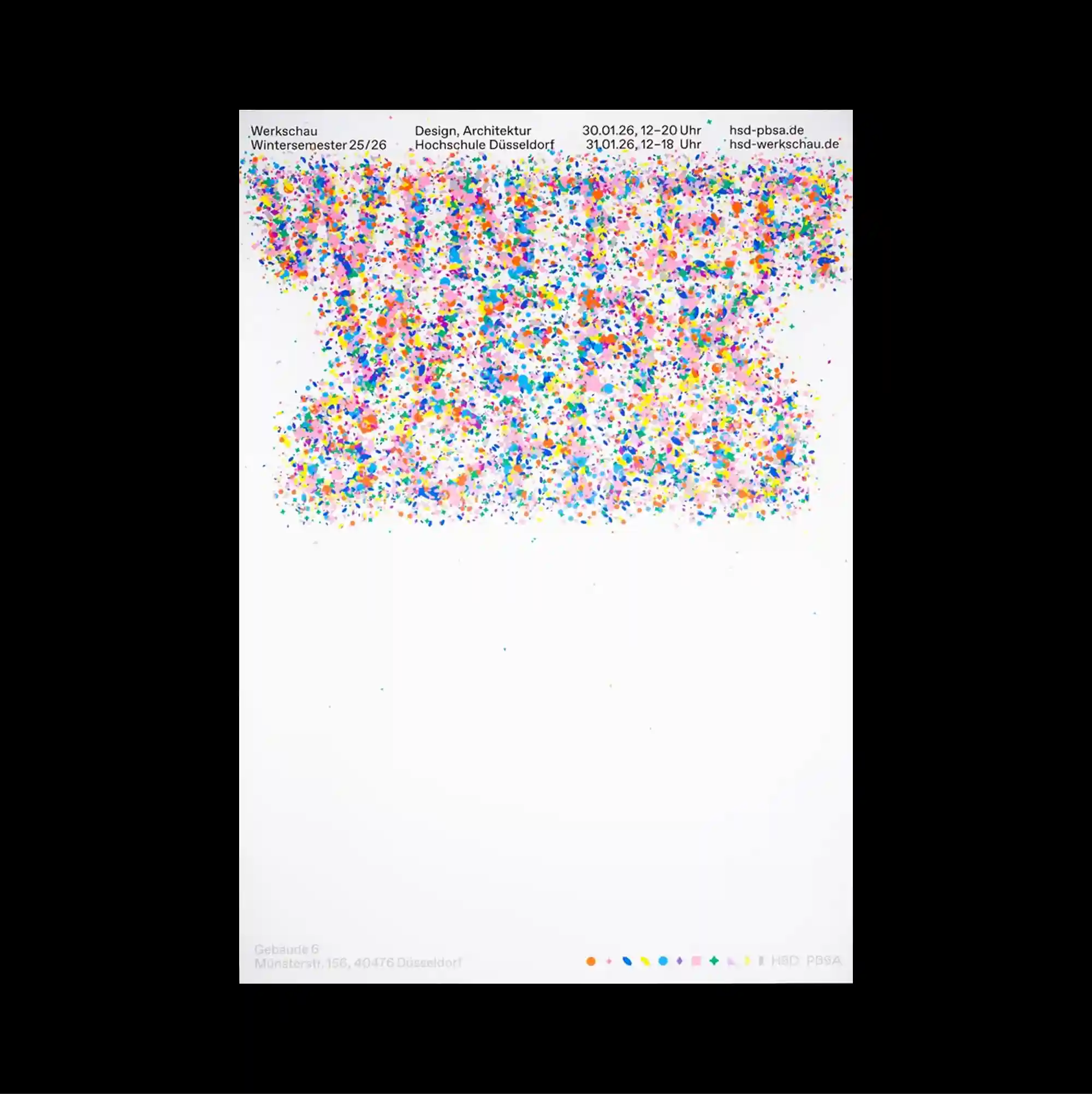
The poster separates a compact image band from a larger lower field, creating a two-part structure with a pronounced shift in density between the sections. Narrow columns of small sans-serif type establish a controlled rhythm, while occasional larger words interrupt the grid and create focal points. A dense cloud of tiny multicolored marks fills the upper region beneath a narrow information header, while the lower half remains largely empty except for minimal indexing details. The repeated structures make the poster read like a diagram or index, with visual meaning emerging from accumulation rather than a single focal image.
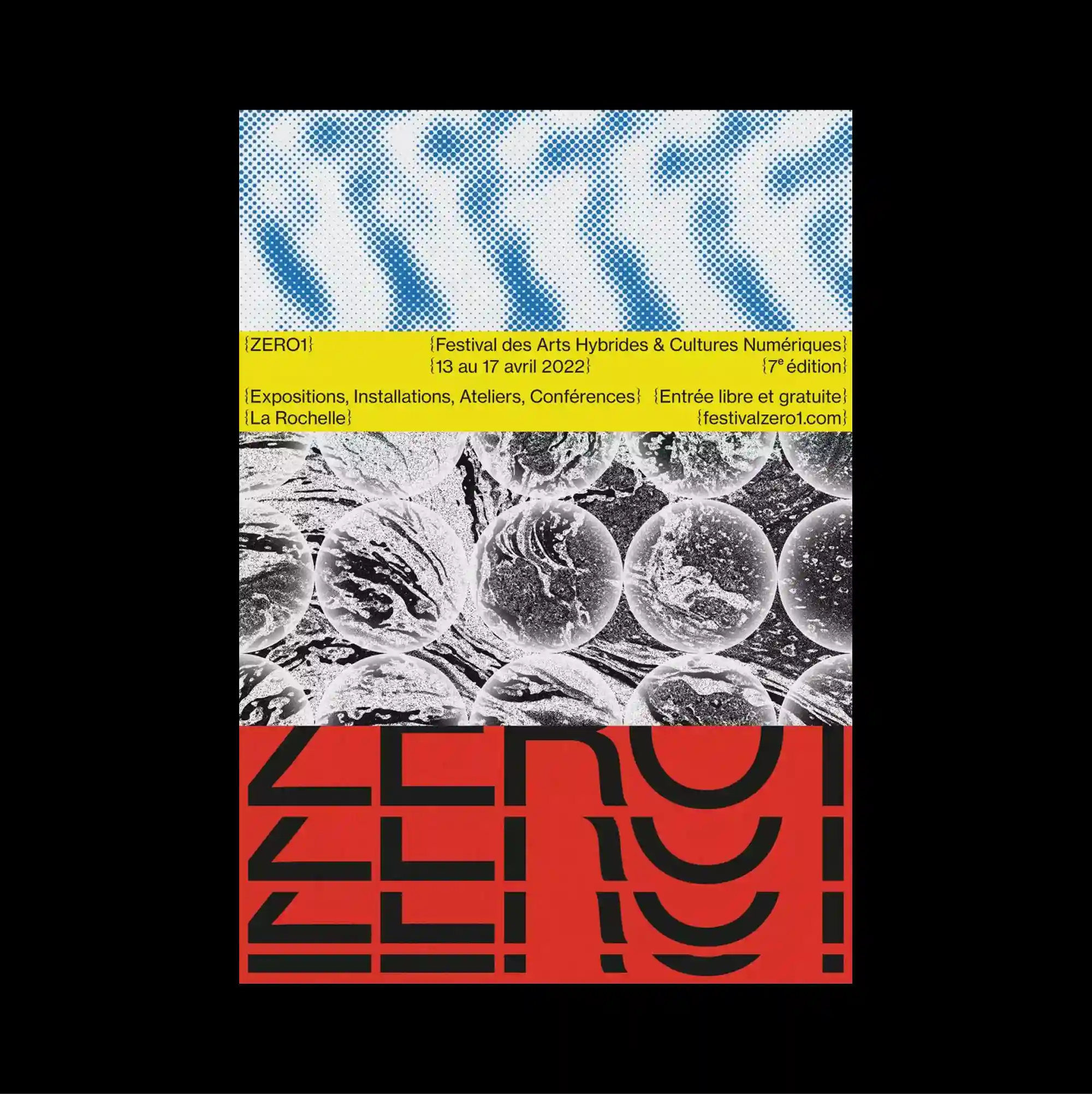
The surface is built from stacked rectangular panels of different sizes, producing a clear vertical rhythm through repeated blocks and abrupt transitions. Letterforms are stretched, distorted, cropped, or rotated until the typography begins to operate as an abstract graphic material. A blurred blue pattern sits above a narrow yellow information band, followed by a grayscale microscopic texture and a red lower block filled with repeated abstract letterforms. Bold color contrasts and abrupt shifts in scale produce an energetic graphic rhythm that remains legible despite the density of the elements.
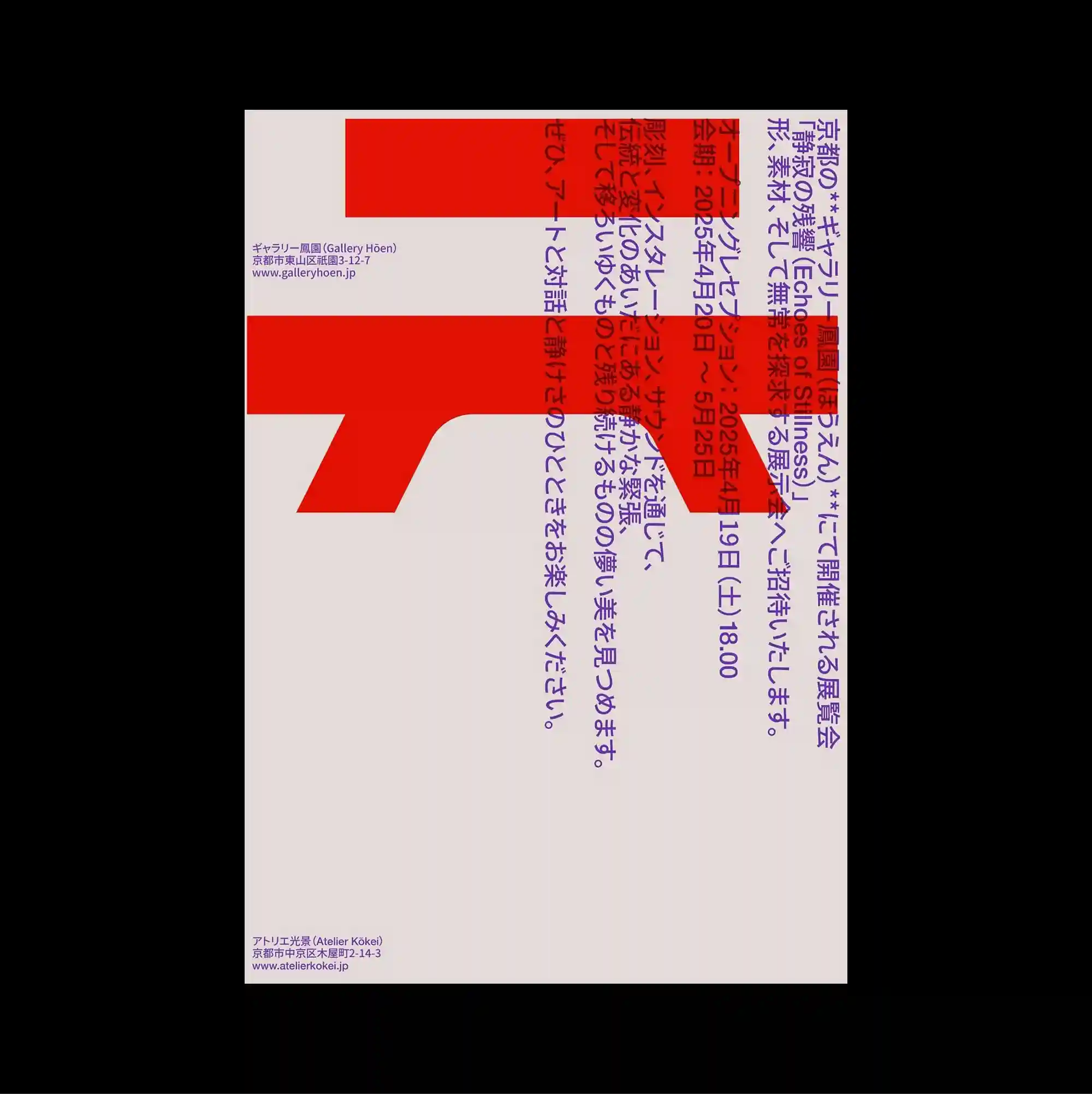
The surface is built from stacked rectangular panels of different sizes, producing a clear vertical rhythm through repeated blocks and abrupt transitions. Vertical East Asian type is combined with smaller horizontal information, creating multiple reading directions within the same tightly controlled structure. Broad red rectangles occupy the upper half while vertical blue and purple Japanese text crosses their edges, leaving a large pale lower field with minimal notation. Bold color contrasts and abrupt shifts in scale produce an energetic graphic rhythm that remains legible despite the density of the elements.
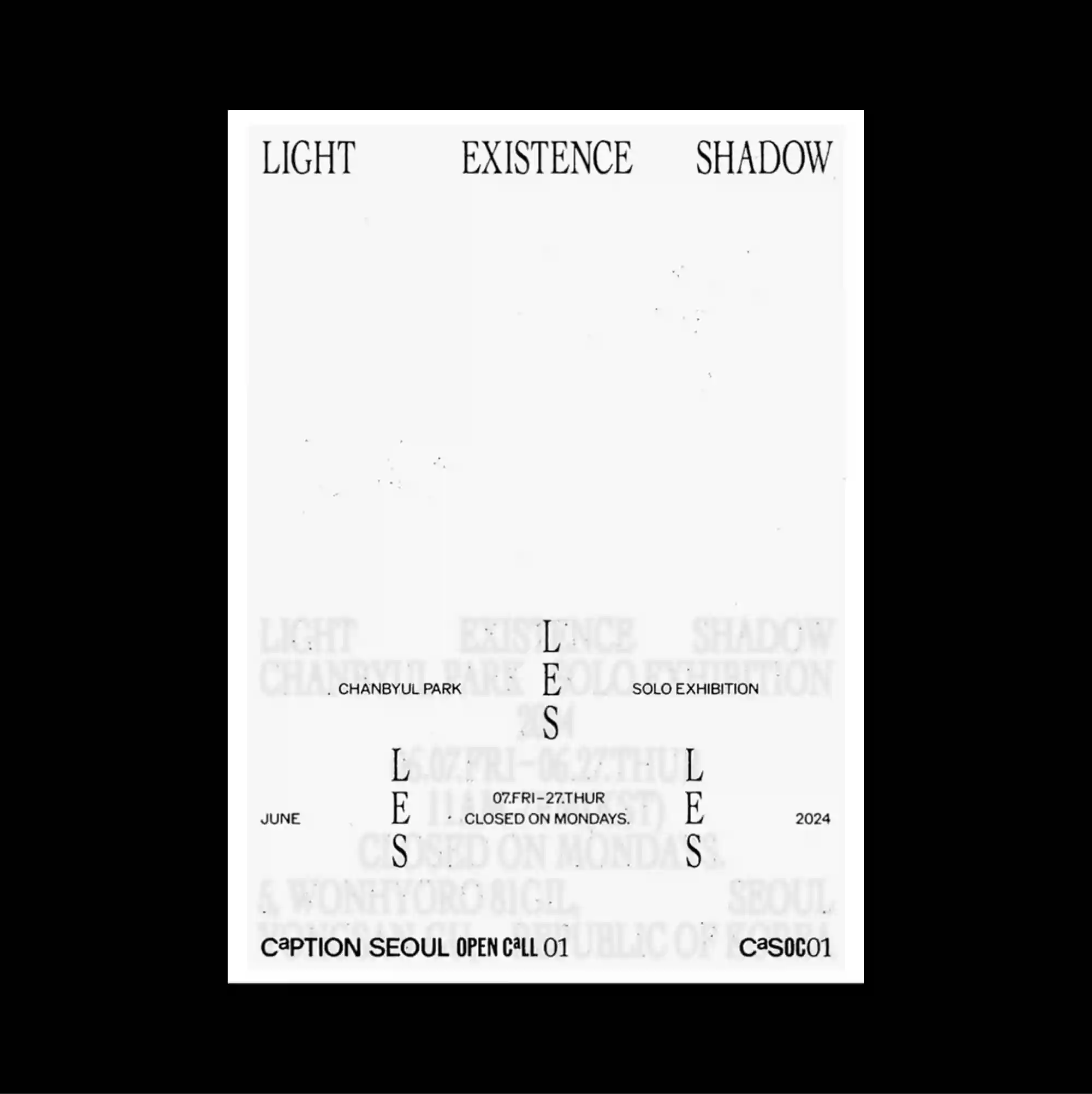
The layout is deliberately sparse, placing only a few compact elements across a broad open field so that distance and scale become active parts of the composition. Restrained serif typography is used at a relatively small scale, allowing generous spacing and subtle alignment shifts to define the hierarchy. Small words are spaced widely across the top and lower margins, with a restrained central letterform and faint repeated terms barely visible through the open white field. Generous empty space and restrained detail create a quiet composition in which small shifts of placement become visually significant.
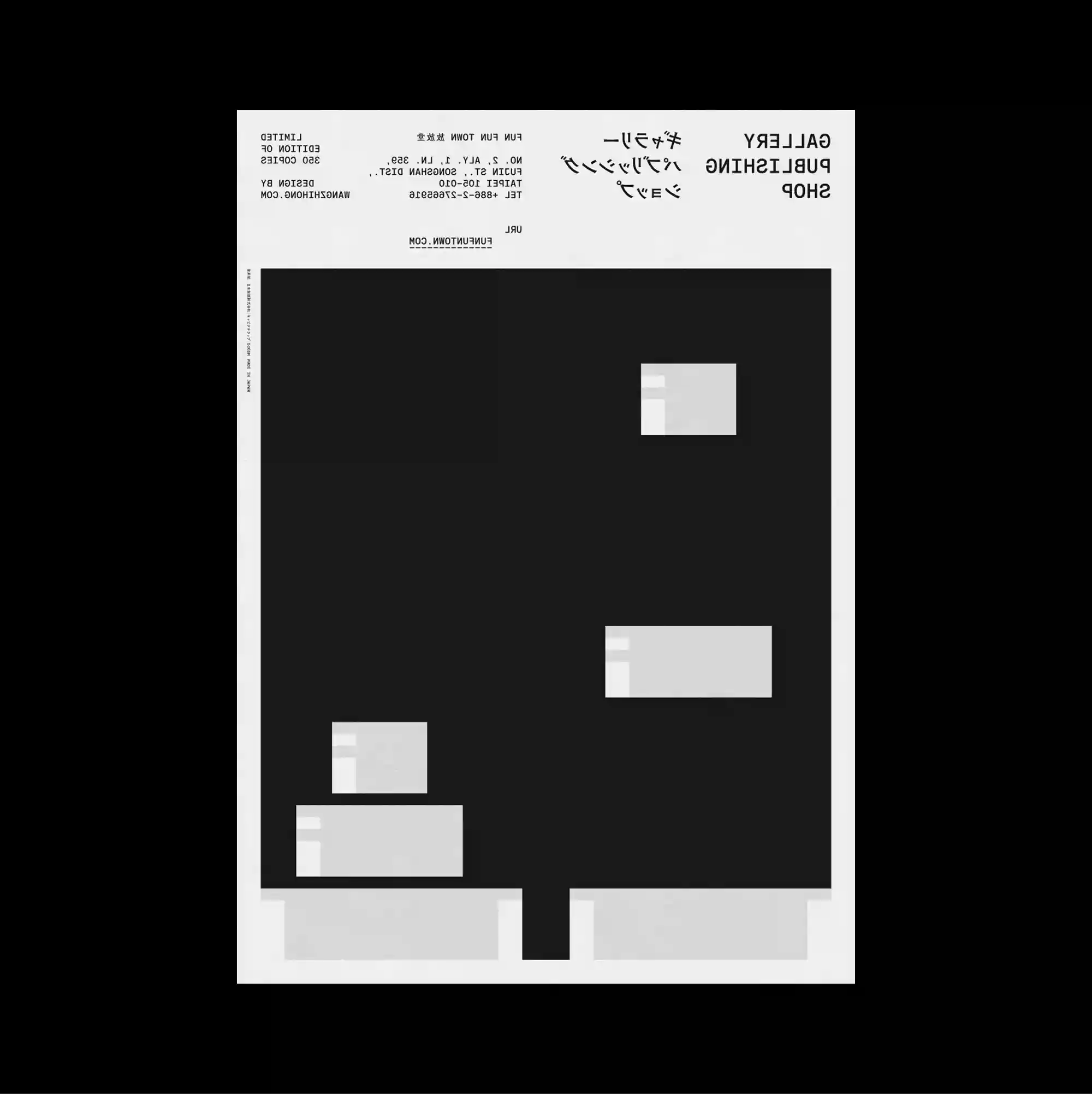
A centered composition leaves a substantial amount of open space around the main elements, allowing a small cluster of imagery and type to carry most of the visual weight. Monospaced and data-like typography is arranged in repeated rows and columns, giving the text the character of measurements, indexes, or coded information. A large near-black rectangle contains a few isolated pale squares of different sizes, while tiny header text and stepped gray blocks remain outside the central field. Generous empty space and restrained detail create a quiet composition in which small shifts of placement become visually significant.
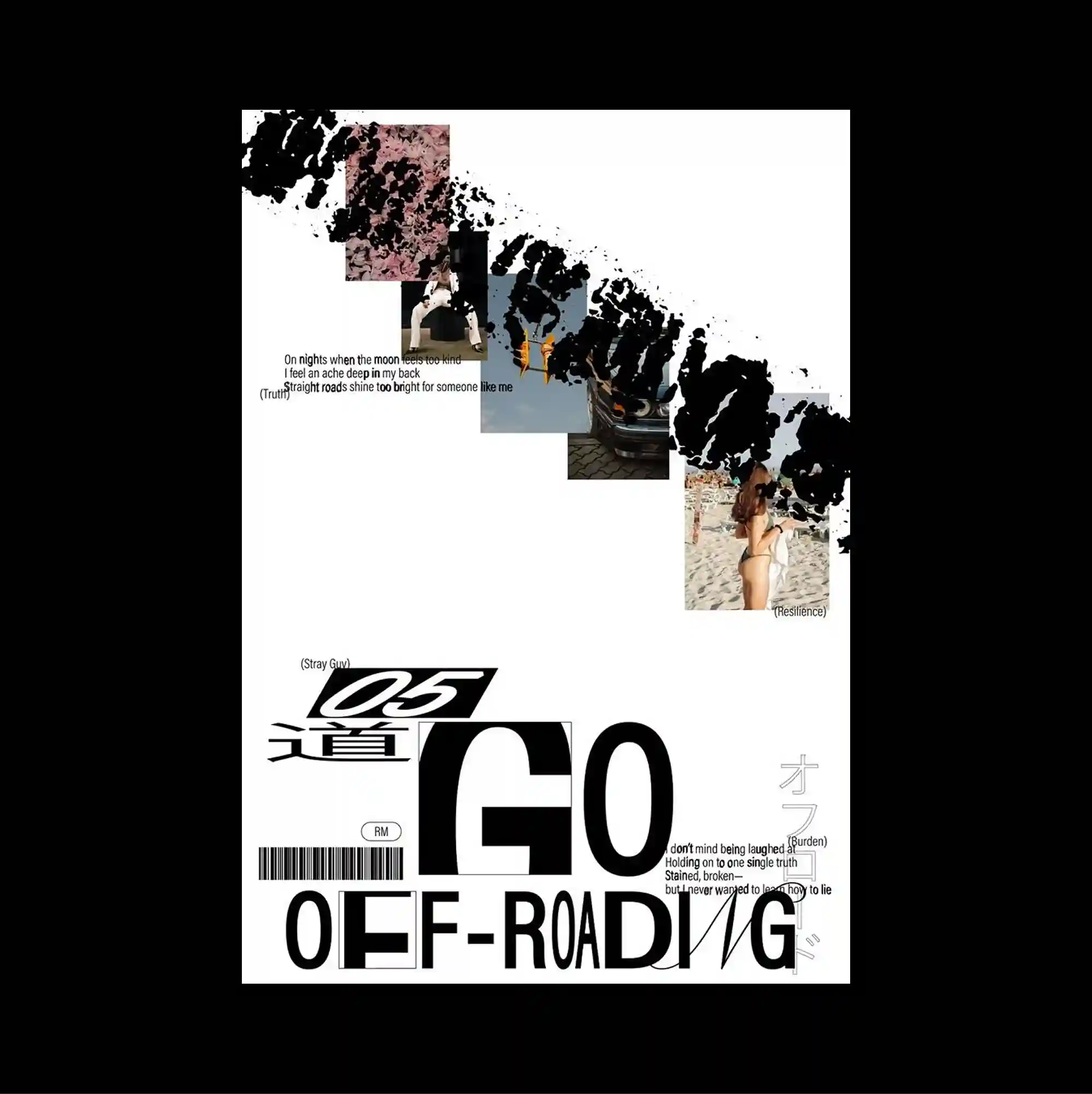
Diagonal and rotated elements interrupt the normal reading direction, turning the page into a dynamic field of crossing axes and displaced blocks. Oversized display lettering is paired with dense micro-typography, creating an extreme scale contrast between headline forms and secondary information. A diagonal chain of rough photographic fragments cuts downward across the page, ending near oversized black words and cropped East Asian characters at the lower edge. The mixture of irregular fragments, changing scales, and layered surfaces gives the work an experimental collage quality without losing overall balance.
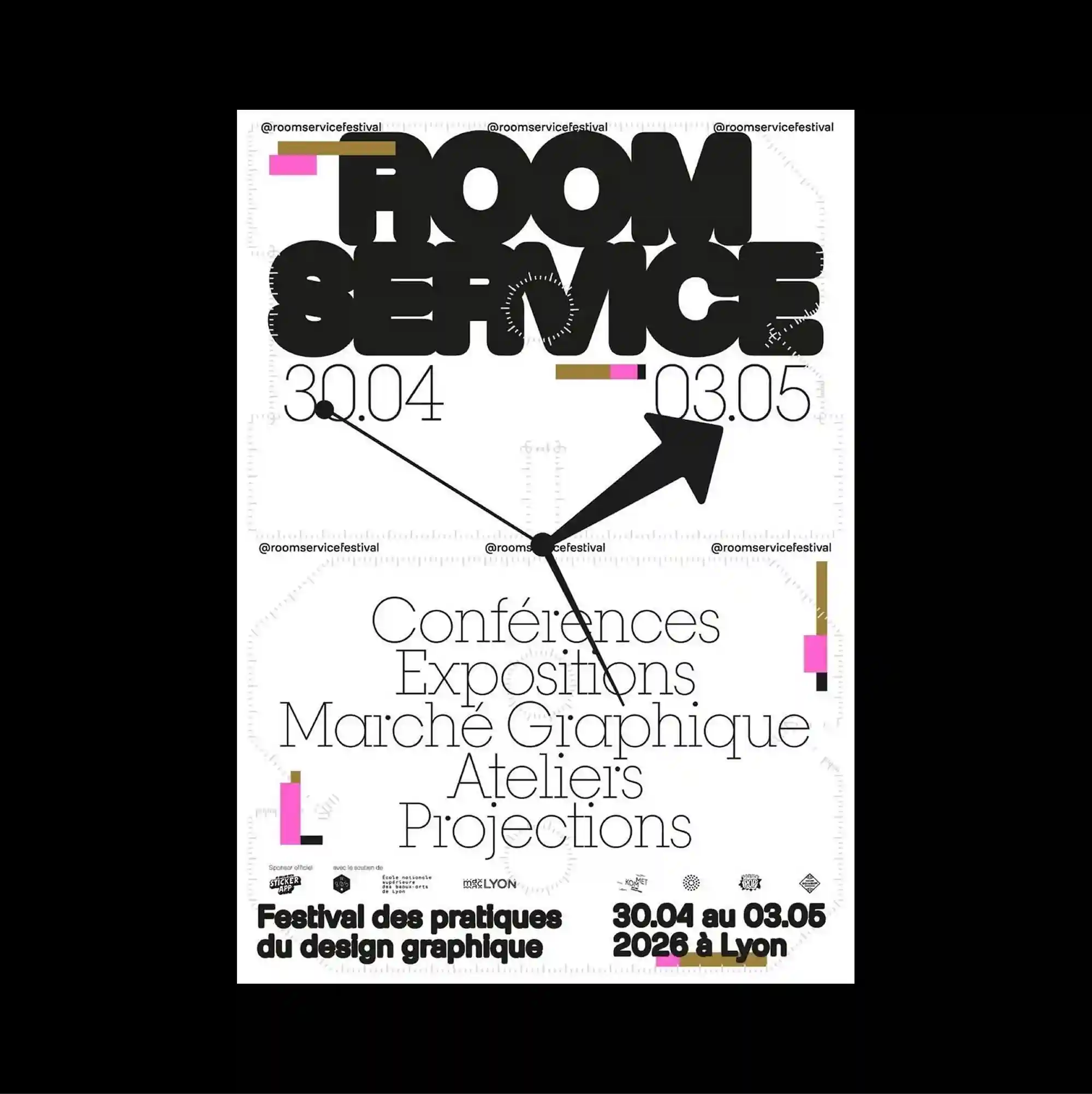
An asymmetrical arrangement is anchored by one oversized geometric or typographic form, while smaller supporting elements are pushed toward the edges. Oversized display lettering is paired with dense micro-typography, creating an extreme scale contrast between headline forms and secondary information. A huge black title dominates the top, a thick arrow pivots through the center like a clock hand, and small magenta rectangles punctuate the surrounding serif information. Bold color contrasts and abrupt shifts in scale produce an energetic graphic rhythm that remains legible despite the density of the elements.
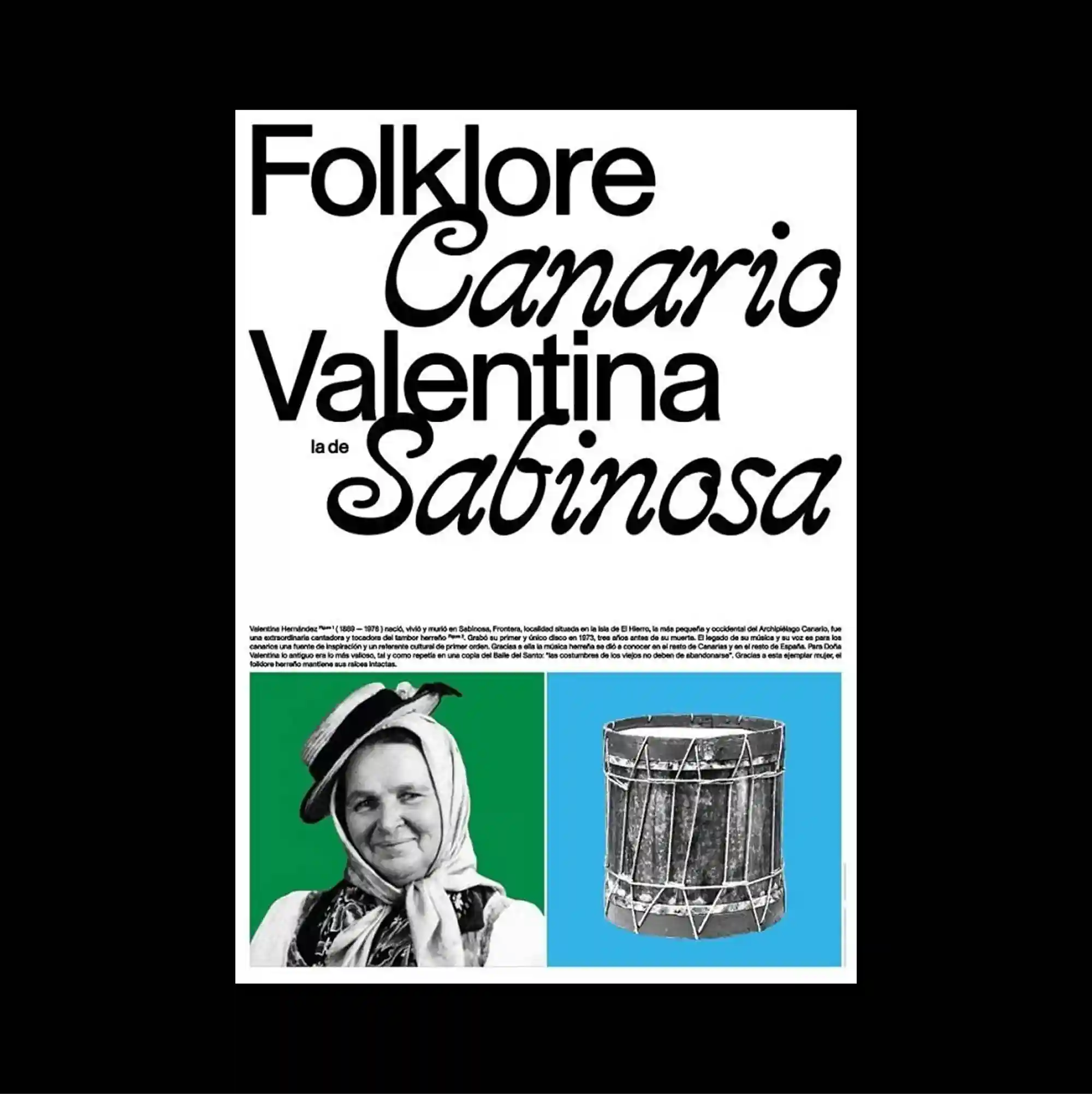
The poster separates a compact image band from a larger lower field, creating a two-part structure with a pronounced shift in density between the sections. Serif and sans-serif styles are mixed with thin rules and compact captions, producing a layered hierarchy through changes in weight, width, and alignment. Large mixed serif and script words occupy the upper two-thirds, while a green-and-cyan image strip at the bottom combines a portrait and a cylindrical object in two distinct blocks. The careful sequencing of headings, captions, and images gives the piece the discipline of a publication page while retaining the impact of a poster.
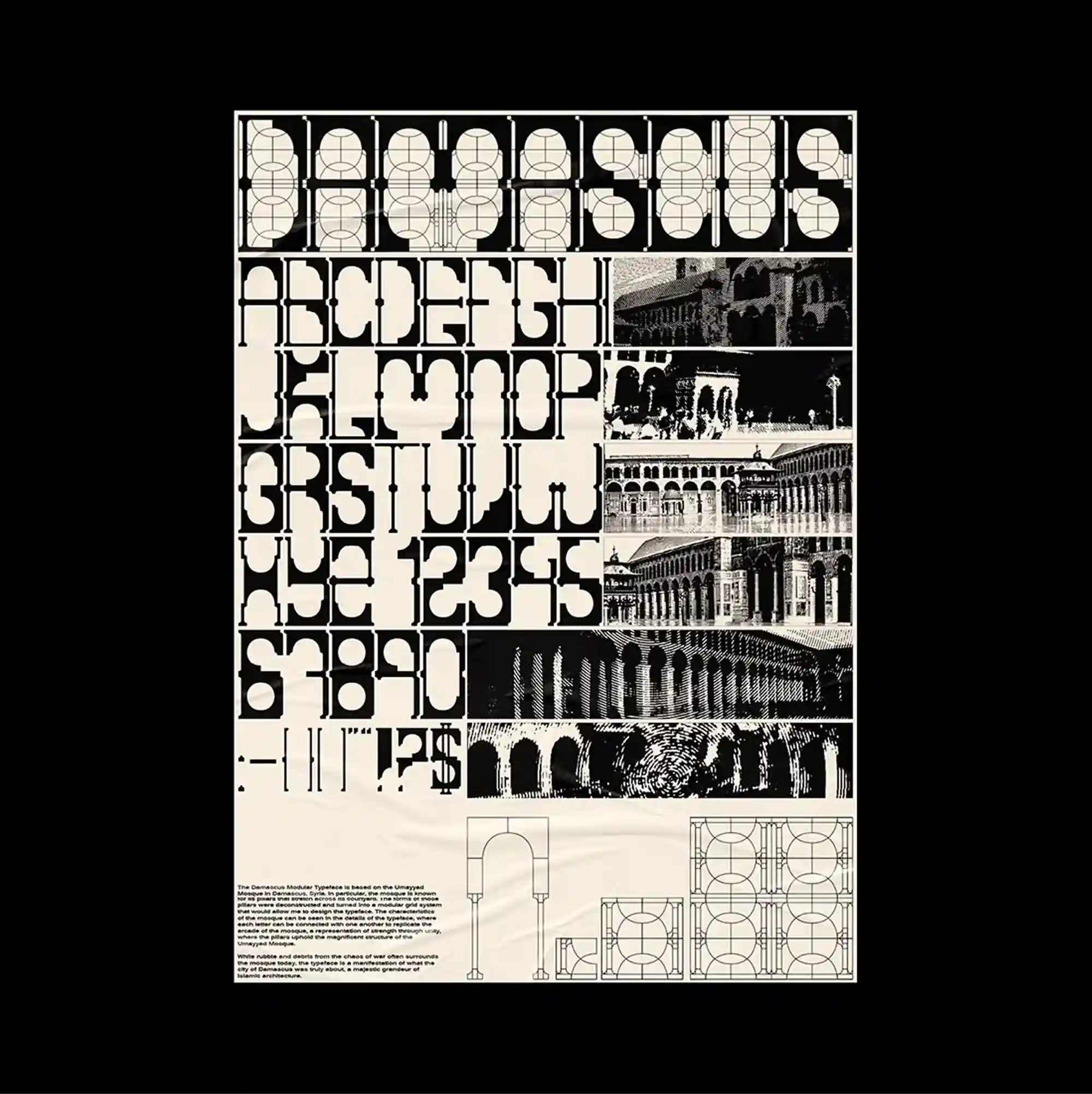
The entire surface is treated as a dense information field, with numerous small units packed closely enough to form an almost continuous visual texture. Oversized display lettering is paired with dense micro-typography, creating an extreme scale contrast between headline forms and secondary information. Large condensed architectural lettering is stacked with small façade photographs, repeating window grids, numbered rows, and technical sketches that create a highly compressed black-and-white surface. The compressed layering and hard contrasts produce a dense industrial character, with information behaving almost like a physical surface.
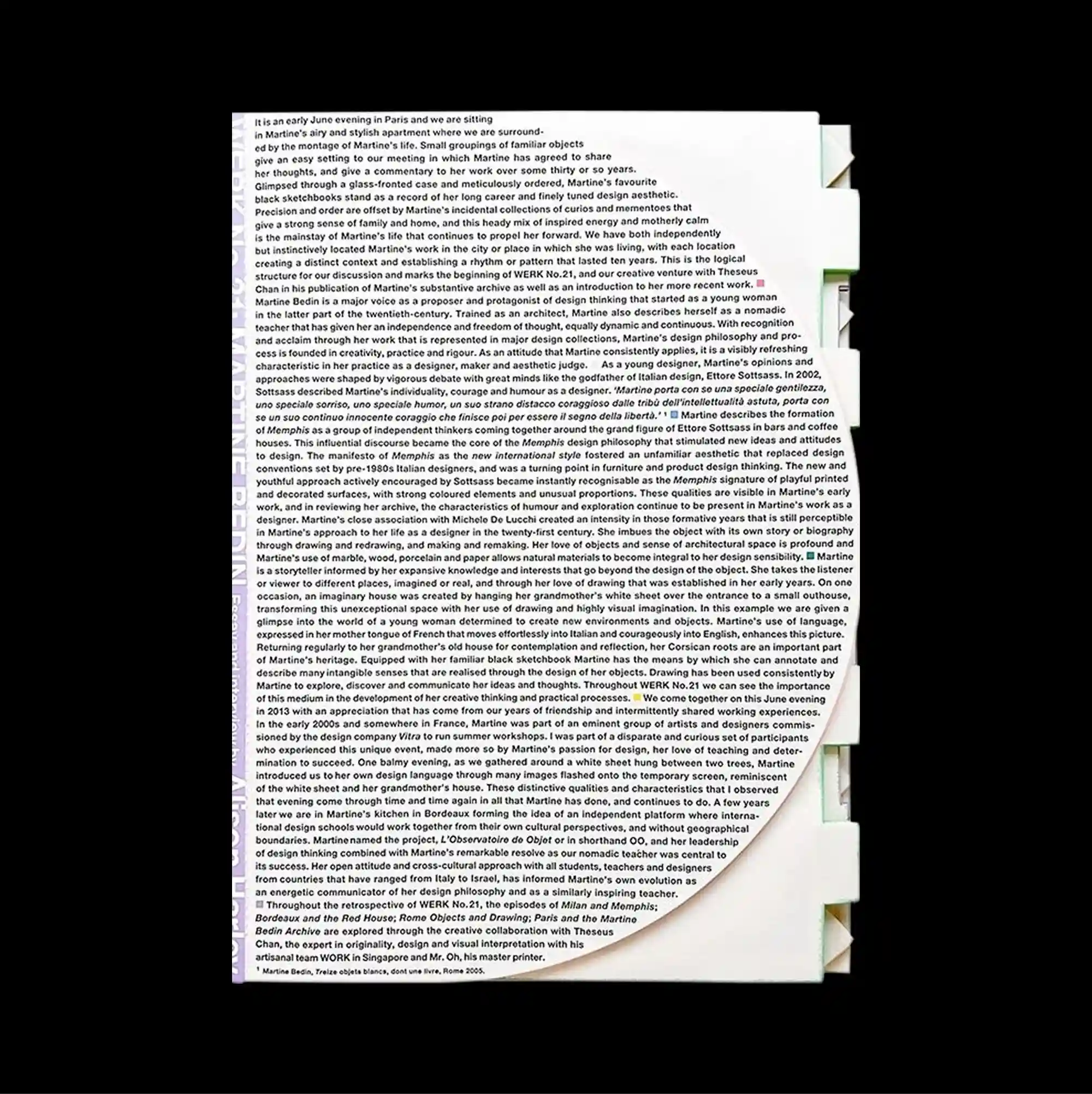
The entire surface is treated as a dense information field, with numerous small units packed closely enough to form an almost continuous visual texture. Narrow columns of small sans-serif type establish a controlled rhythm, while occasional larger words interrupt the grid and create focal points. Dense paragraph text fills almost the entire sheet, interrupted only by rough torn edges, pale layered paper corners, and a subtle circular fold-like form near the lower area. The controlled alignment and rough material details give the poster a direct archival print character while keeping the visual rhythm sharply organized.
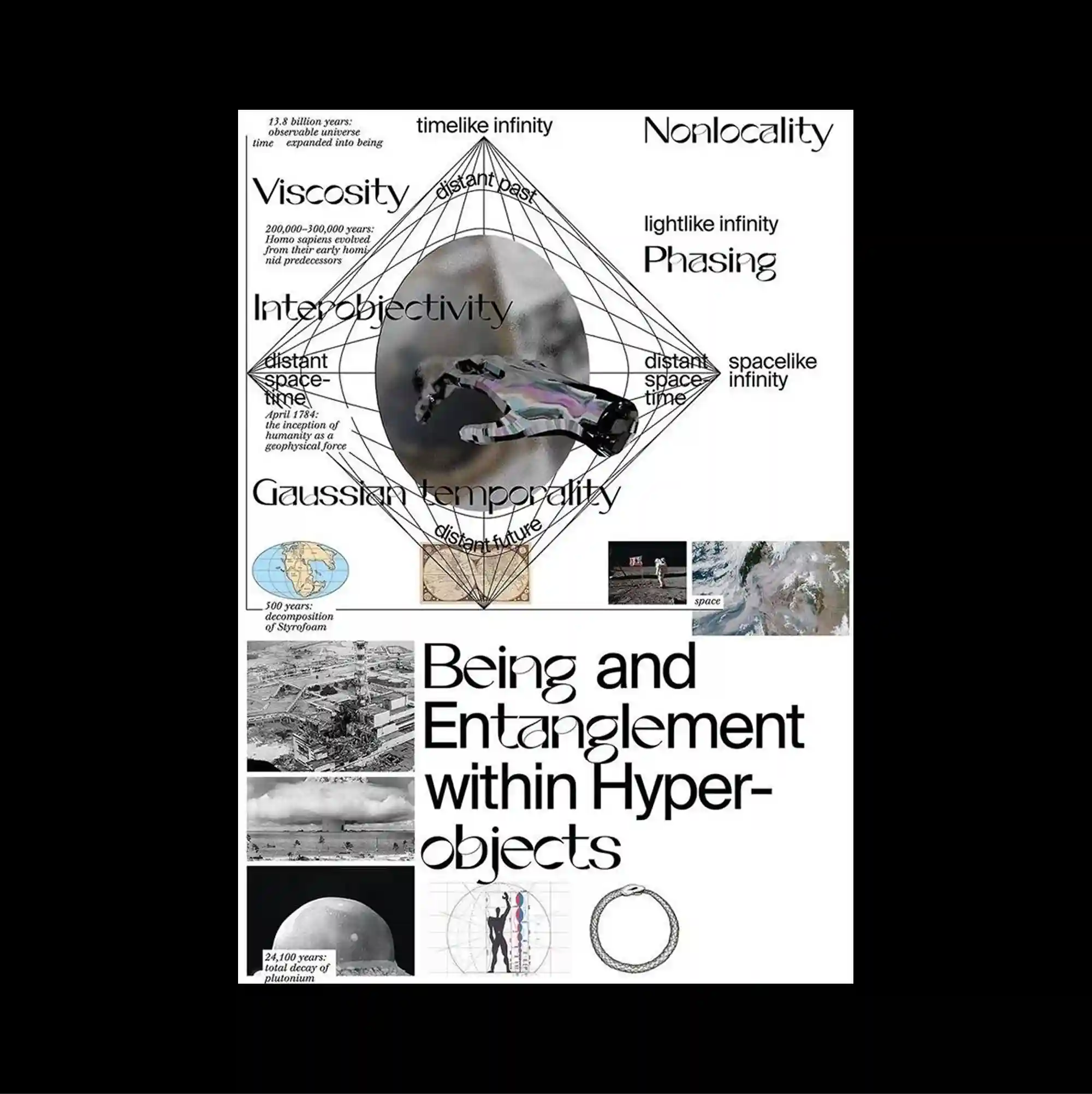
Several overlapping panels and cropped fragments are layered across the page, creating an assembled composition in which foreground and background continuously exchange roles. Typography is integrated with diagrams, coordinates, and graphic notation, so textual information and visual systems become difficult to separate. A central eye photograph is embedded within overlapping diagrams, arrows, circular sketches, scientific-looking labels, and small landscape images arranged in a loose analytical collage. The result feels analytical and technical, using repetition and precise spacing to turn information into a structured visual system.
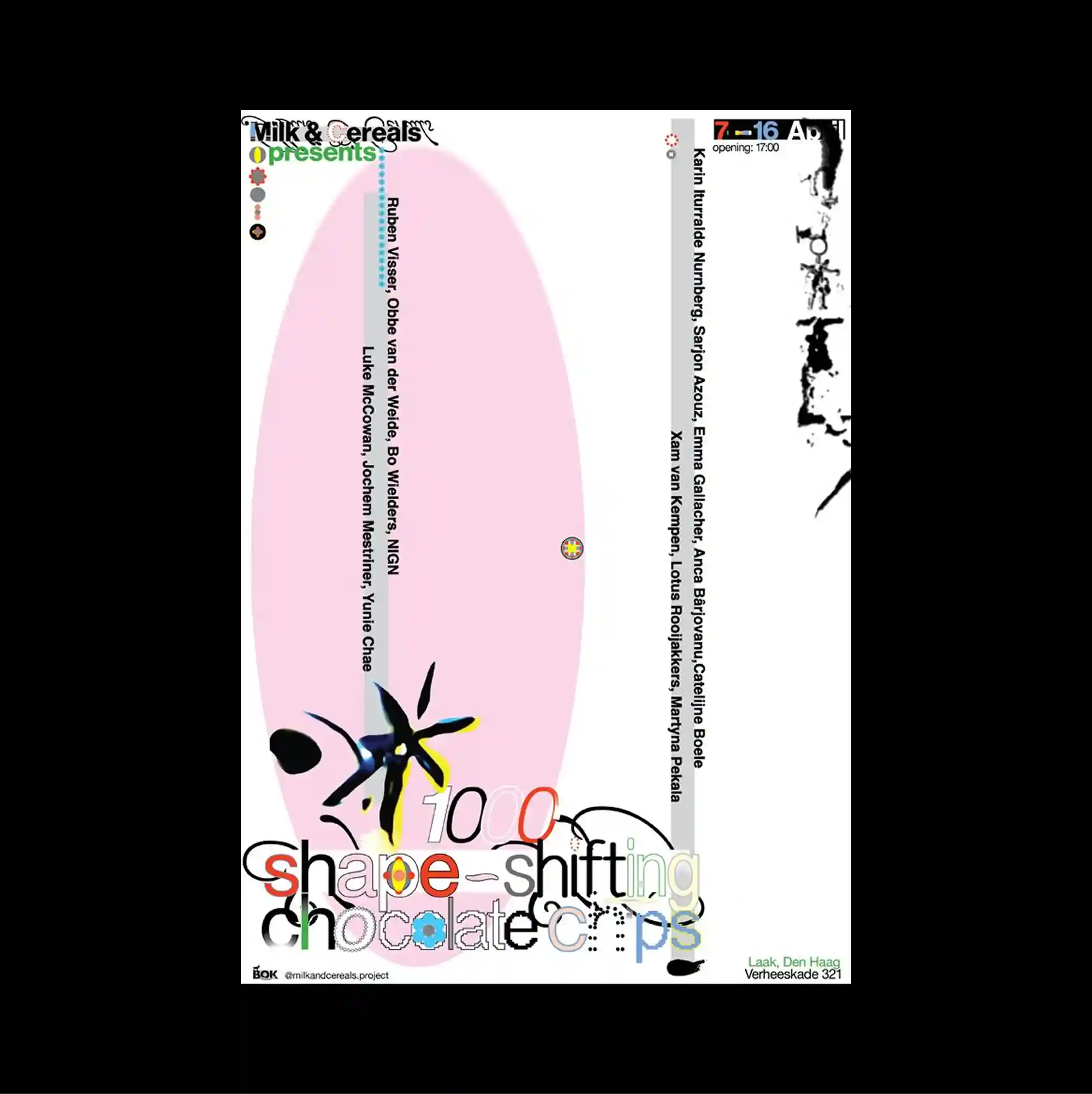
An asymmetrical arrangement is anchored by one oversized geometric or typographic form, while smaller supporting elements are pushed toward the edges. Different scripts, orientations, and typographic weights are mixed freely, producing a layered reading experience with no single dominant direction. A large translucent pink oval occupies most of the center, bordered by thin vertical text, small colorful symbols, and a few playful black shapes near the lower edge. Unexpected alignments, playful shapes, and uneven spacing create a deliberately irregular rhythm that keeps the surface visually active.
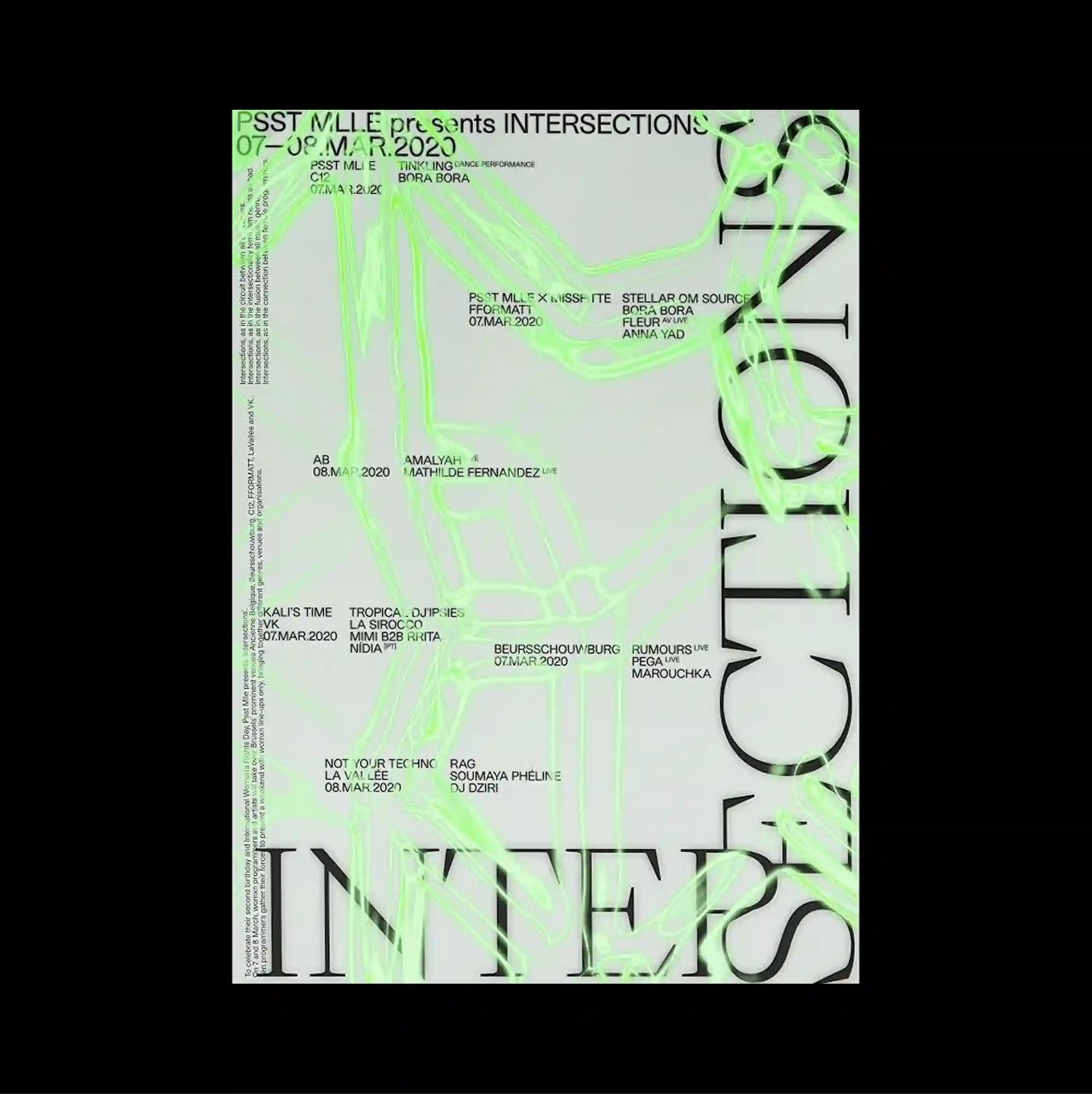
An asymmetrical arrangement is anchored by one oversized geometric or typographic form, while smaller supporting elements are pushed toward the edges. Thin outlined lettering and delicate strokes keep the typography visually light, even when the letterforms extend to a large scale. Pale green contour lines and small coordinate-like labels spread across the sheet, while huge outlined letters run vertically along the sides and extend beyond the frame. The result feels analytical and technical, using repetition and precise spacing to turn information into a structured visual system.
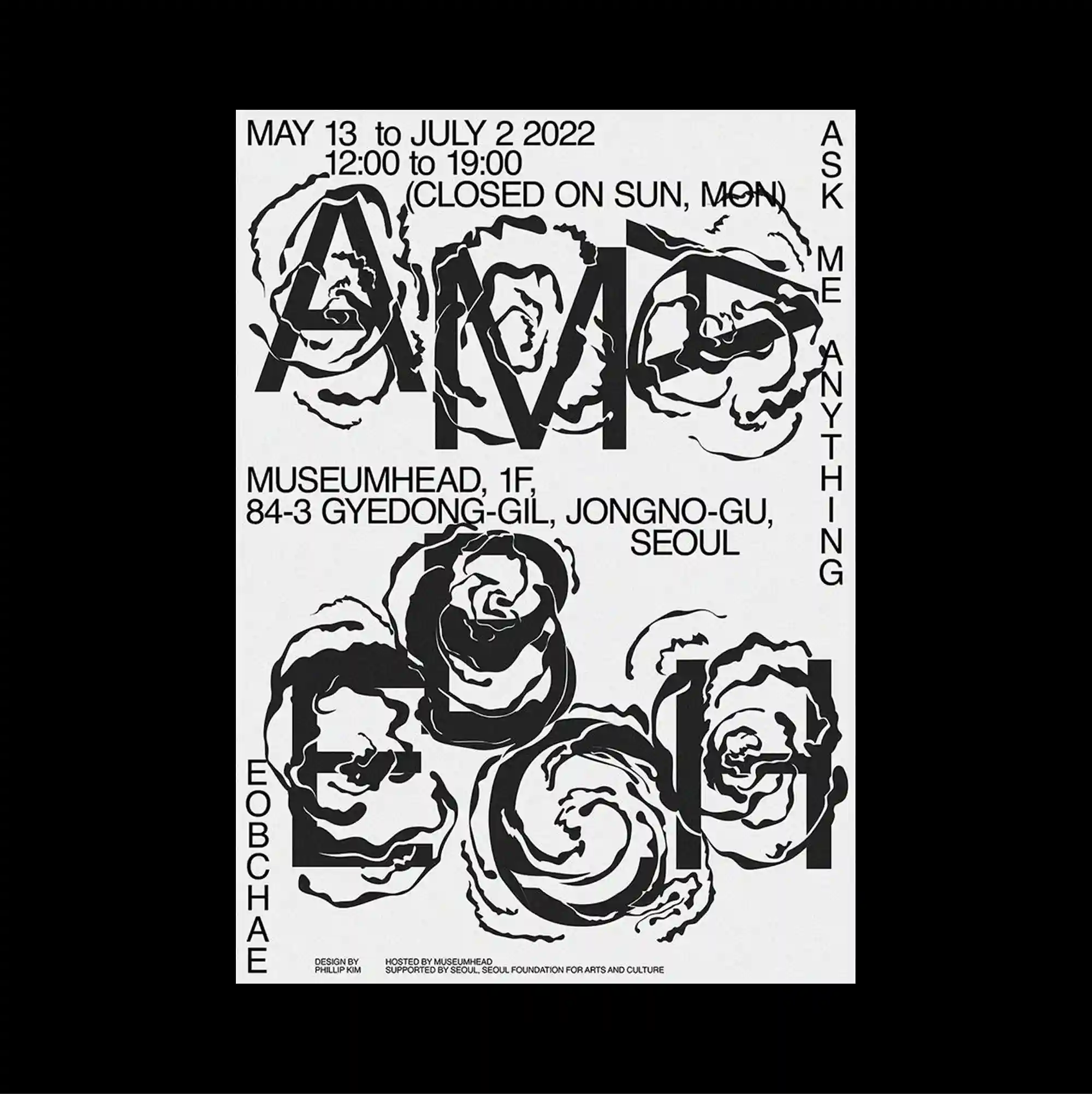
An asymmetrical arrangement is anchored by one oversized geometric or typographic form, while smaller supporting elements are pushed toward the edges. Heavy black display type creates the main visual anchors, with smaller text fitted into the remaining gaps and margins. Bold black floral drawings surround enormous cropped letters, with compact dates and narrow vertical labels fitted into the remaining white spaces. Large forms and compressed supporting information create a monumental hierarchy that feels assertive even within a tightly organized layout.
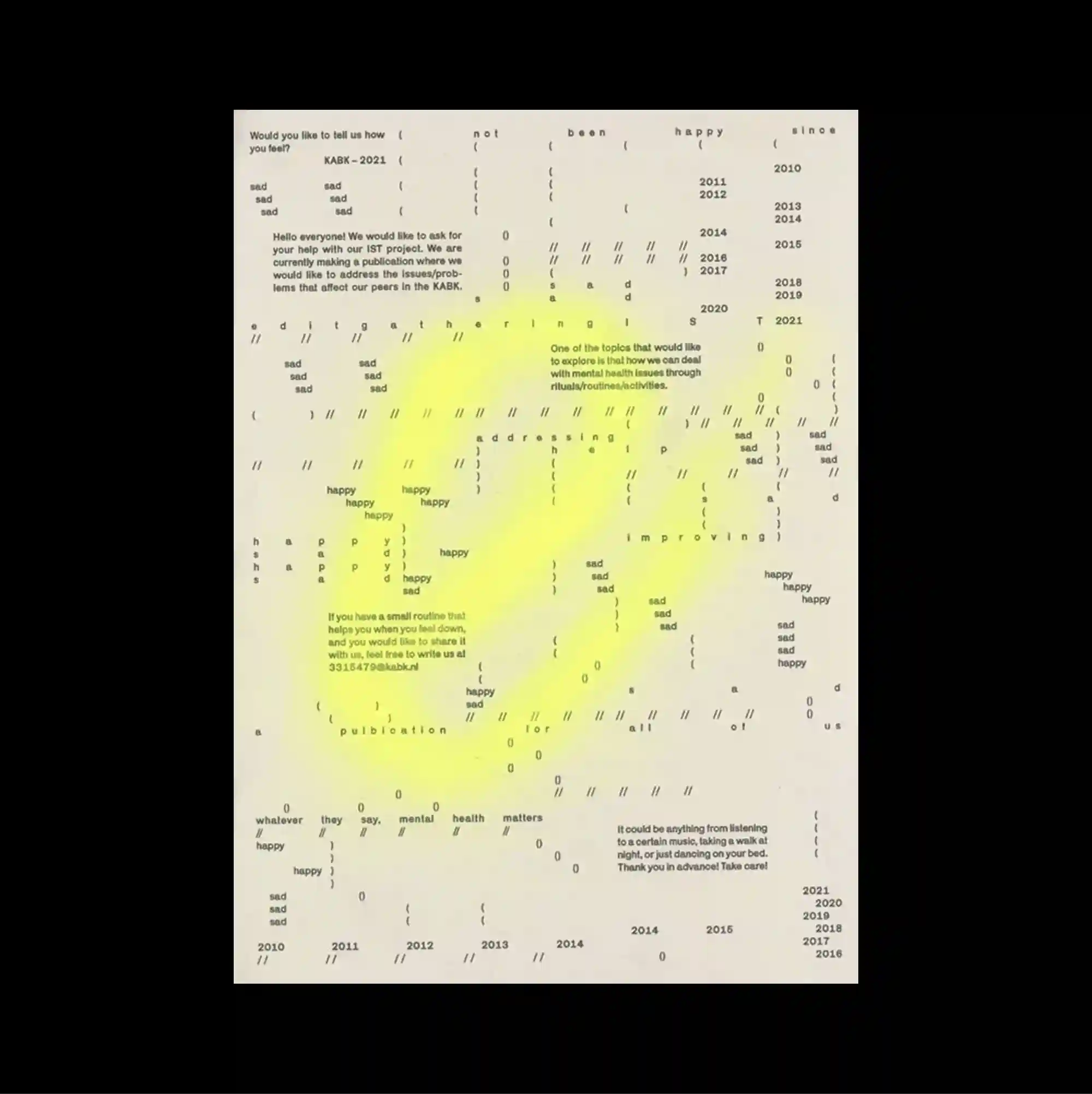
The entire surface is treated as a dense information field, with numerous small units packed closely enough to form an almost continuous visual texture. Monospaced and data-like typography is arranged in repeated rows and columns, giving the text the character of measurements, indexes, or coded information. Tiny words, numbers, and diagram-like marks are scattered across a pale page, while a soft fluorescent yellow cloud spreads through the center and interrupts the otherwise precise notation. Soft tonal transitions and selective color accents create an atmospheric surface where texture and spacing carry as much weight as typography.
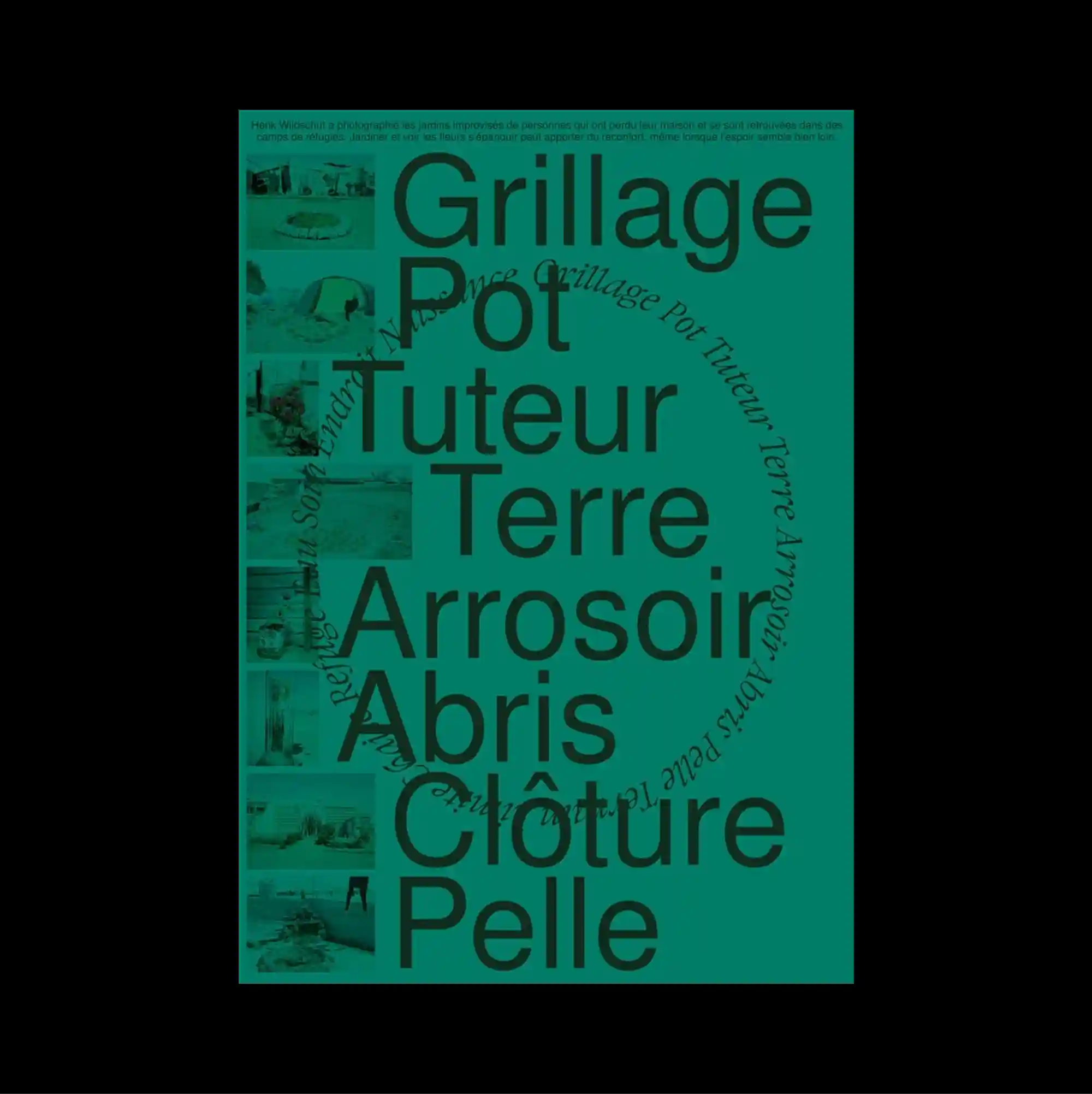
Typography occupies most of the page and functions as the primary image, with letterforms treated as large spatial masses rather than only carriers of information. Heavy black display type creates the main visual anchors, with smaller text fitted into the remaining gaps and margins. Large stacked black words fill most of a deep teal rectangle, while smaller curved text and faint photographic fragments remain partially visible behind the main typography. Large forms and compressed supporting information create a monumental hierarchy that feels assertive even within a tightly organized layout.
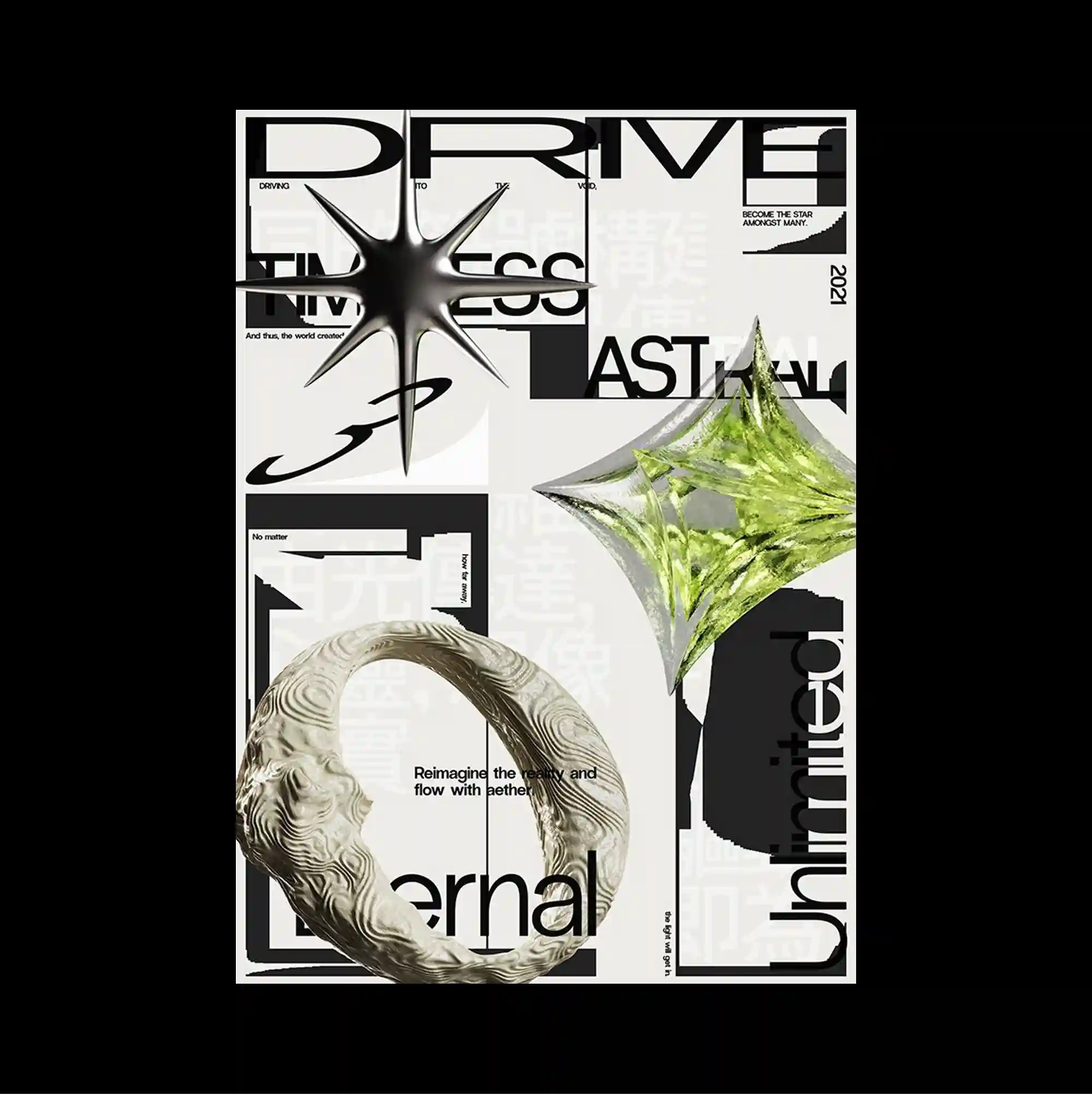
Several overlapping panels and cropped fragments are layered across the page, creating an assembled composition in which foreground and background continuously exchange roles. Oversized display lettering is paired with dense micro-typography, creating an extreme scale contrast between headline forms and secondary information. Oversized black display words collide with angular frames, grayscale text blocks, and glossy three-dimensional objects, creating a dense editorial collage with sharply competing depths. The compressed layering and hard contrasts produce a dense industrial character, with information behaving almost like a physical surface.
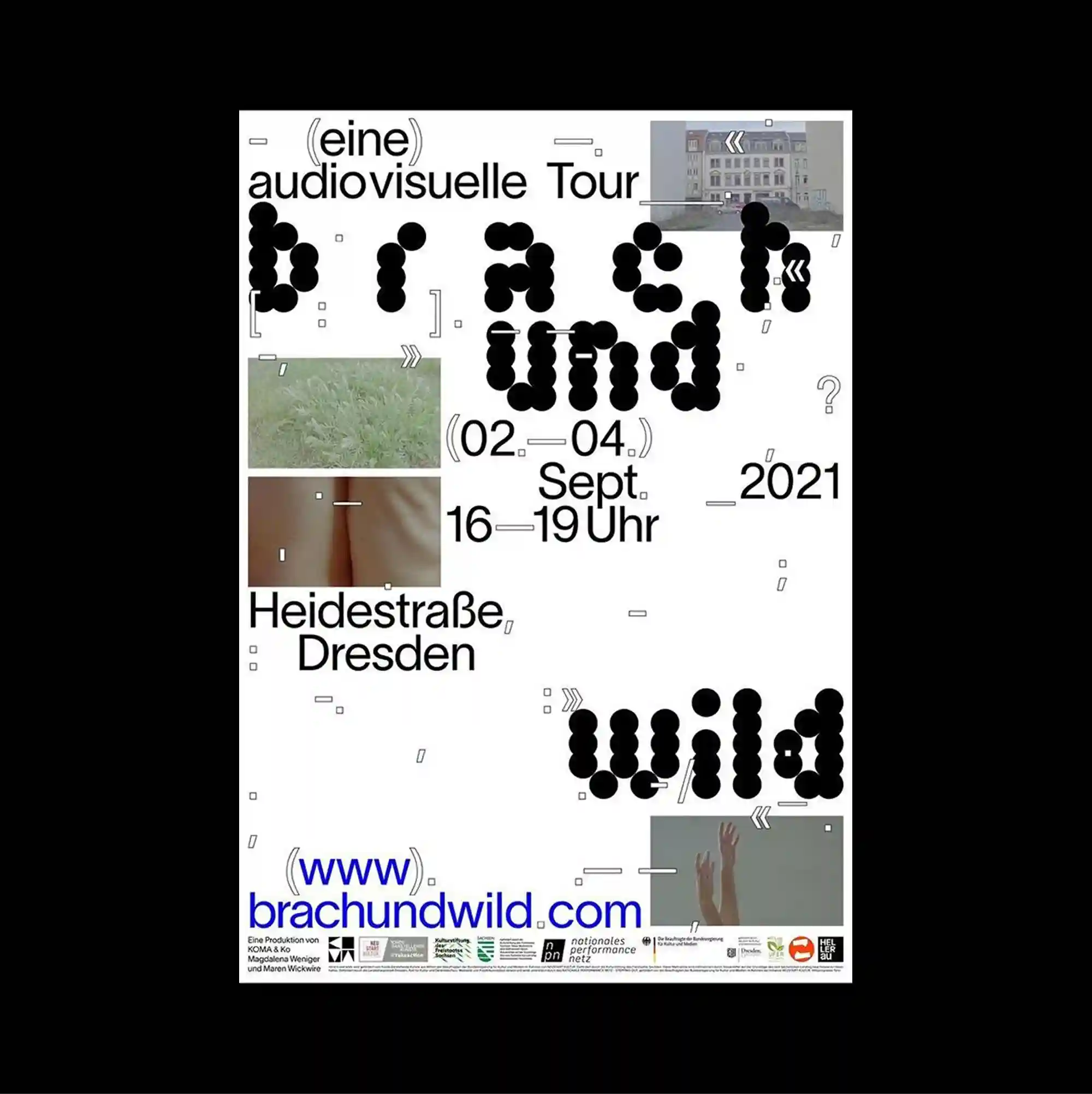
Several overlapping panels and cropped fragments are layered across the page, creating an assembled composition in which foreground and background continuously exchange roles. Typography is integrated with diagrams, coordinates, and graphic notation, so textual information and visual systems become difficult to separate. Clusters of black dots form large abstract letter-like masses, interspersed with pale photo snippets, muted green rectangles, small question marks, and isolated numeric details. The mixture of irregular fragments, changing scales, and layered surfaces gives the work an experimental collage quality without losing overall balance.
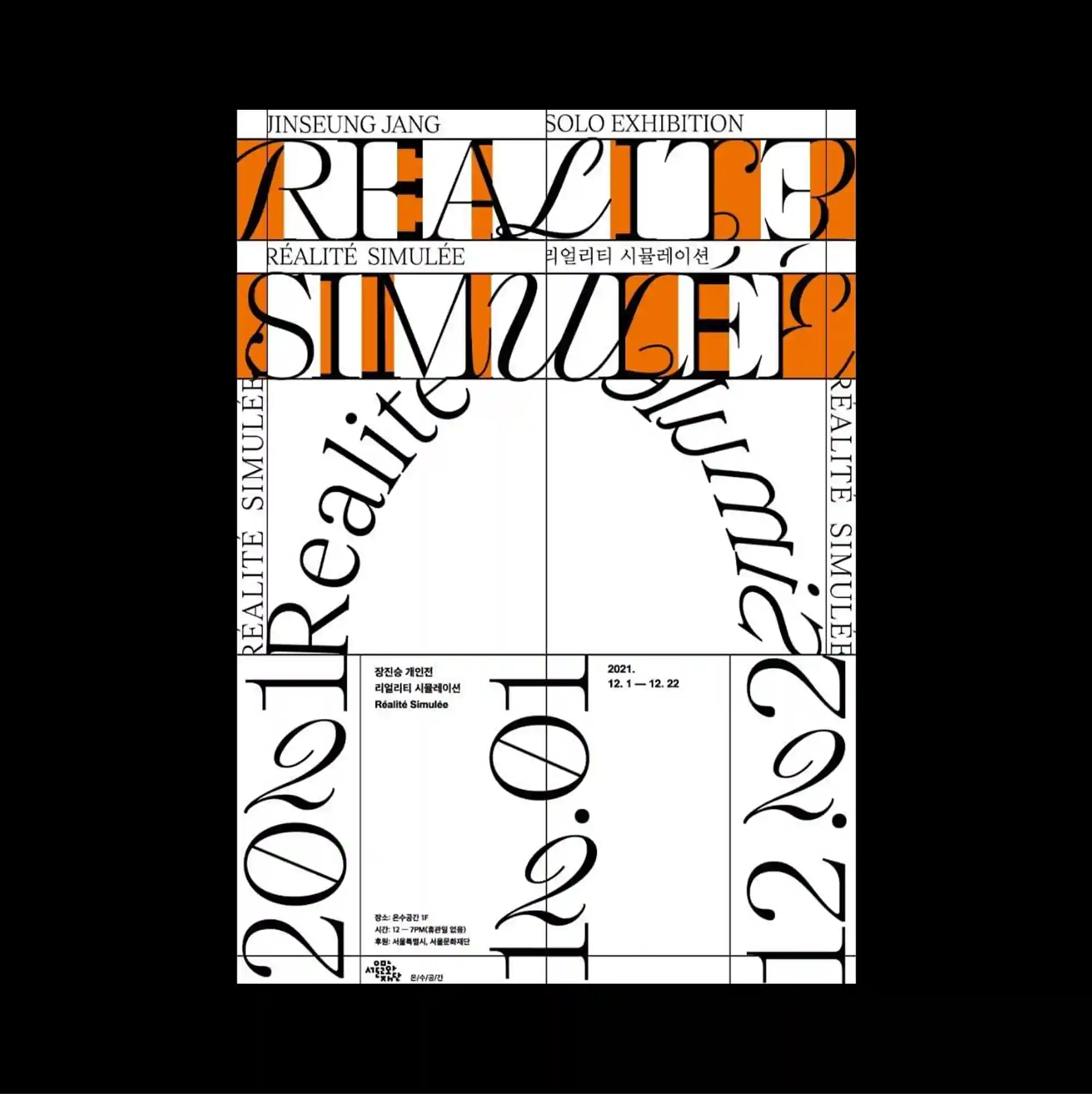
The page is organized as a sequence of modular bands and compartments, each functioning like a small technical panel within a larger information system. Letterforms are stretched, distorted, cropped, or rotated until the typography begins to operate as an abstract graphic material. Orange and black bands slice through a strict grid while enormous warped serif words curve across multiple compartments and thin rules keep the structure visibly segmented. Strong scale contrast and simplified spatial relationships make the composition immediately readable while preserving a distinctive experimental edge.
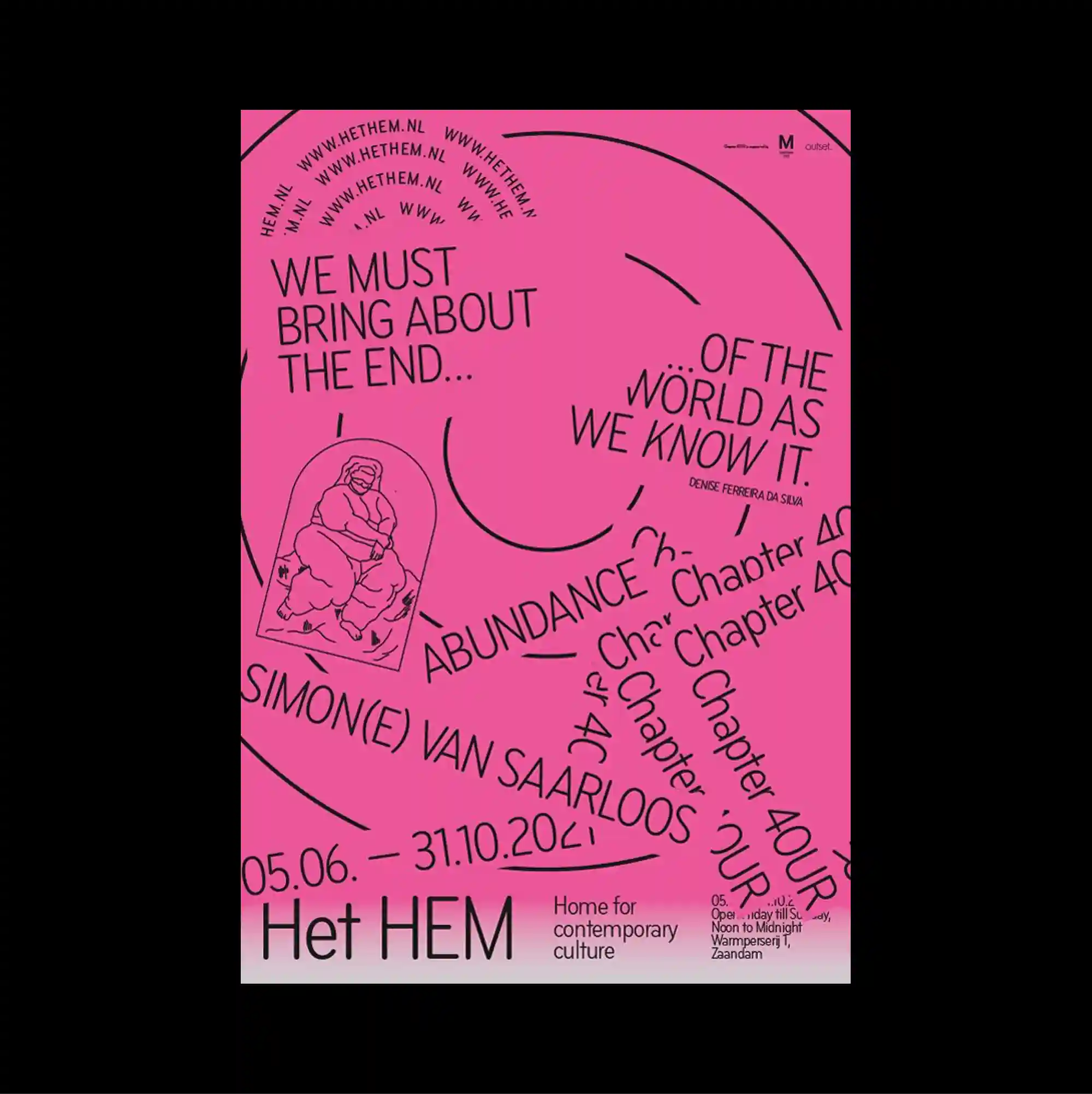
An asymmetrical arrangement is anchored by one oversized geometric or typographic form, while smaller supporting elements are pushed toward the edges. Different scripts, orientations, and typographic weights are mixed freely, producing a layered reading experience with no single dominant direction. A saturated pink field is crossed by long curved lines, angled phrases, a small outlined figure, and repeated chapter-like text that bends around the open center. Unexpected alignments, playful shapes, and uneven spacing create a deliberately irregular rhythm that keeps the surface visually active.
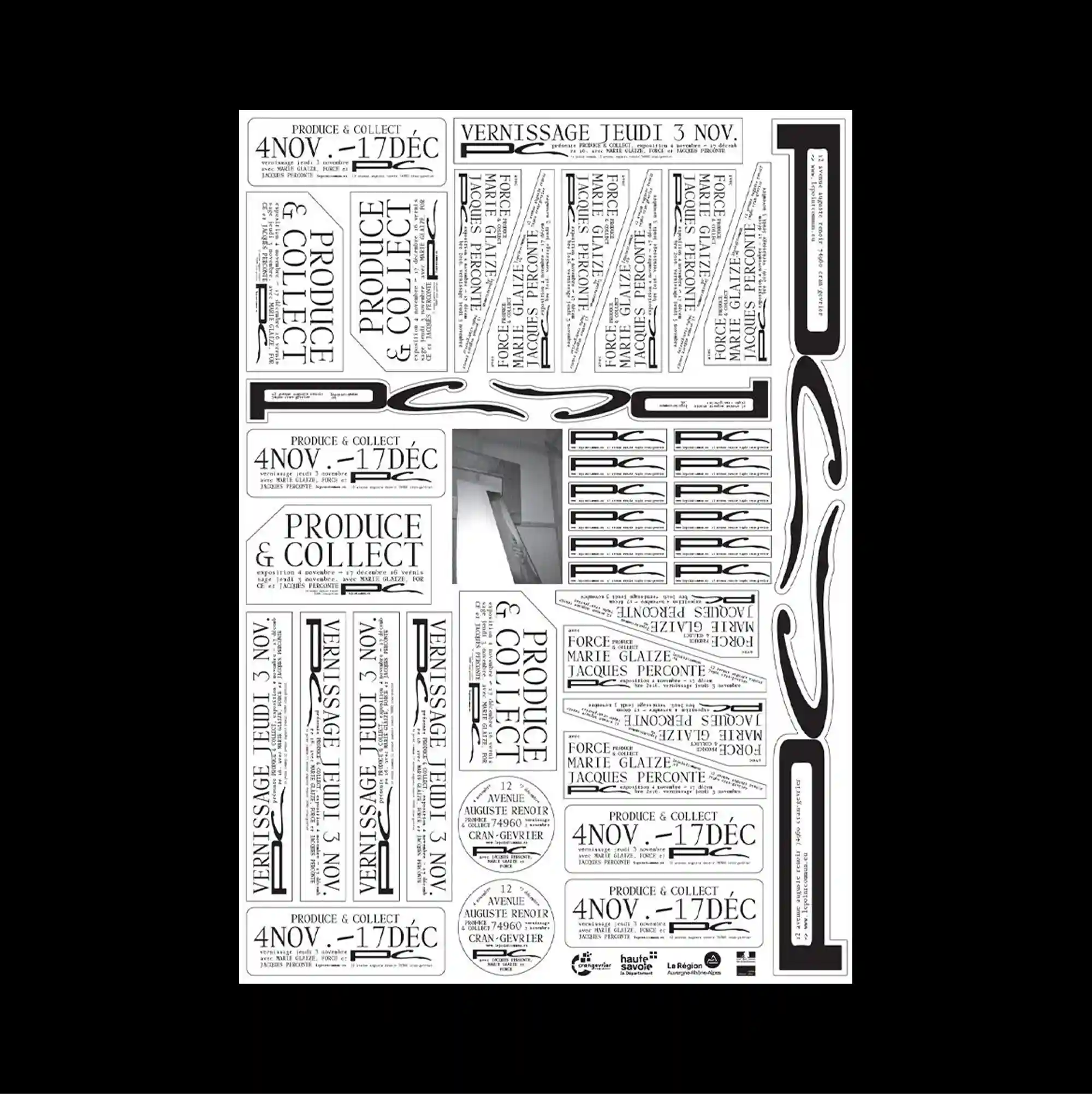
The entire surface is treated as a dense information field, with numerous small units packed closely enough to form an almost continuous visual texture. Text is tightly aligned to grids, rules, and modular divisions, reinforcing the sense of a carefully engineered information structure. Numerous narrow ticket-like rectangles, condensed labels, and bold outlined side forms are packed into a strict black-and-white arrangement with repeated separators. The compressed layering and hard contrasts produce a dense industrial character, with information behaving almost like a physical surface.
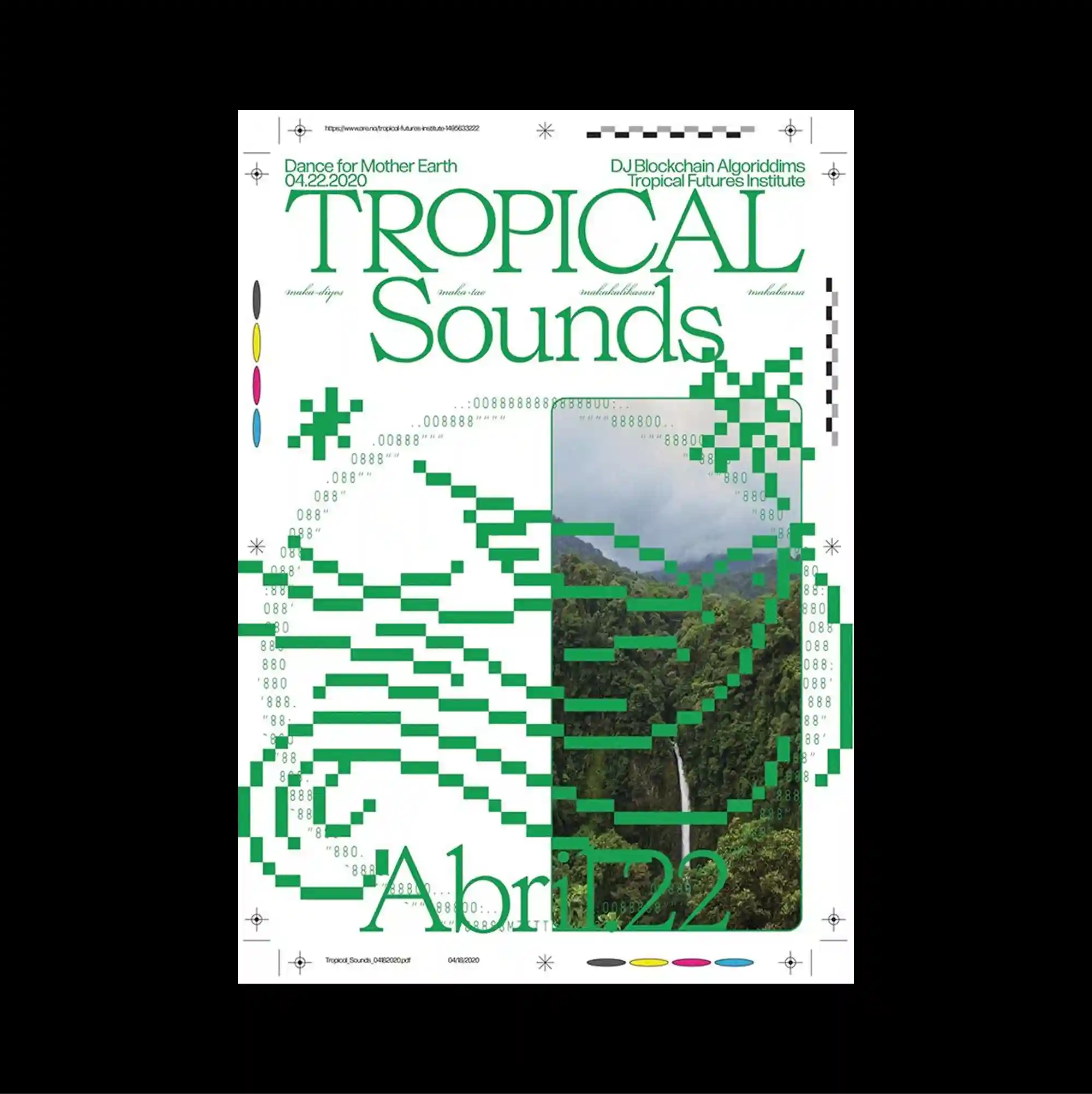
Several overlapping panels and cropped fragments are layered across the page, creating an assembled composition in which foreground and background continuously exchange roles. Typography is integrated with diagrams, coordinates, and graphic notation, so textual information and visual systems become difficult to separate. Bright green pixel-like wave patterns surround a central rectangular landscape image, while oversized green serif lettering and small calibration marks extend around the perimeter. The repeated structures make the poster read like a diagram or index, with visual meaning emerging from accumulation rather than a single focal image.
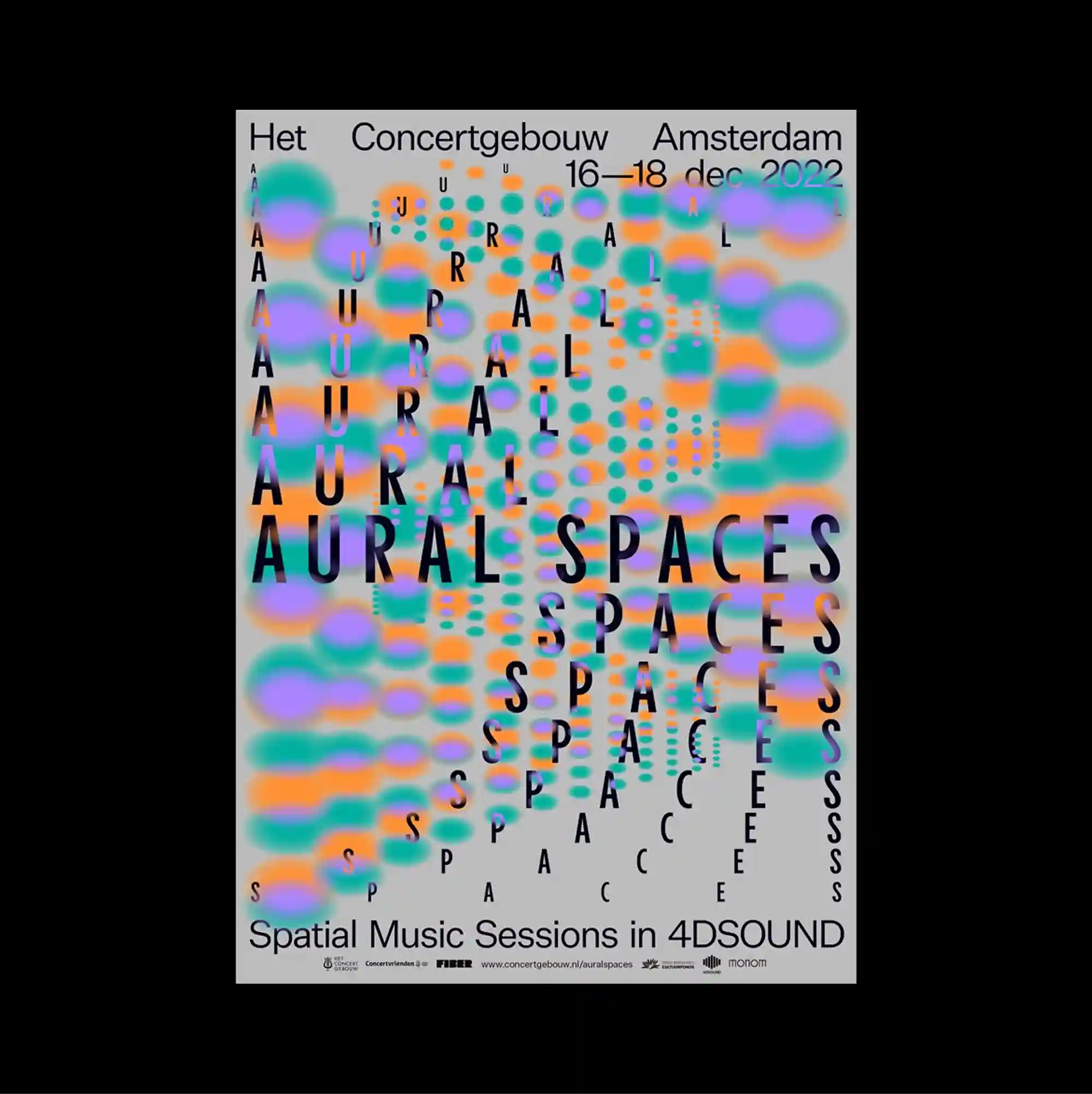
The entire surface is treated as a dense information field, with numerous small units packed closely enough to form an almost continuous visual texture. Heavy black display type creates the main visual anchors, with smaller text fitted into the remaining gaps and margins. Soft multicolored blurred shapes repeat behind tall black lettering, creating a dense field where the text remains legible through strong contrast and vertical alignment. Bold color contrasts and abrupt shifts in scale produce an energetic graphic rhythm that remains legible despite the density of the elements.
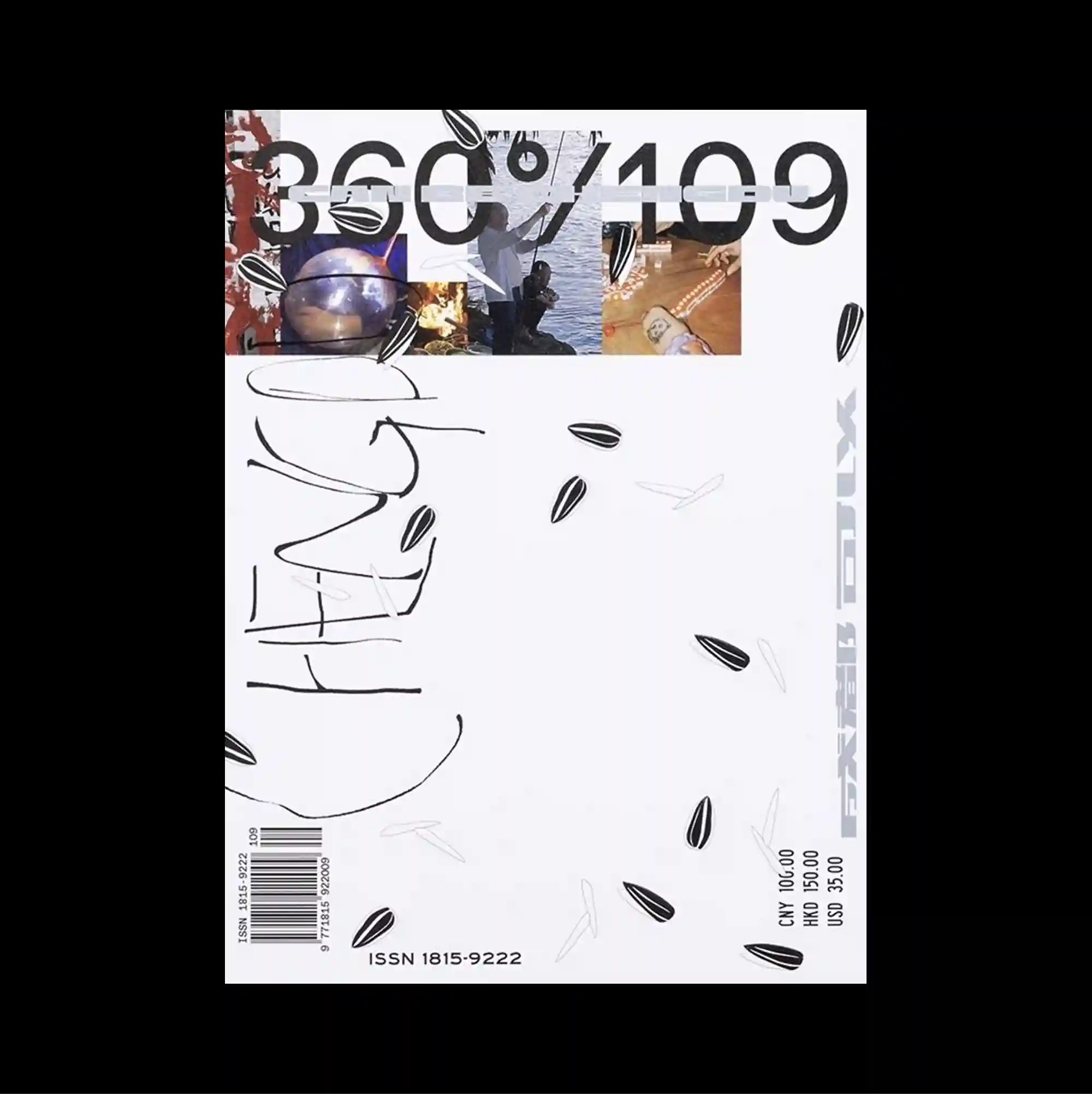
Several overlapping panels and cropped fragments are layered across the page, creating an assembled composition in which foreground and background continuously exchange roles. A strong hierarchy is created almost entirely through scale, with very large type set against miniature labels and finely printed supporting text. A narrow collage strip of photographs runs across the top, while a huge cropped number, loose black drawing, barcode, and scattered seed-like marks occupy the white lower field. The mixture of irregular fragments, changing scales, and layered surfaces gives the work an experimental collage quality without losing overall balance.
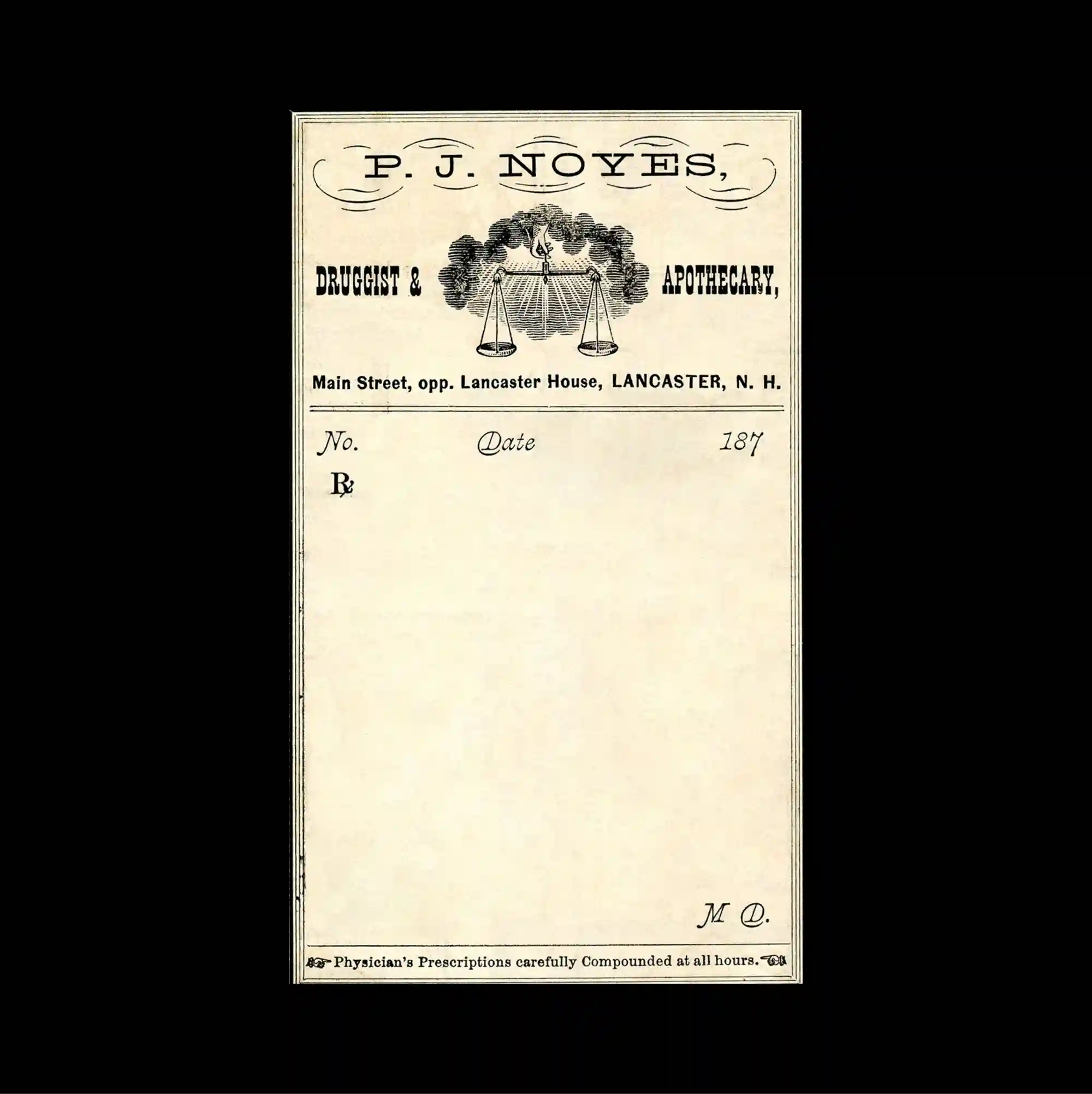
A centered composition leaves a substantial amount of open space around the main elements, allowing a small cluster of imagery and type to carry most of the visual weight. Restrained serif typography is used at a relatively small scale, allowing generous spacing and subtle alignment shifts to define the hierarchy. The design resembles a vintage form, using an ornate engraved header, thin horizontal writing lines, and a large untouched central area with softly aged paper texture. The controlled alignment and rough material details give the poster a direct archival print character while keeping the visual rhythm sharply organized.
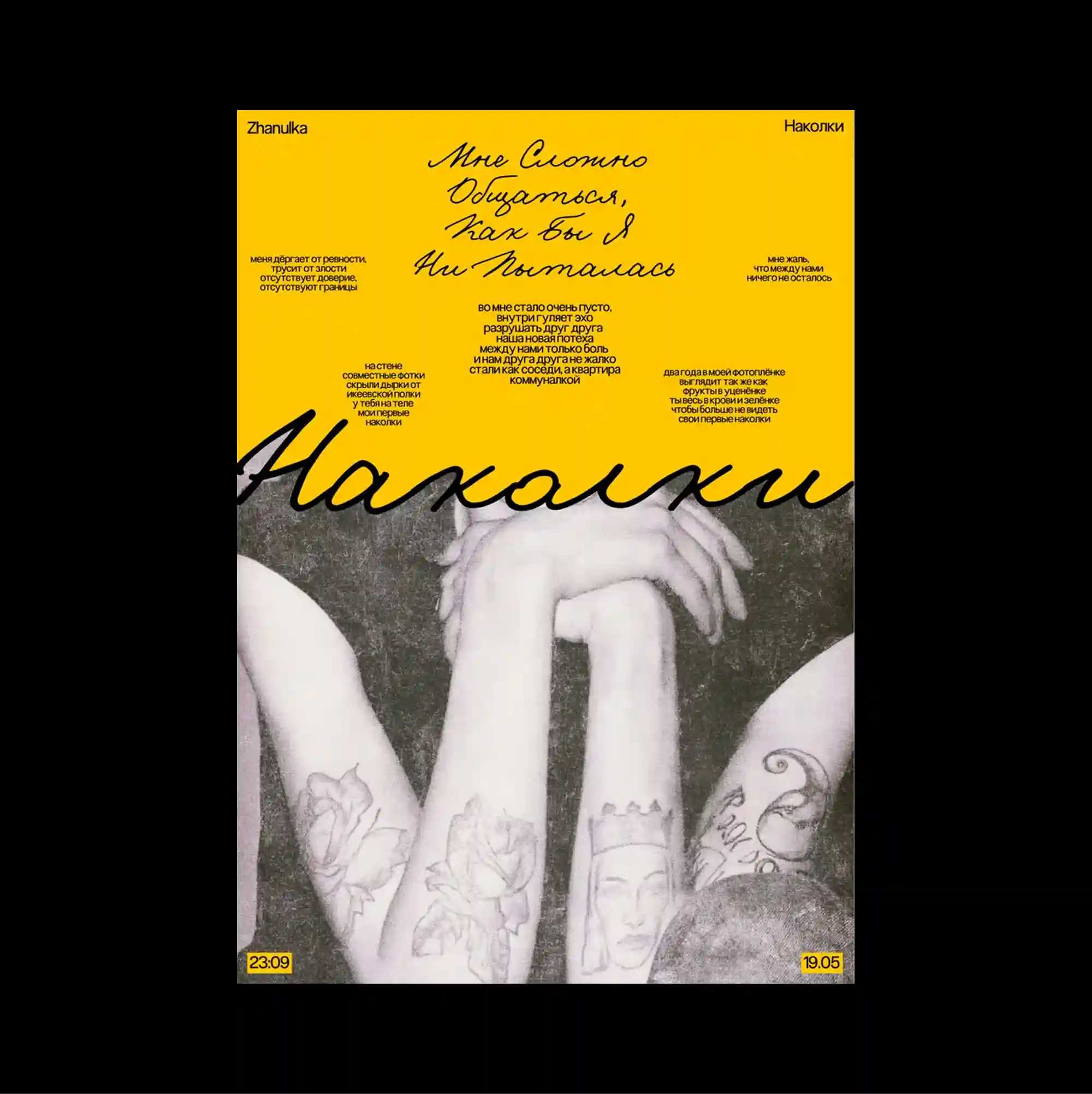
The design is divided into strongly contrasting color and image zones, using large rectangular fields to establish a clear structural hierarchy. Handwritten marks and informal annotations are layered over more systematic printed type, creating tension between spontaneous gestures and controlled typography. A mustard-colored upper field holds compact text and sweeping script, while the lower half is dominated by a grayscale crop of tattooed arms and hands. Bold color contrasts and abrupt shifts in scale produce an energetic graphic rhythm that remains legible despite the density of the elements.
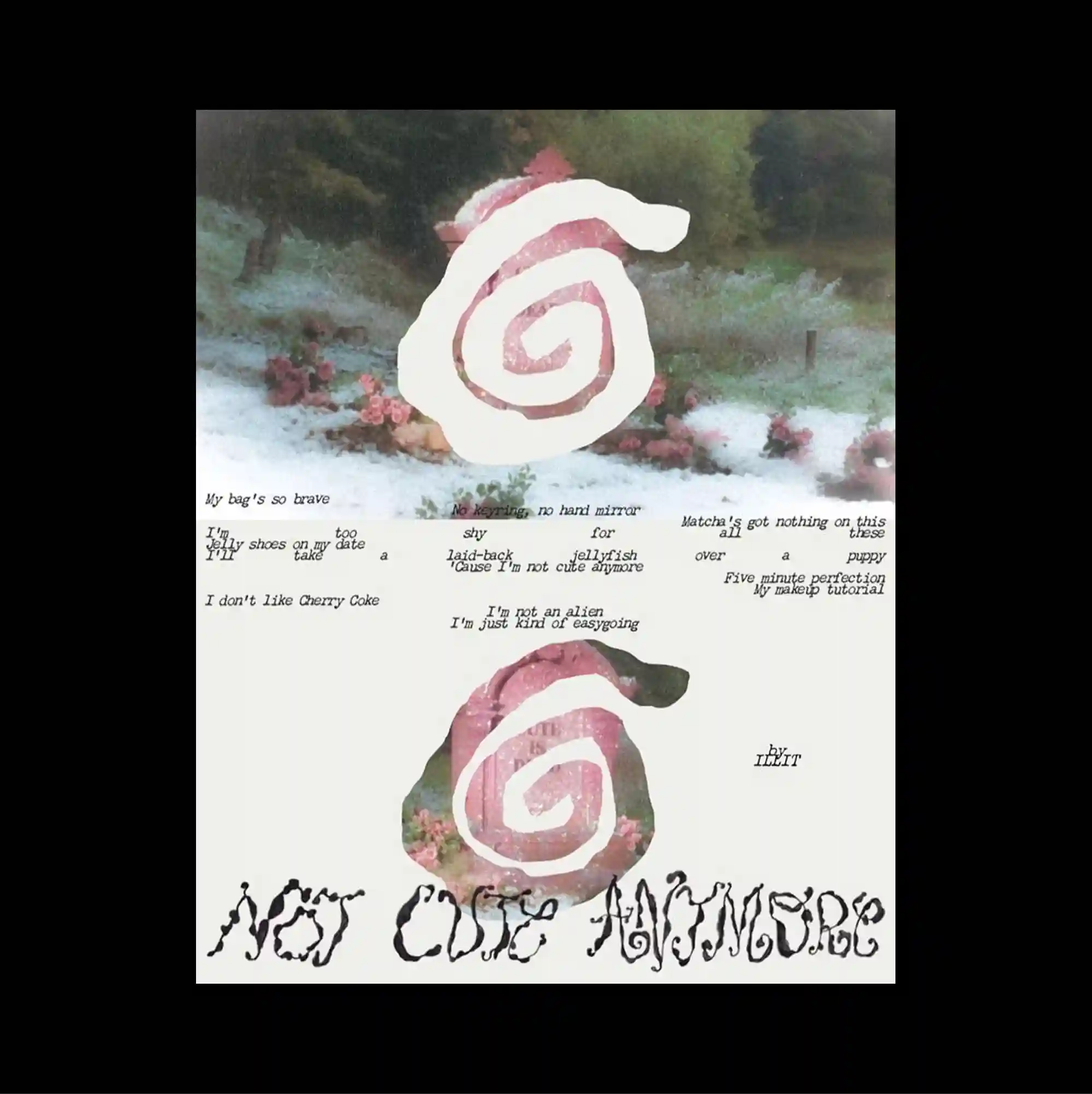
The poster separates a compact image band from a larger lower field, creating a two-part structure with a pronounced shift in density between the sections. Handwritten marks and informal annotations are layered over more systematic printed type, creating tension between spontaneous gestures and controlled typography. Two muted photographic scenes are interrupted by large white spiral symbols, while small typed lines and rough handwritten forms cluster through the center and lower edge. Visible grain, imperfect edges, and mixed image qualities introduce a tactile analog character that softens the underlying grid.
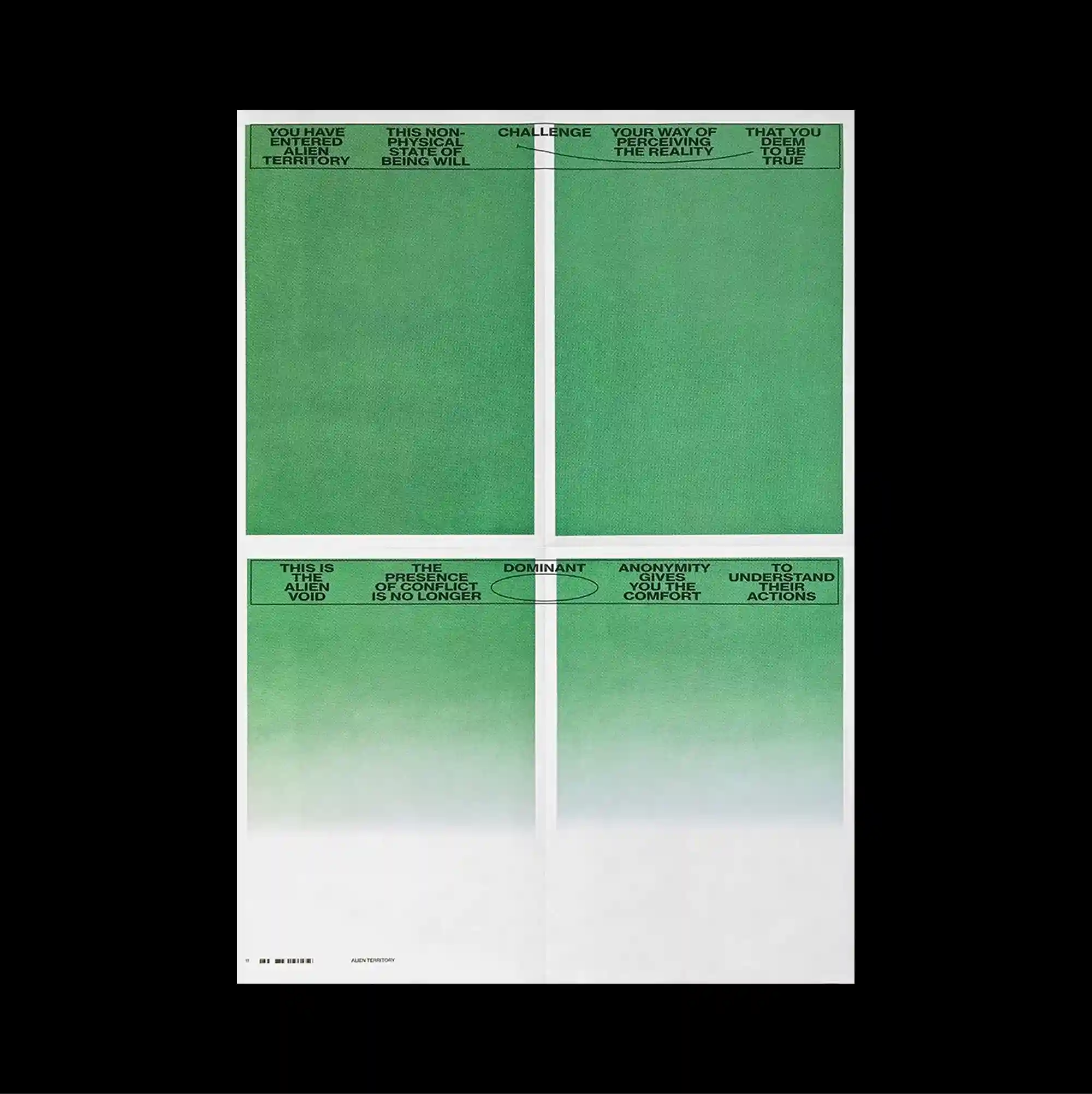
The surface is built from stacked rectangular panels of different sizes, producing a clear vertical rhythm through repeated blocks and abrupt transitions. Narrow columns of small sans-serif type establish a controlled rhythm, while occasional larger words interrupt the grid and create focal points. Four green gradient panels are divided by a white cross, with tiny repeated type concentrated along the upper and central edges of each section. Precise alignment and dense secondary information give the design a highly functional appearance while preserving a distinctive graphic hierarchy.
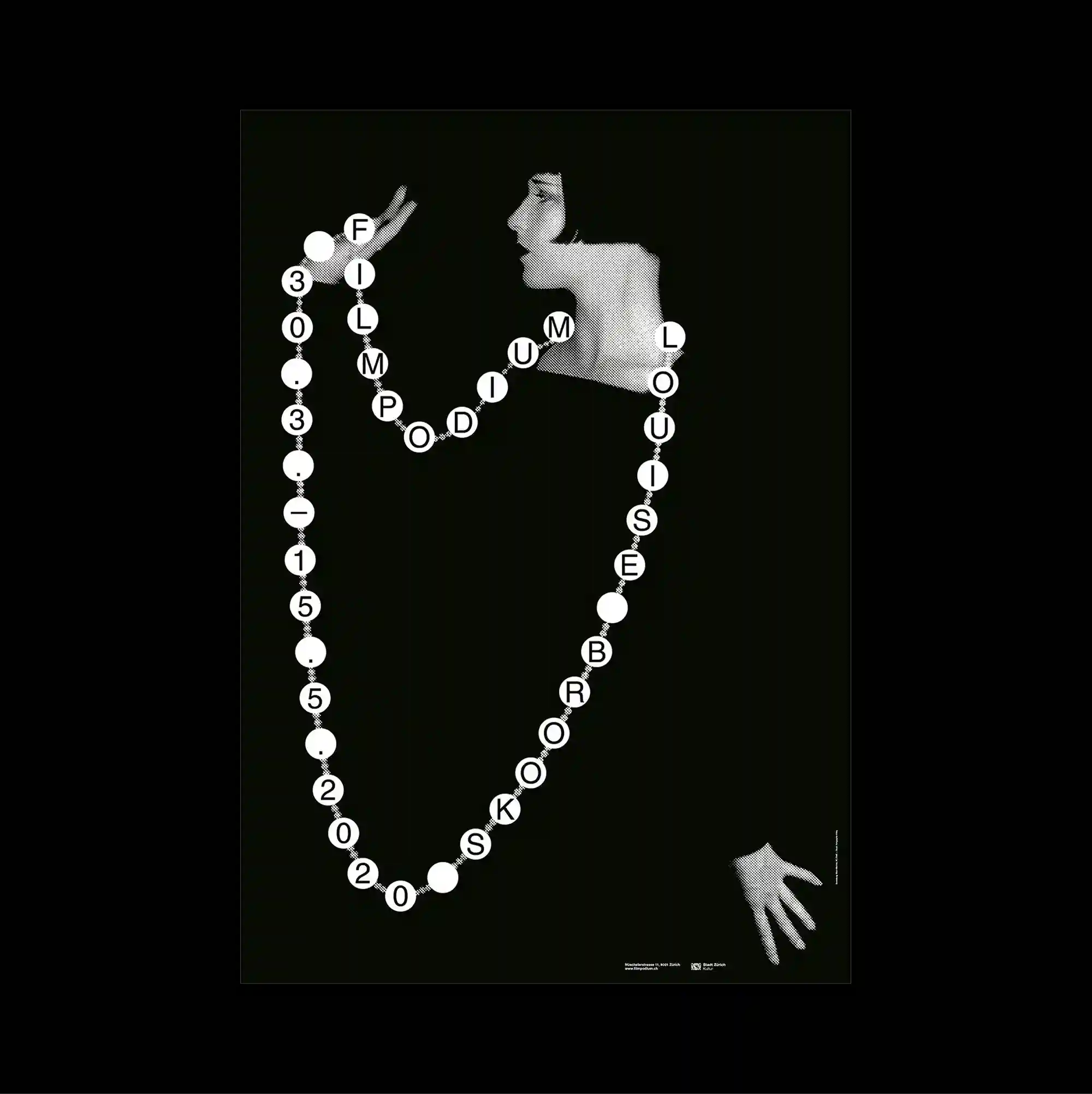
A radial structure dominates the page, arranging text and graphic marks around circular paths that pull attention toward and away from the center. Monospaced and data-like typography is arranged in repeated rows and columns, giving the text the character of measurements, indexes, or coded information. White circular nodes marked with letters and numbers trace an irregular looping path, joined by a few isolated grayscale body fragments at the outer corners. The repeated structures make the poster read like a diagram or index, with visual meaning emerging from accumulation rather than a single focal image.
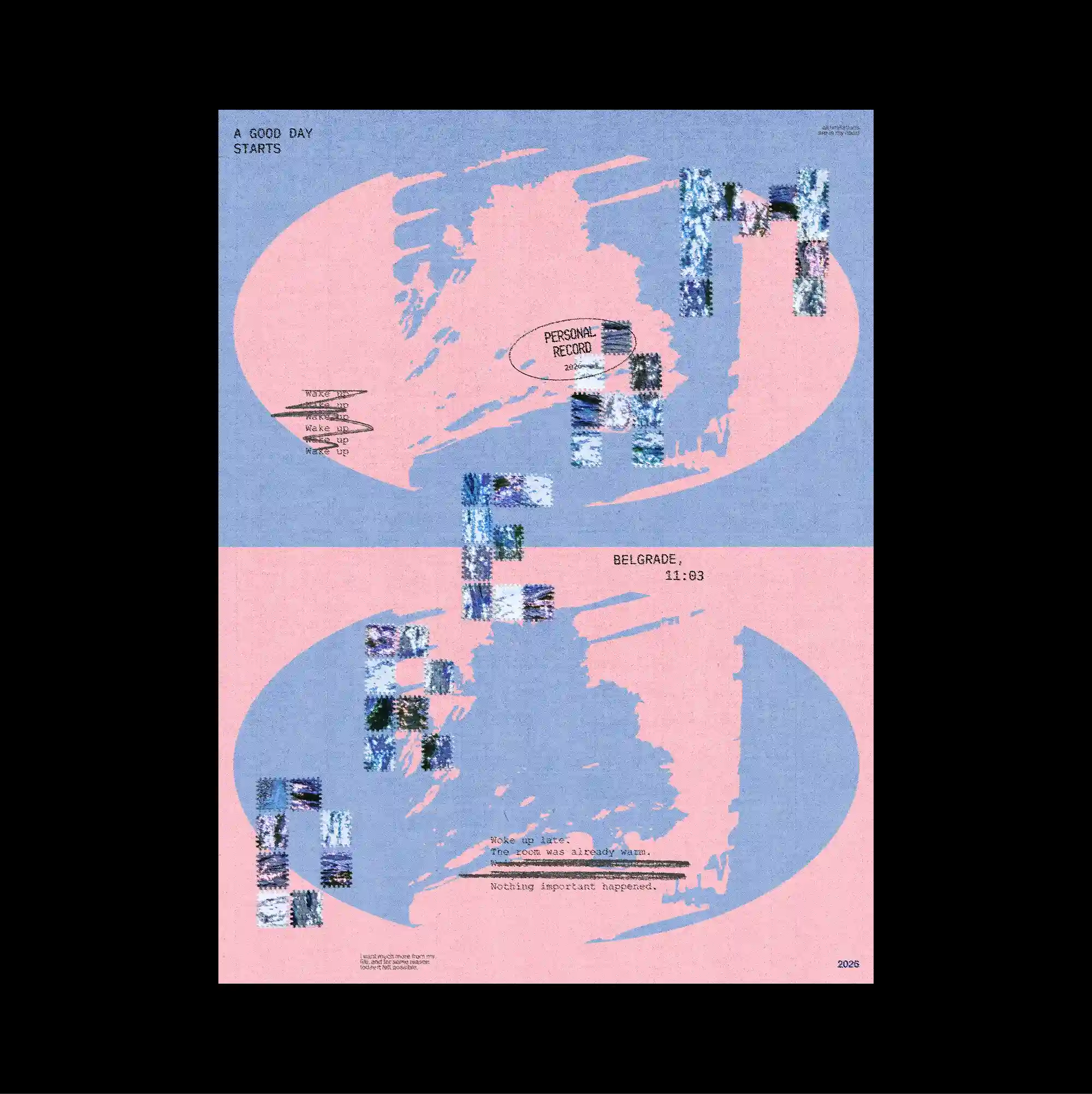
Several overlapping panels and cropped fragments are layered across the page, creating an assembled composition in which foreground and background continuously exchange roles. Different scripts, orientations, and typographic weights are mixed freely, producing a layered reading experience with no single dominant direction. Large pink and blue organic shapes overlap across the page while tiny image fragments and narrow text labels appear intermittently along the irregular contours. Unexpected alignments, playful shapes, and uneven spacing create a deliberately irregular rhythm that keeps the surface visually active.
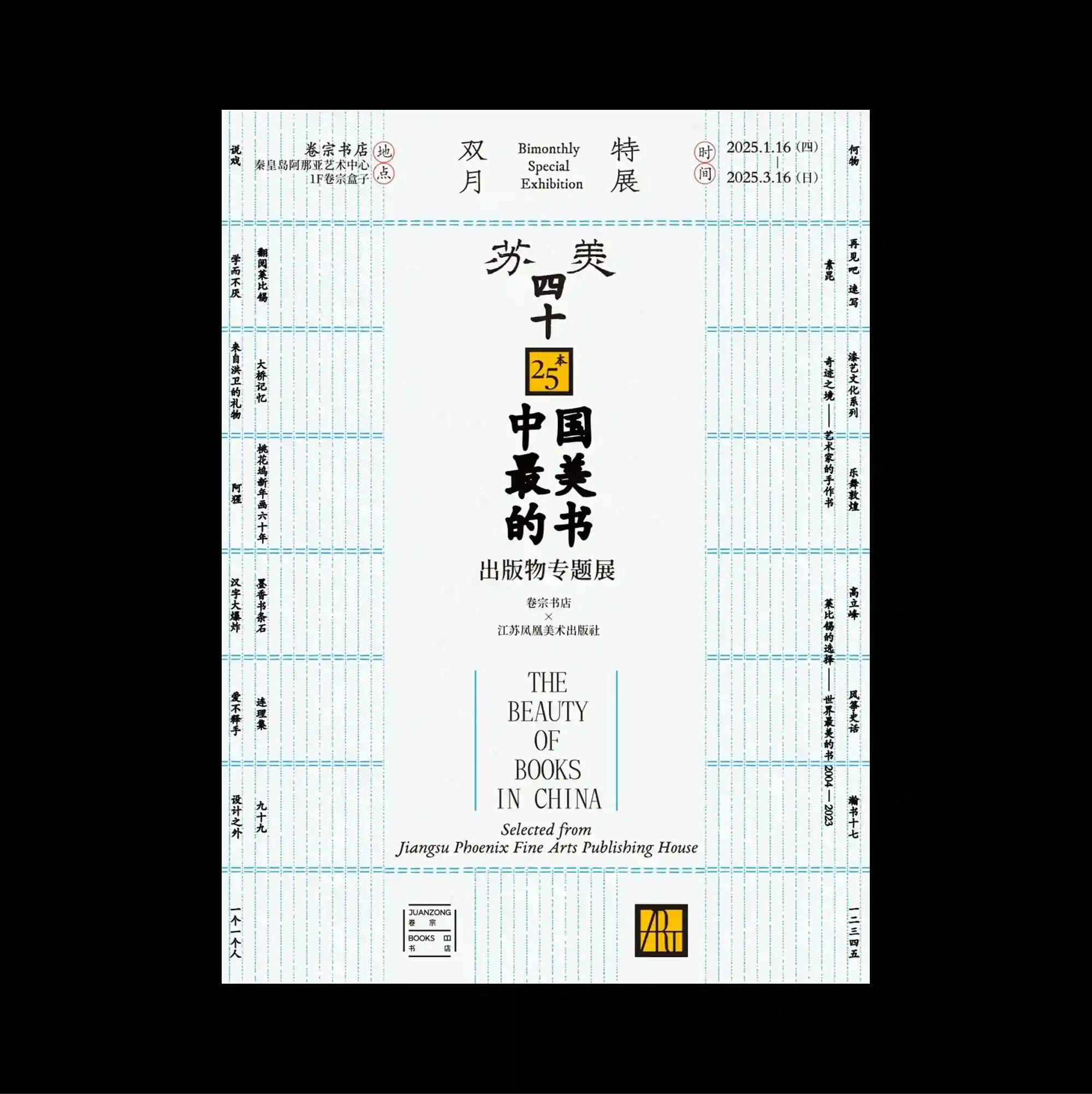
The page is organized as a sequence of modular bands and compartments, each functioning like a small technical panel within a larger information system. Vertical East Asian type is combined with smaller horizontal information, creating multiple reading directions within the same tightly controlled structure. Fine blue ruled lines structure the sheet like a ledger, while tall black Chinese characters, narrow side columns, and small registration marks create a formal publication-like framework. The careful sequencing of headings, captions, and images gives the piece the discipline of a publication page while retaining the impact of a poster.
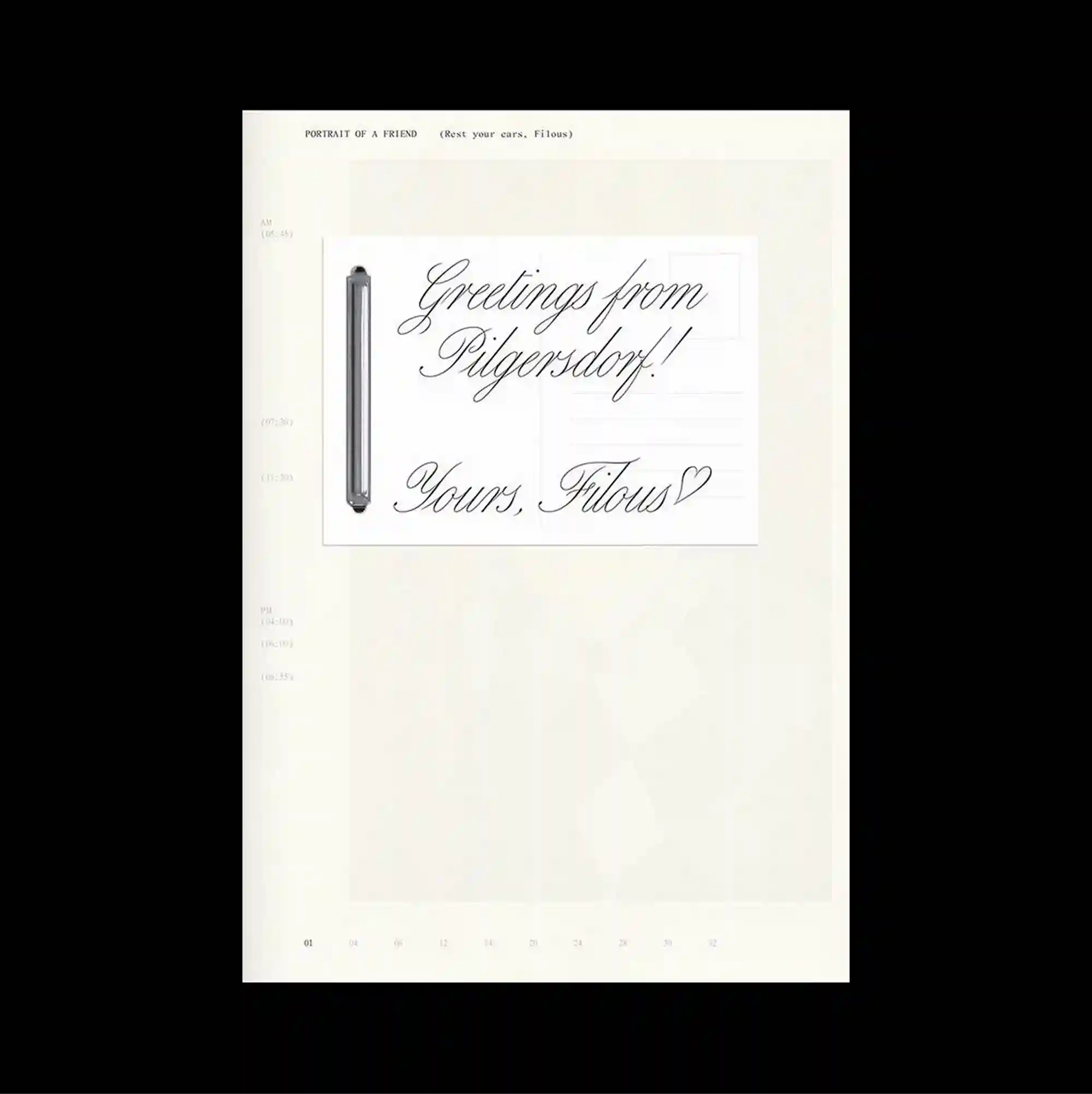
A centered composition leaves a substantial amount of open space around the main elements, allowing a small cluster of imagery and type to carry most of the visual weight. Restrained serif typography is used at a relatively small scale, allowing generous spacing and subtle alignment shifts to define the hierarchy. A small inset card with ornate script sits near the upper center of a pale sheet, while faint peripheral marks and tiny bottom details keep the rest exceptionally restrained. Generous empty space and restrained detail create a quiet composition in which small shifts of placement become visually significant.
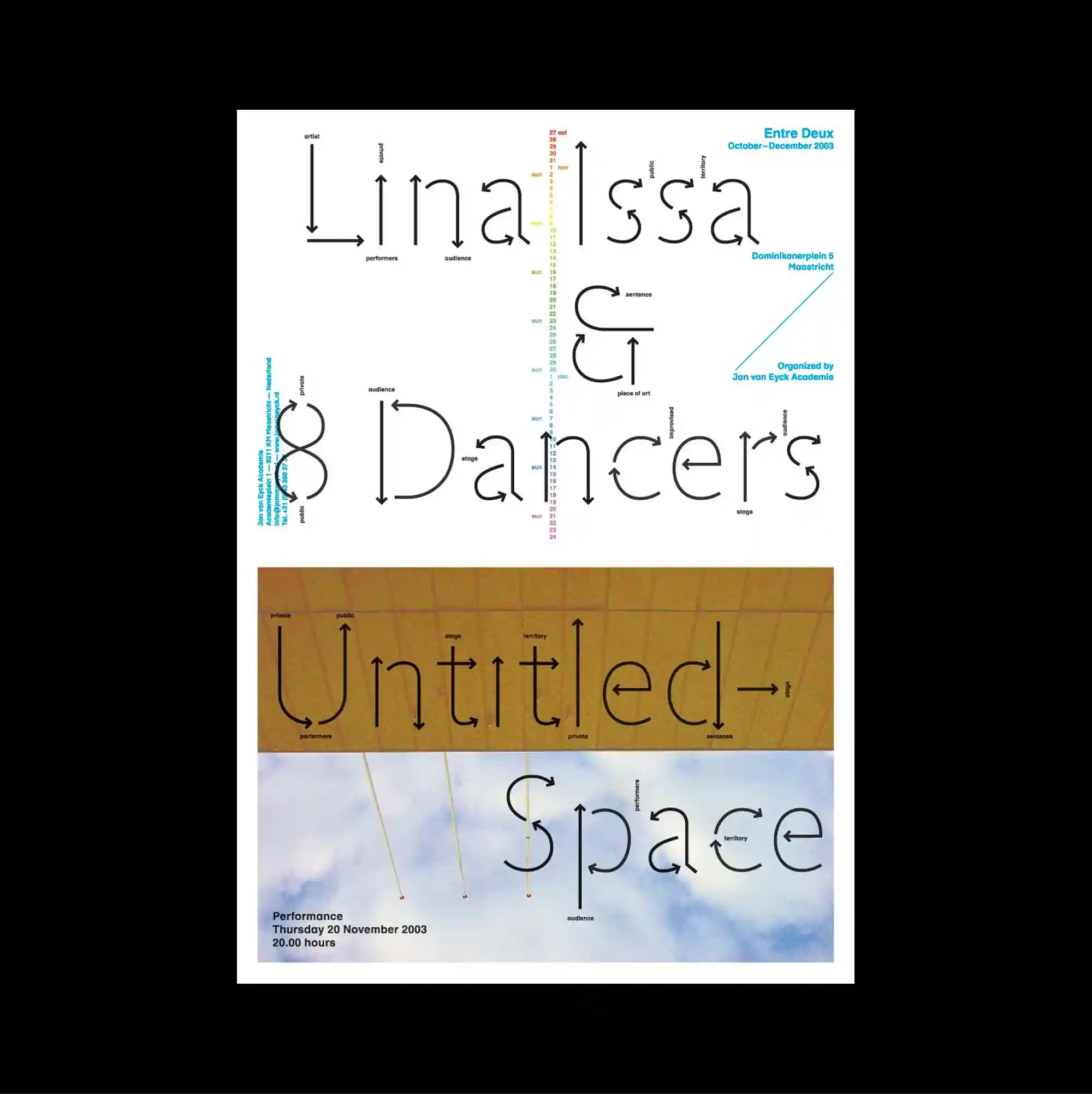
The surface is built from stacked rectangular panels of different sizes, producing a clear vertical rhythm through repeated blocks and abrupt transitions. Thin outlined lettering and delicate strokes keep the typography visually light, even when the letterforms extend to a large scale. Thin elongated letterforms stretch vertically across several horizontal bands, mixing pale blue imagery, a warm ochre rectangle, and small calibration-like marks. Strong scale contrast and simplified spatial relationships make the composition immediately readable while preserving a distinctive experimental edge.
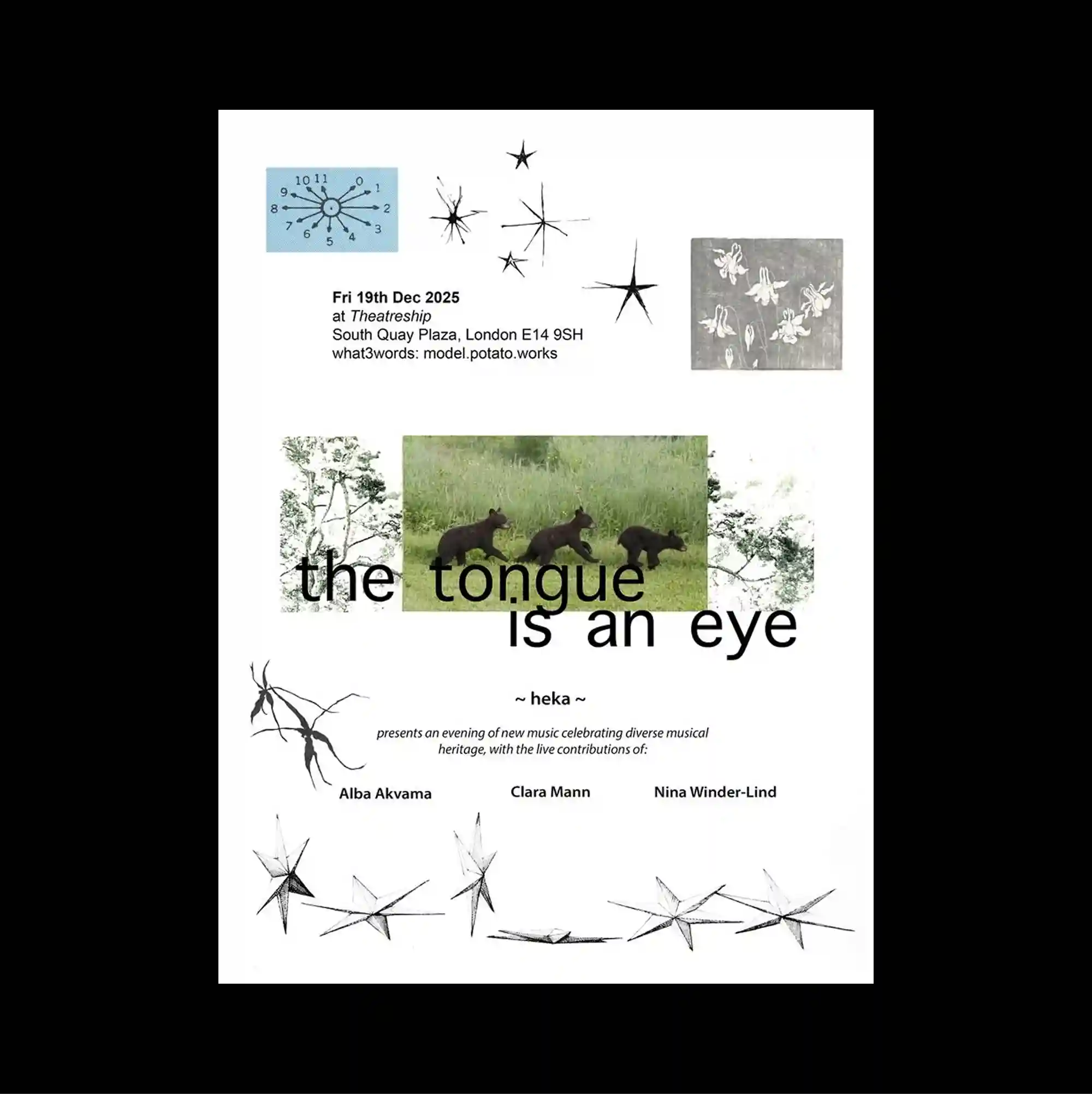
Several overlapping panels and cropped fragments are layered across the page, creating an assembled composition in which foreground and background continuously exchange roles. Thin outlined lettering and delicate strokes keep the typography visually light, even when the letterforms extend to a large scale. Plant and landscape fragments are combined with small star-like drawings, thin branching lines, and a central title that cuts across a strip of green imagery. Unexpected alignments, playful shapes, and uneven spacing create a deliberately irregular rhythm that keeps the surface visually active.
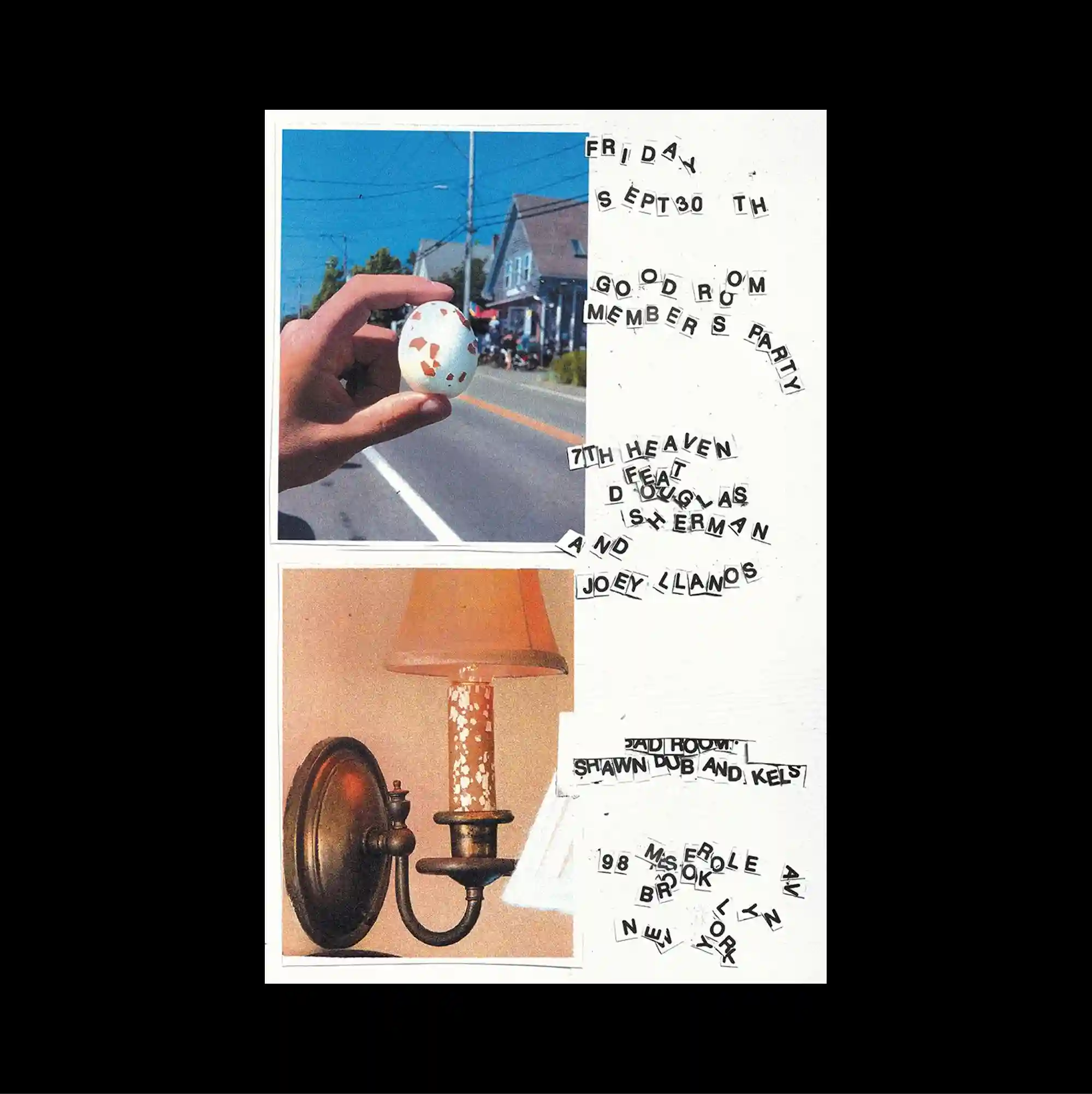
Several overlapping panels and cropped fragments are layered across the page, creating an assembled composition in which foreground and background continuously exchange roles. Handwritten marks and informal annotations are layered over more systematic printed type, creating tension between spontaneous gestures and controlled typography. Two rectangular photographs are stacked diagonally with informal handwritten notes wrapping around them, giving the page the appearance of an annotated scrapbook or personal document. Visible grain, imperfect edges, and mixed image qualities introduce a tactile analog character that softens the underlying grid.
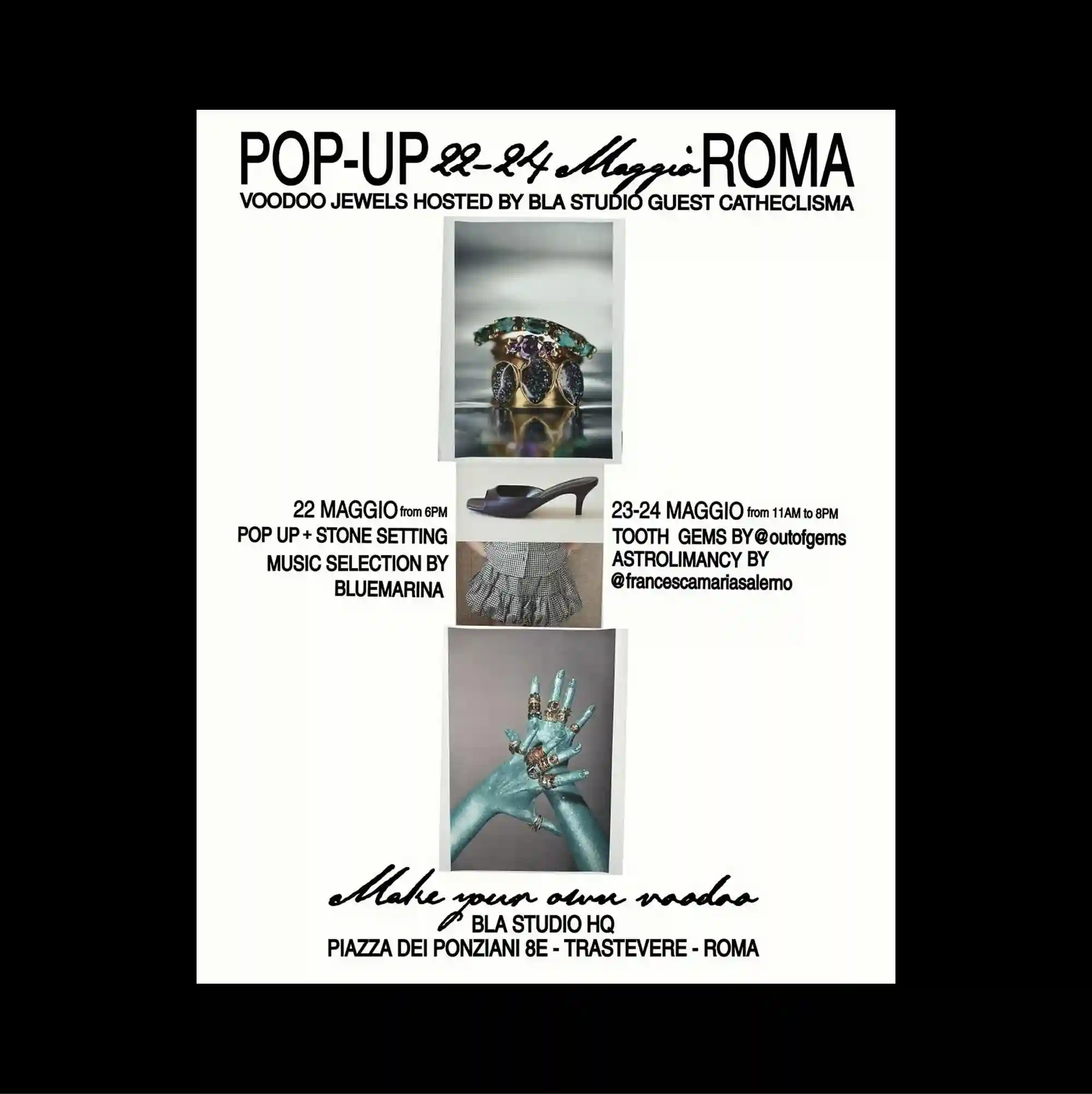
A centered composition leaves a substantial amount of open space around the main elements, allowing a small cluster of imagery and type to carry most of the visual weight. Heavy black display type creates the main visual anchors, with smaller text fitted into the remaining gaps and margins. A large black title spans the top while two small object photographs are separated vertically through the center, surrounded by compact captions and extensive white space. Generous empty space and restrained detail create a quiet composition in which small shifts of placement become visually significant.
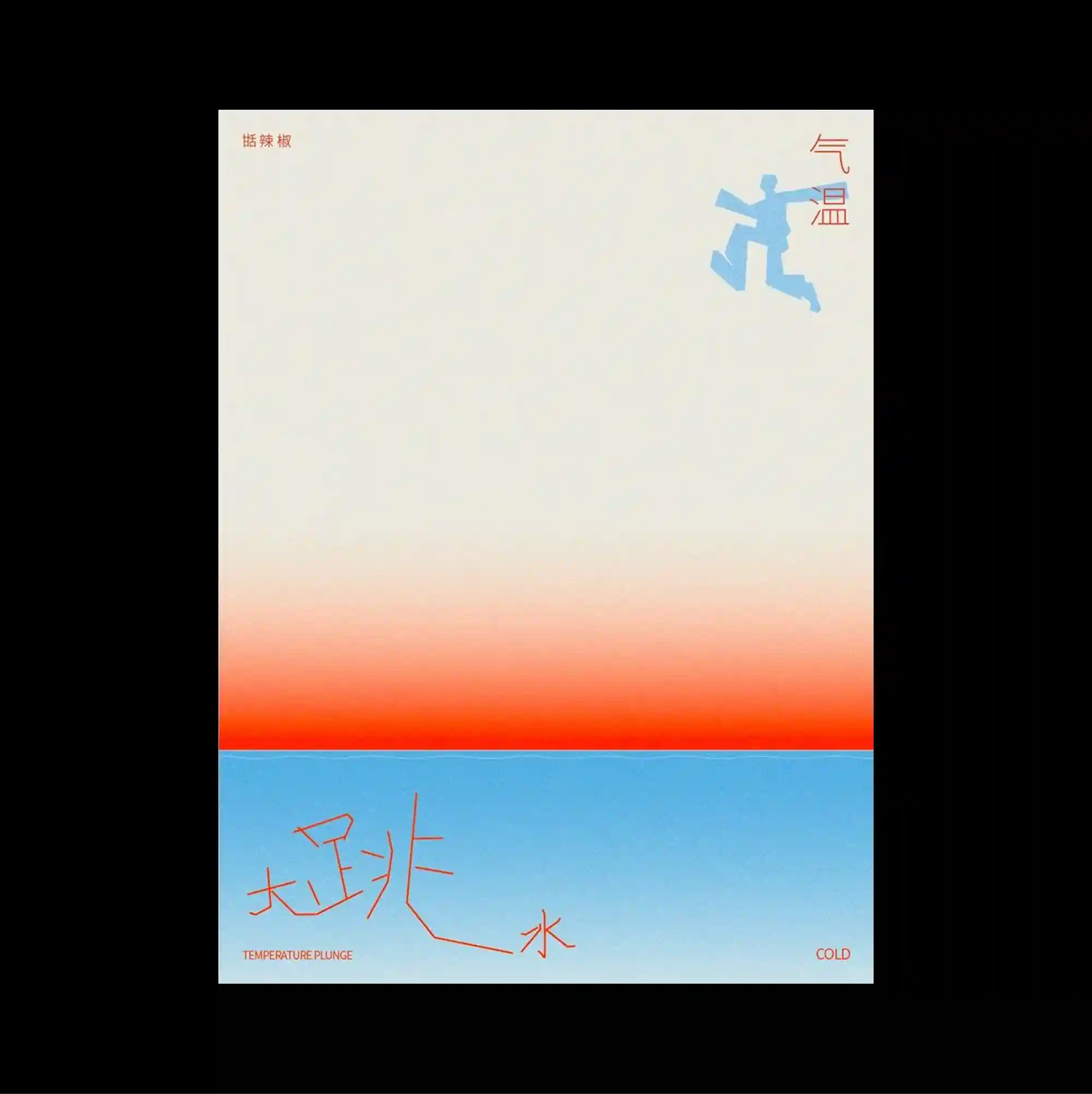
The design is divided into strongly contrasting color and image zones, using large rectangular fields to establish a clear structural hierarchy. Handwritten marks and informal annotations are layered over more systematic printed type, creating tension between spontaneous gestures and controlled typography. A pale upper field transitions through a warm orange band into a bright blue lower section, accented by a small cyan figure and loose red handwritten strokes. Soft tonal transitions and selective color accents create an atmospheric surface where texture and spacing carry as much weight as typography.
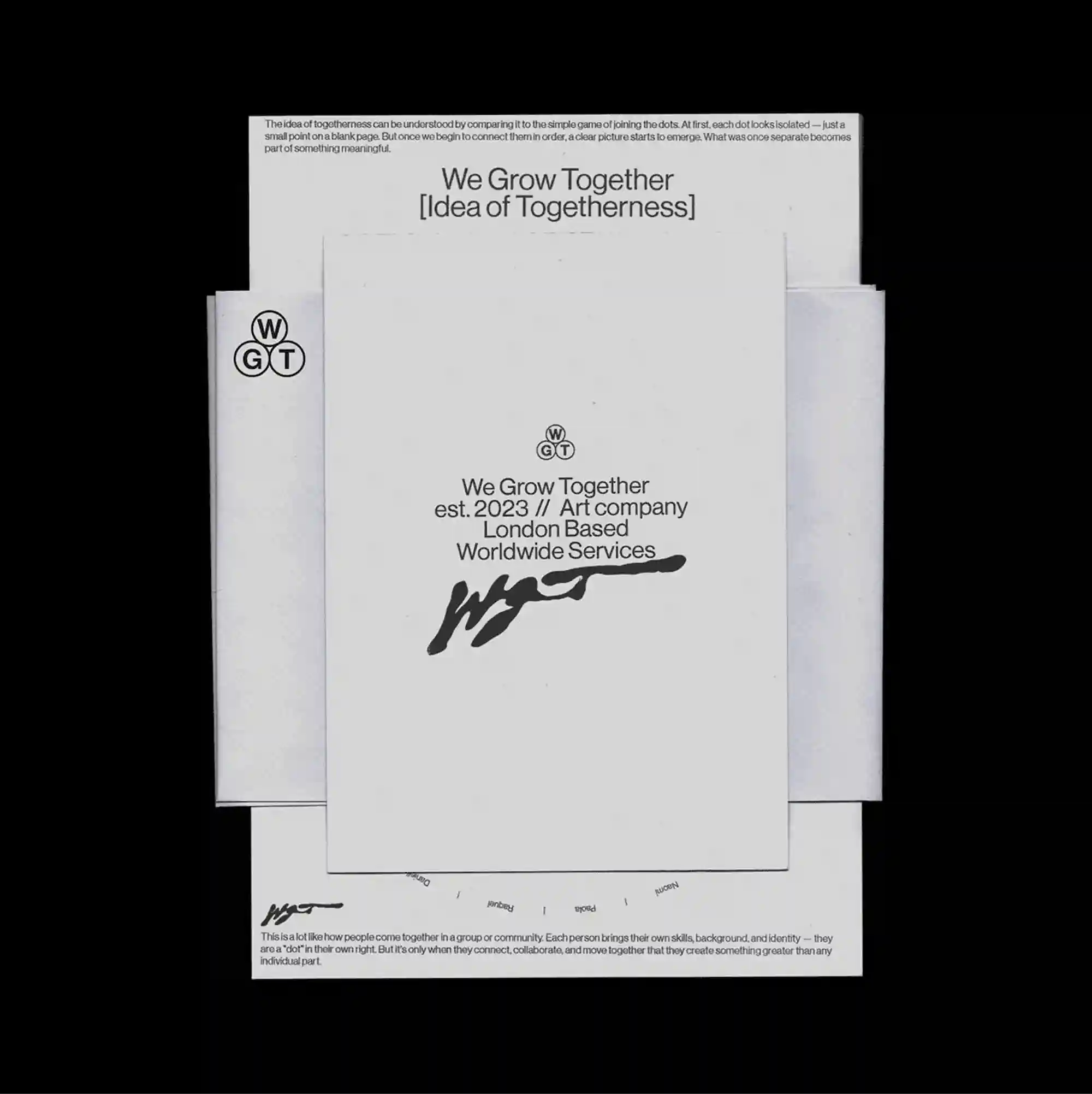
Several overlapping panels and cropped fragments are layered across the page, creating an assembled composition in which foreground and background continuously exchange roles. Restrained serif typography is used at a relatively small scale, allowing generous spacing and subtle alignment shifts to define the hierarchy. Several pale paper-like rectangles are stacked slightly out of register, with small centered labels and a bold signature-like mark creating subtle depth through overlap. Generous empty space and restrained detail create a quiet composition in which small shifts of placement become visually significant.
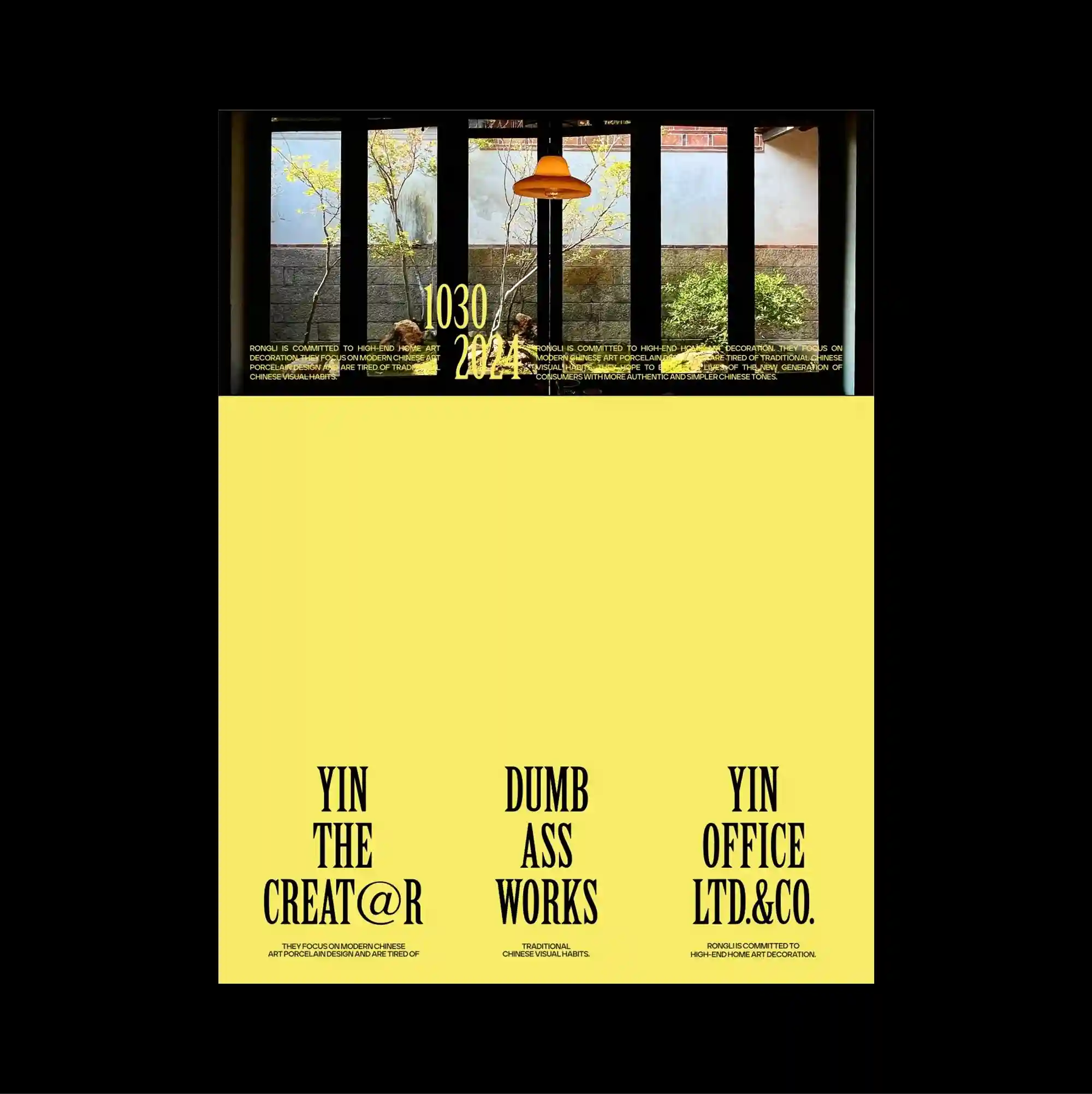
The poster separates a compact image band from a larger lower field, creating a two-part structure with a pronounced shift in density between the sections. A strong hierarchy is created almost entirely through scale, with very large type set against miniature labels and finely printed supporting text. A dark panoramic window photograph forms a narrow upper strip, while a large flat yellow field below carries three widely spaced columns of tall black lettering. Bold color contrasts and abrupt shifts in scale produce an energetic graphic rhythm that remains legible despite the density of the elements.
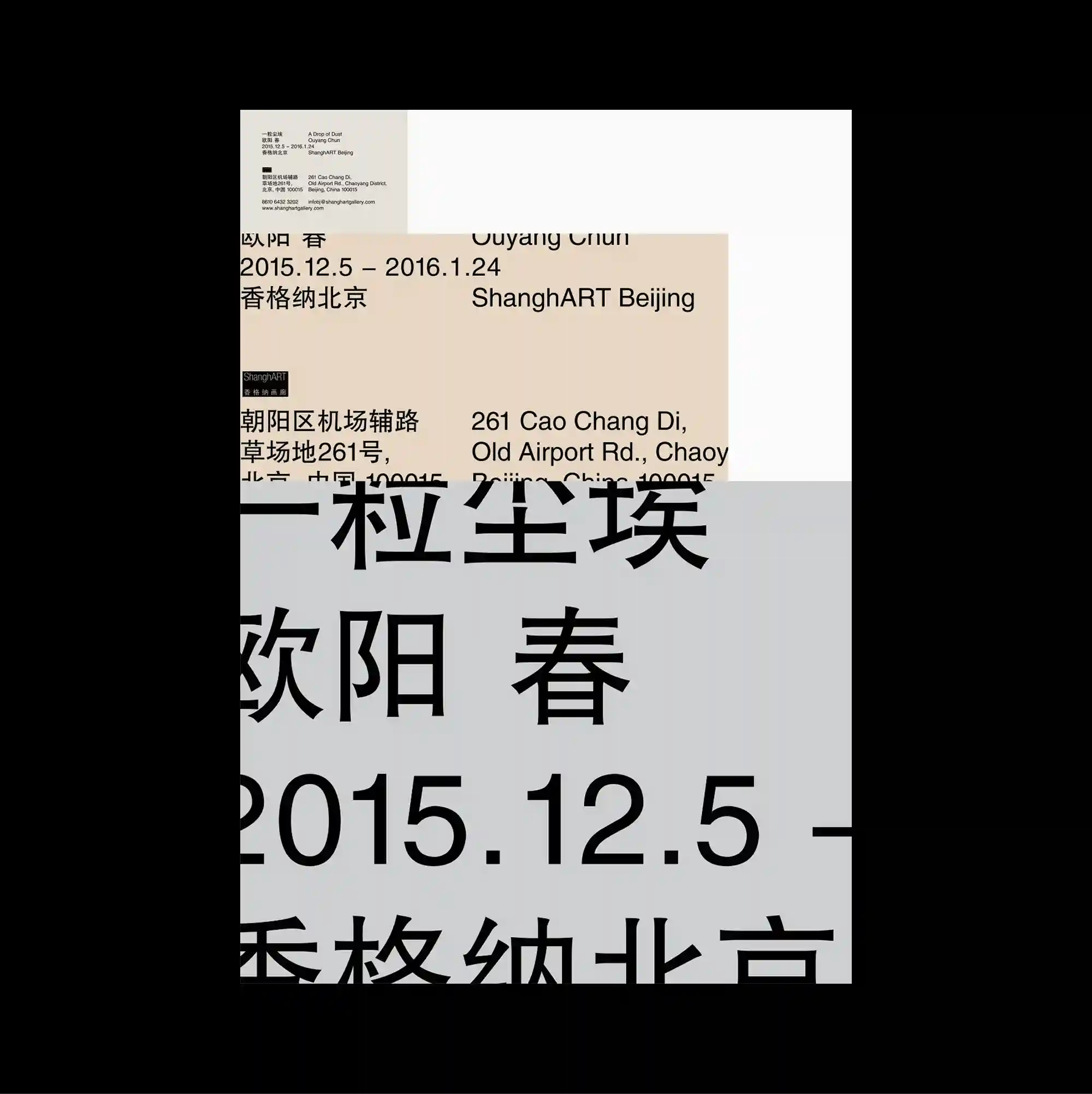
An asymmetrical arrangement is anchored by one oversized geometric or typographic form, while smaller supporting elements are pushed toward the edges. Oversized display lettering is paired with dense micro-typography, creating an extreme scale contrast between headline forms and secondary information. Massive cropped Chinese characters rise from the lower half and extend beyond the edges, while compact bilingual information is held in a narrow band above. Large forms and compressed supporting information create a monumental hierarchy that feels assertive even within a tightly organized layout.
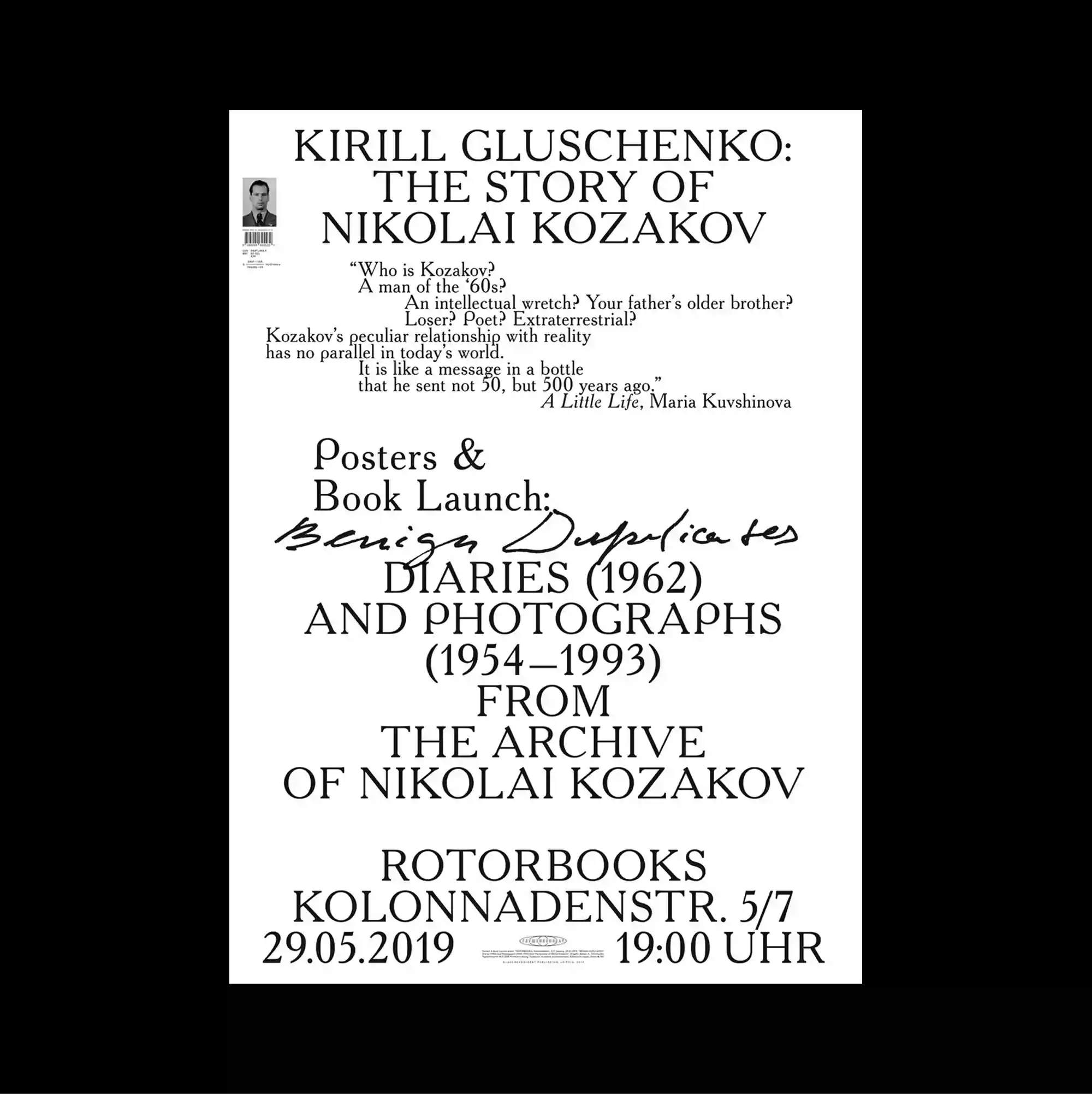
Typography occupies most of the page and functions as the primary image, with letterforms treated as large spatial masses rather than only carriers of information. Serif and sans-serif styles are mixed with thin rules and compact captions, producing a layered hierarchy through changes in weight, width, and alignment. Most of the surface is filled with carefully stacked serif headlines, smaller supporting lines, and one handwritten stroke, leaving almost no imagery beyond the typography itself. Large forms and compressed supporting information create a monumental hierarchy that feels assertive even within a tightly organized layout.
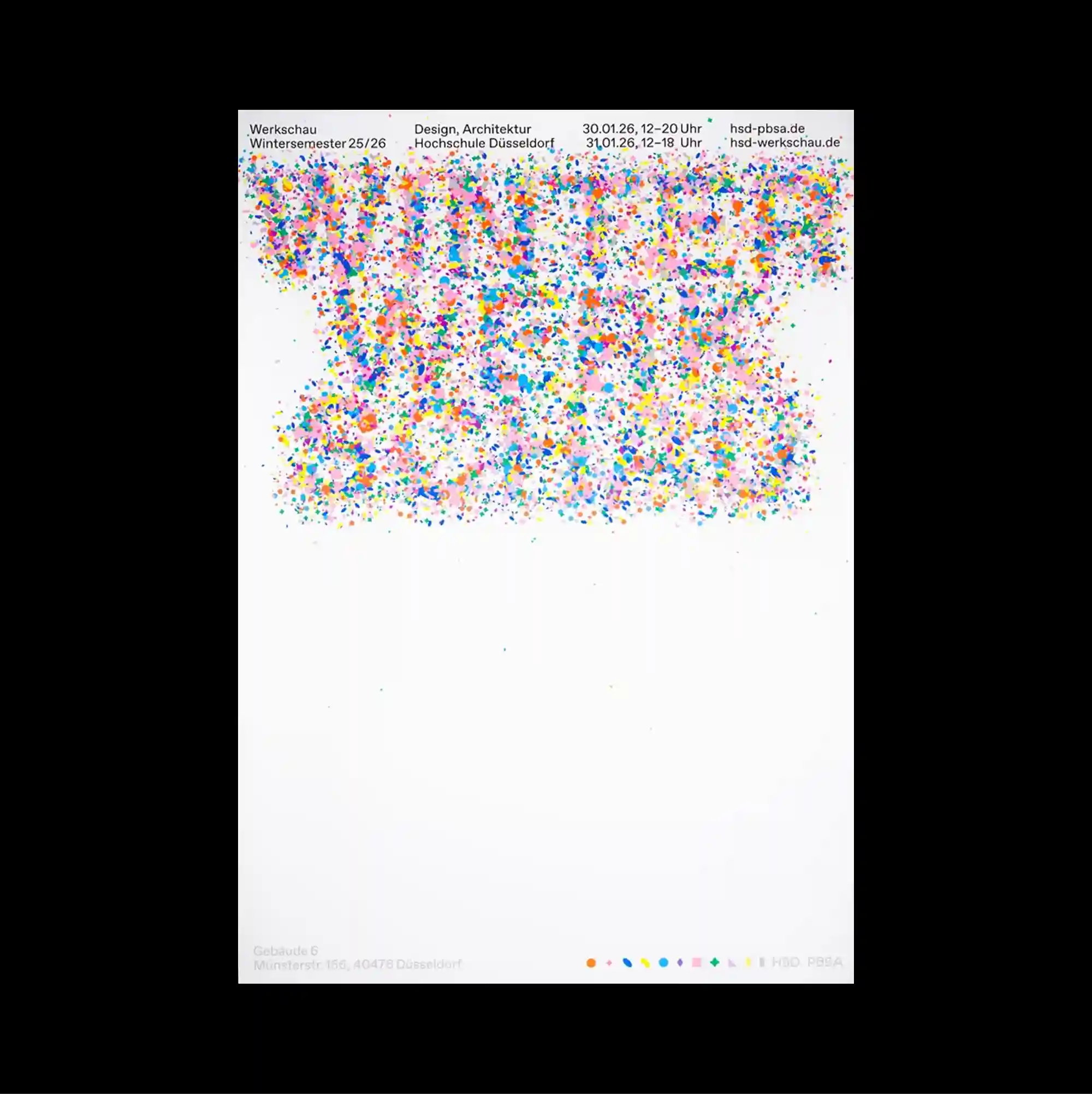
The poster separates a compact image band from a larger lower field, creating a two-part structure with a pronounced shift in density between the sections. Narrow columns of small sans-serif type establish a controlled rhythm, while occasional larger words interrupt the grid and create focal points. A dense cloud of tiny multicolored marks fills the upper region beneath a narrow information header, while the lower half remains largely empty except for minimal indexing details. The repeated structures make the poster read like a diagram or index, with visual meaning emerging from accumulation rather than a single focal image.
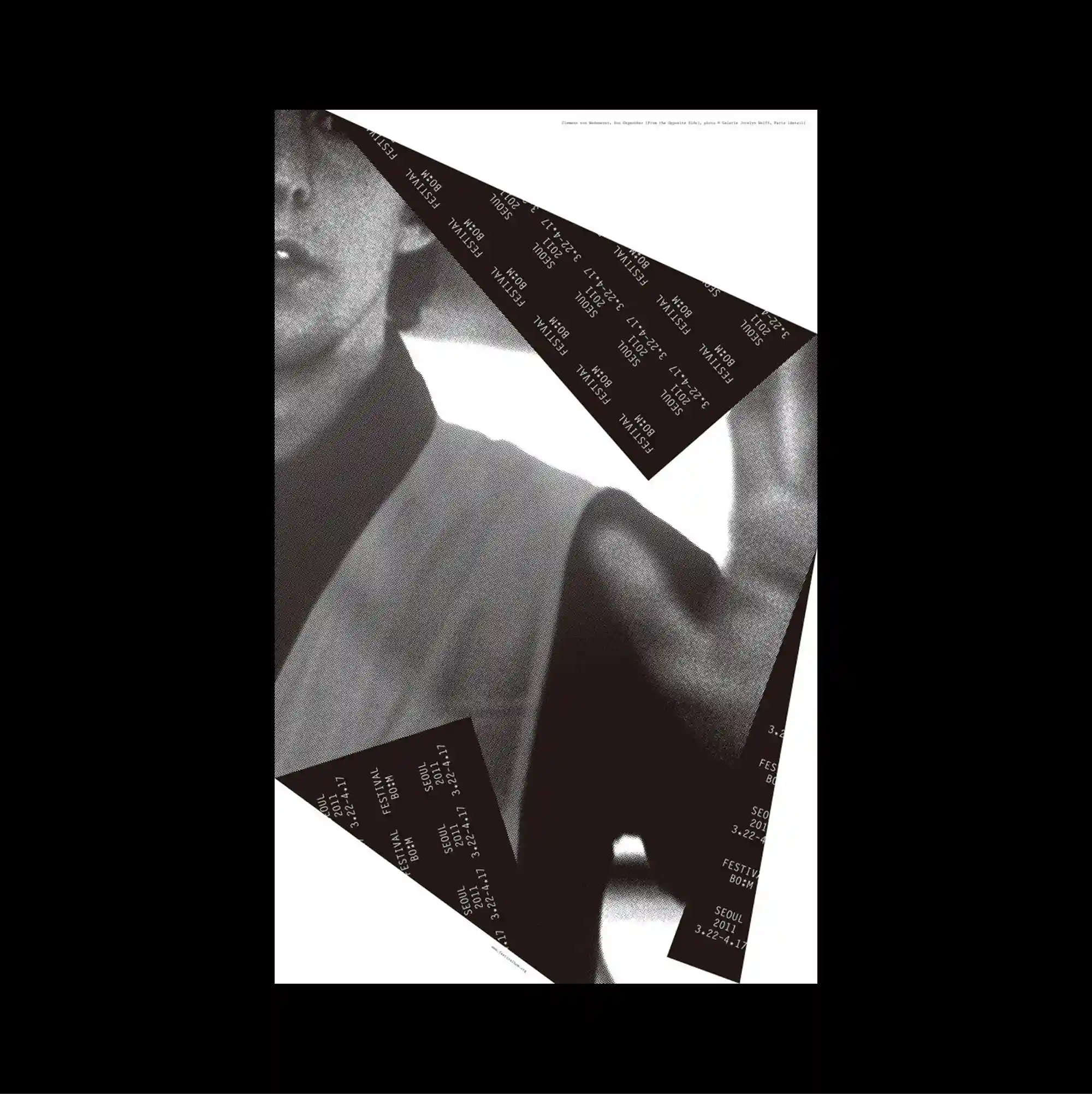
Several overlapping panels and cropped fragments are layered across the page, creating an assembled composition in which foreground and background continuously exchange roles. Repeated words and characters accumulate into a patterned surface, allowing typography to function simultaneously as information and texture. A grayscale close-up of the human body is interrupted by sharp black triangular bands filled with repeated small lettering, creating a strong contrast between soft flesh and rigid geometry. The mixture of irregular fragments, changing scales, and layered surfaces gives the work an experimental collage quality without losing overall balance.
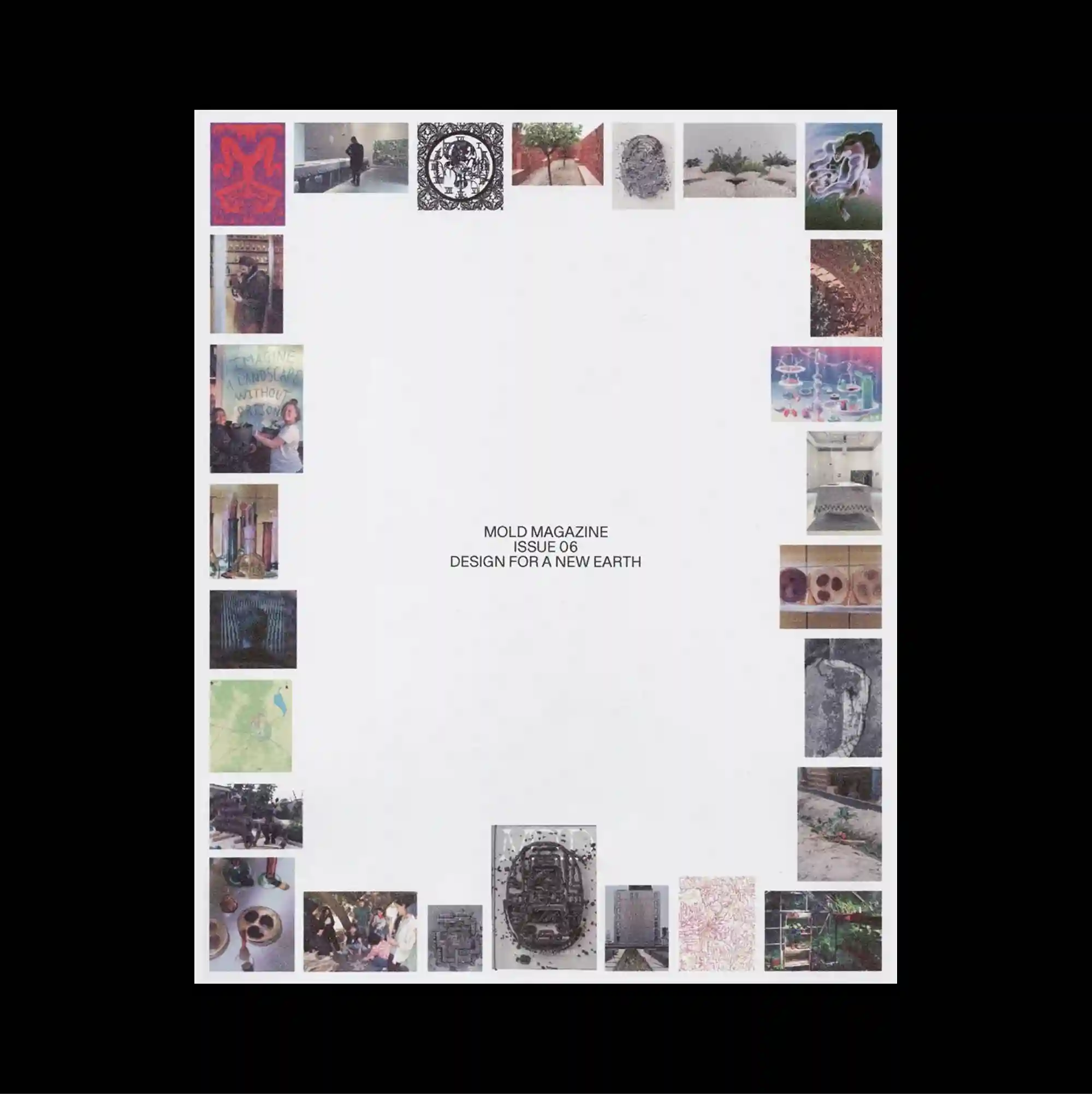
The composition is framed by elements positioned close to the outer edges, leaving the center comparatively open and emphasizing the perimeter as an active zone. Restrained serif typography is used at a relatively small scale, allowing generous spacing and subtle alignment shifts to define the hierarchy. Many small photographs form an uneven perimeter around a large blank center, creating a visual frame made from varied textures, colors, and cropped fragments. Generous empty space and restrained detail create a quiet composition in which small shifts of placement become visually significant.
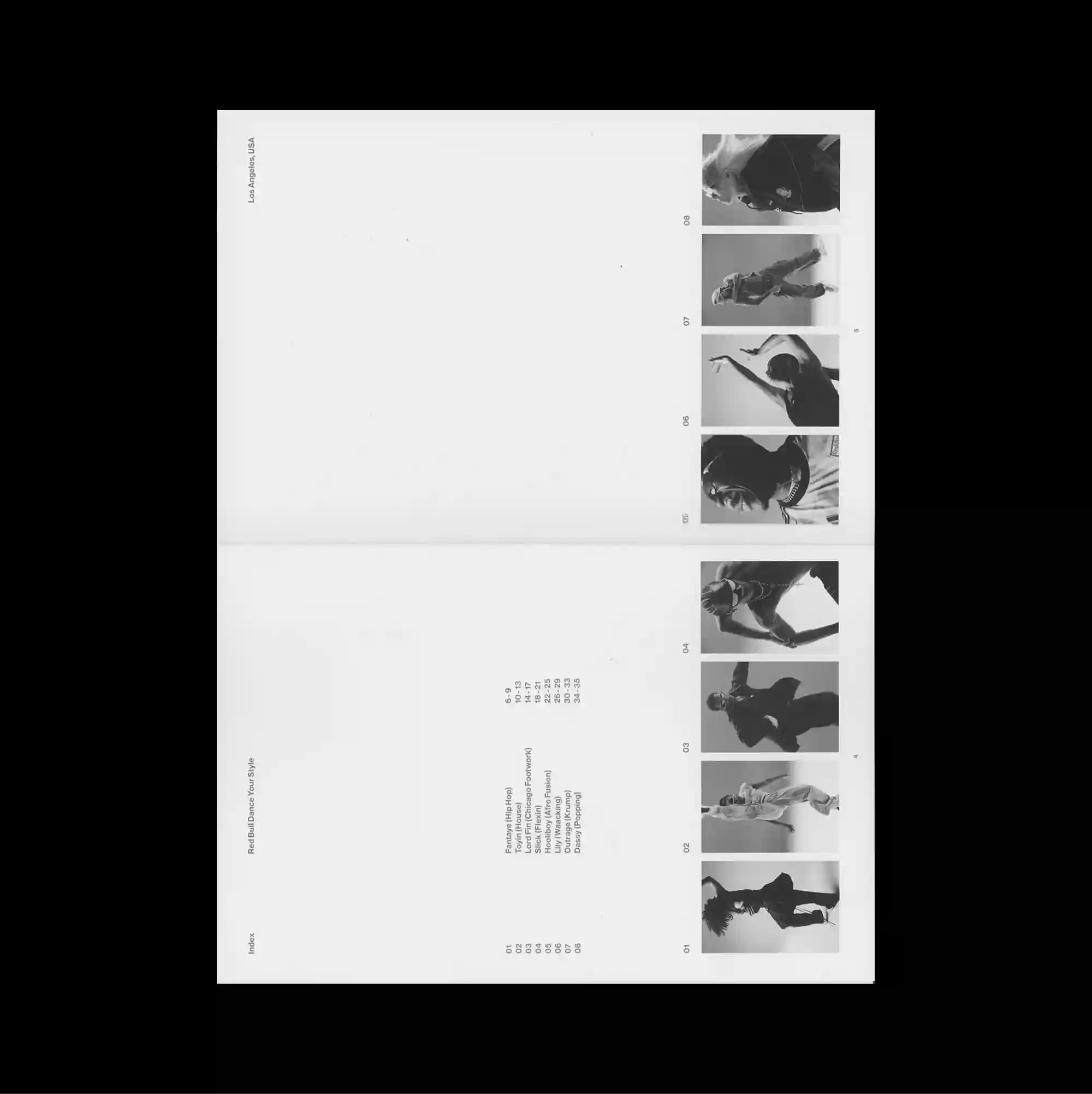
The layout is deliberately sparse, placing only a few compact elements across a broad open field so that distance and scale become active parts of the composition. Restrained serif typography is used at a relatively small scale, allowing generous spacing and subtle alignment shifts to define the hierarchy. A narrow column of monochrome film stills runs down the far right, while tiny centered text and faint fold-like divisions leave most of the sheet visually untouched. The contrast between image fragments and restrained type creates a cinematic pacing, with the eye moving between isolated moments rather than a continuous field.
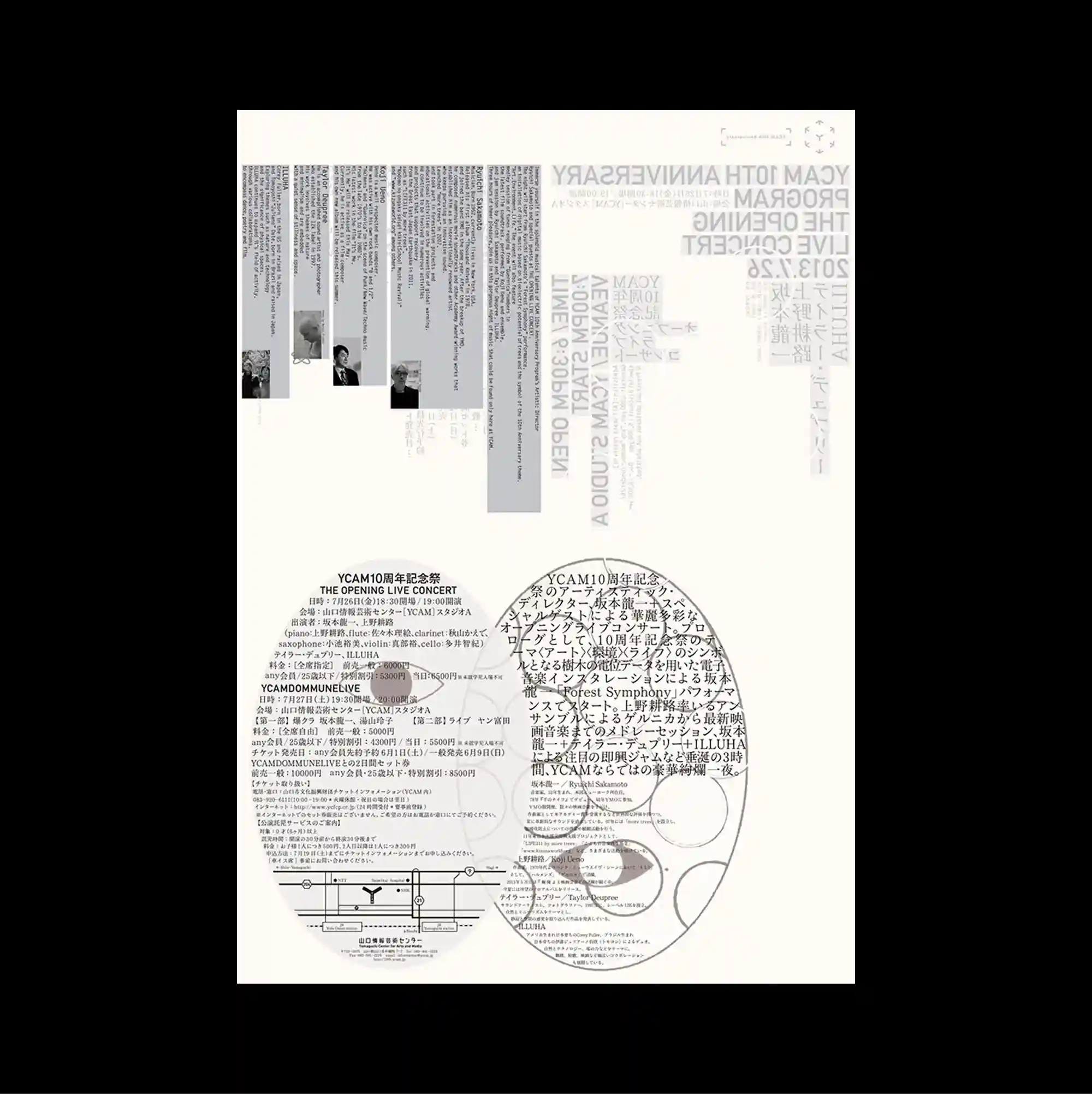
Several overlapping panels and cropped fragments are layered across the page, creating an assembled composition in which foreground and background continuously exchange roles. Typography is integrated with diagrams, coordinates, and graphic notation, so textual information and visual systems become difficult to separate. Layered circular diagrams, fine text columns, translucent gray blocks, and small photographs overlap across the page, producing a complex field of intersecting informational systems. The repeated structures make the poster read like a diagram or index, with visual meaning emerging from accumulation rather than a single focal image.
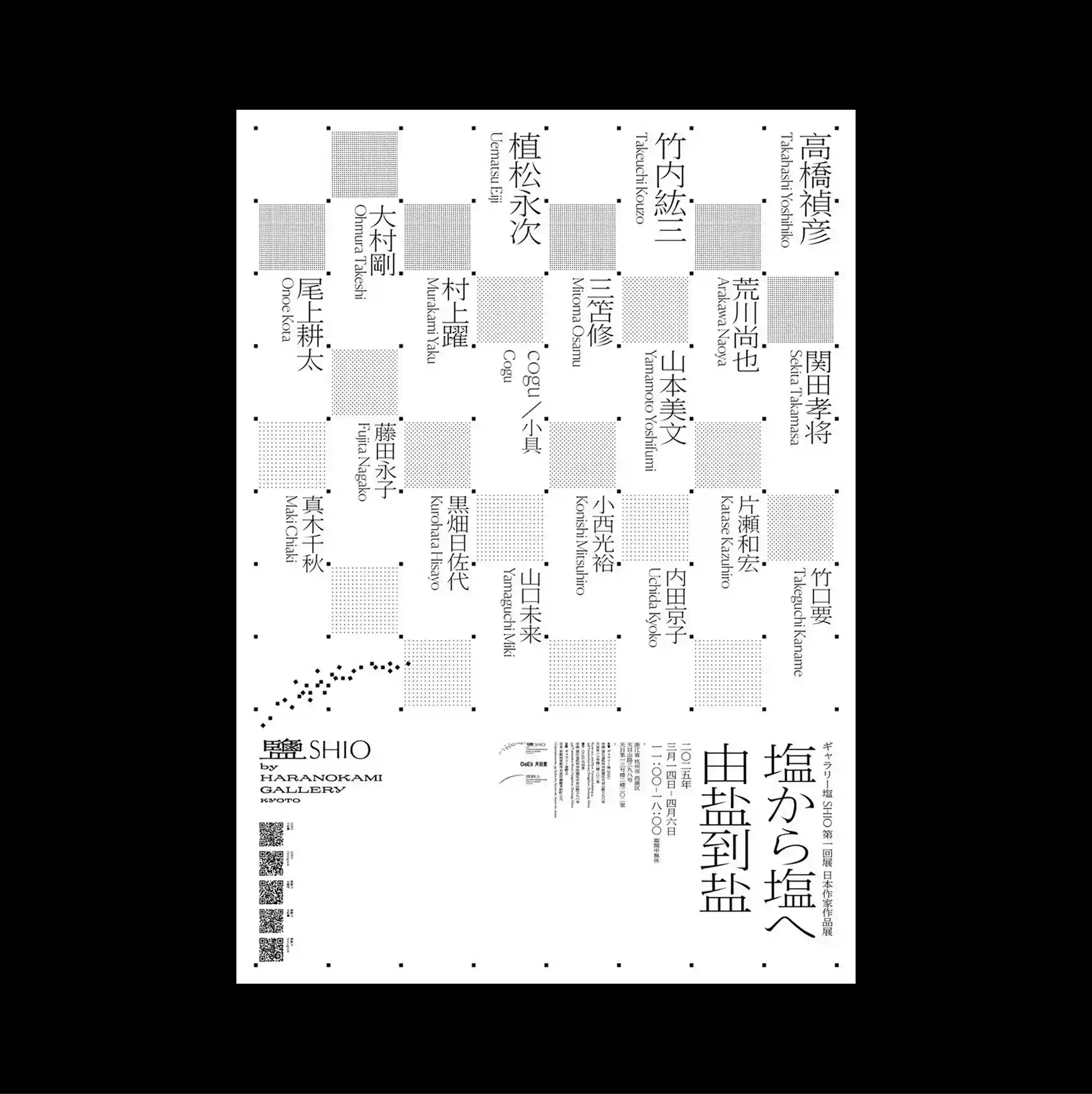
The entire surface is treated as a dense information field, with numerous small units packed closely enough to form an almost continuous visual texture. Vertical East Asian type is combined with smaller horizontal information, creating multiple reading directions within the same tightly controlled structure. Alternating gray squares and vertical East Asian text form a loose checkerboard, with small rules and captions distributed through the gaps like a modular index. Precise alignment and dense secondary information give the design a highly functional appearance while preserving a distinctive graphic hierarchy.
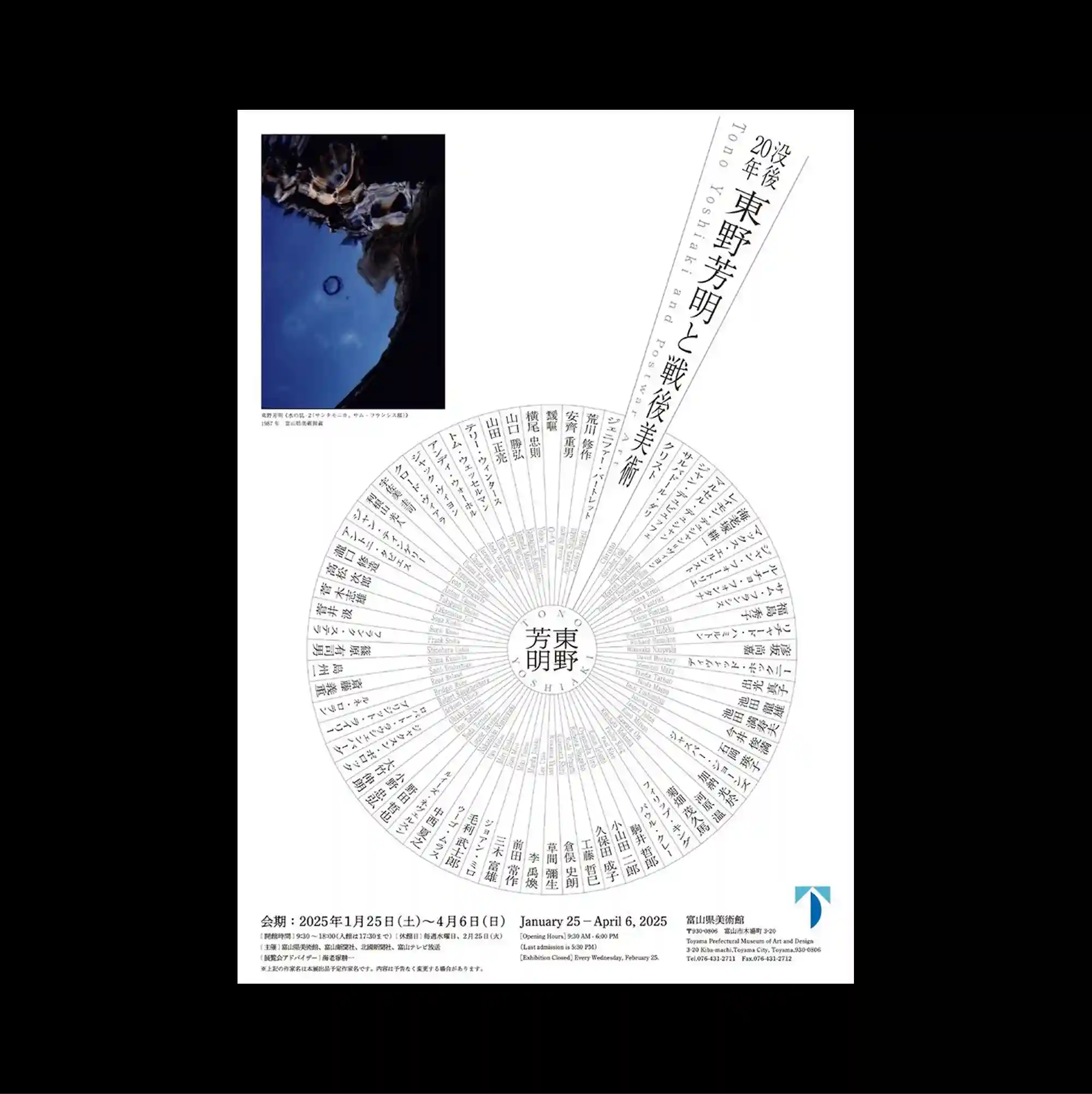
A radial structure dominates the page, arranging text and graphic marks around circular paths that pull attention toward and away from the center. Vertical East Asian type is combined with smaller horizontal information, creating multiple reading directions within the same tightly controlled structure. A large circular typographic wheel occupies the lower half, intersected by a sharply angled text band and balanced by one compact blue-toned photograph near the top. The repeated structures make the poster read like a diagram or index, with visual meaning emerging from accumulation rather than a single focal image.